

Allan Roth and the Numbers That Changed Baseball
Bear Mountain, April 1944
The dinner was not going well.
Allan Roth had traveled from Montreal to Brooklyn by train, checked into a small hotel, and waited several days for Branch Rickey to return from spring training. When Rickey did not come, Roth made a decision that said everything about the man he was. He went to Bear Mountain instead.
He found Rickey in the main dining room of the Bear Mountain Inn, the premier hotel in the region just north of New York City. The Dodgers were holding spring training nearby, and Rickey, as was his custom, was holding court. Mrs. Rickey was at the table. Well-wishers kept interrupting. The room was loud. Roth sat across from one of the most powerful men in baseball and watched his carefully prepared arguments go unheard.
Finally, after nearly an hour of this, Roth had had enough. He told Rickey directly that he did not think he was getting a fair hearing. Rickey asked him what he wanted. Roth's answer was immediate: "Ten minutes of your undivided attention."
That sentence, spoken by a 26-year-old Canadian tie salesman to the most celebrated executive in the game, is where the modern analytics era of baseball begins.
"Baseball is a game of percentages. I try to find the actual percentage." — Allan Roth
The Salesman with a Suitcase Full of Numbers
Allan Roth was born Abraham Roth in Montreal in 1917, the son of Jewish immigrants. He grew up watching the Montreal Royals of the International League and fell in love with baseball statistics the way other boys fell in love with the game itself. By the time he was a young man selling ties and suspenders for a living, he was spending his evenings compiling detailed statistical breakdowns of games that no official scorer was tracking in the same way.
He had already tried and failed to interest the Brooklyn Dodgers once before. In 1941, he approached Larry MacPhail, then the Dodgers' general manager, with his ideas. MacPhail was uninterested. Roth redirected his energy toward hockey, convincing NHL president Frank Calder to hire him as the league's official statistician. Three months later he was drafted into the Canadian Army, where, in a fitting irony, the military assigned him to manage all records and statistics for his unit. He was discharged in January 1944 due to a mild form of epilepsy, and within months he was on a train to Brooklyn, trying the Dodgers again.
This time, the general manager was Branch Rickey. And Rickey, unlike MacPhail, was the kind of man who could hear an original idea and recognize it.
After that difficult dinner at Bear Mountain, Rickey asked Roth to send his proposals in writing to assistant Ed Staples. The four-page letter that followed outlined a statistical program unlike anything a major league organization had ever attempted. Roth wanted to track not just what happened in a game, but the conditions under which it happened: which base a runner scored from on an RBI, how batters performed against left-handed versus right-handed pitching, how hitters fared in different ballparks, what happened at every count in every at-bat. He proposed a salary of thirty dollars a week.
What finally won Rickey over, Roth later recalled, was a conversation about runs batted in. Both men agreed the statistic was overrated. Roth argued that what mattered was not the RBI total itself, but the percentage of RBI opportunities a hitter converted. Context, not raw numbers. That was the idea that convinced Rickey he was dealing with something genuine.
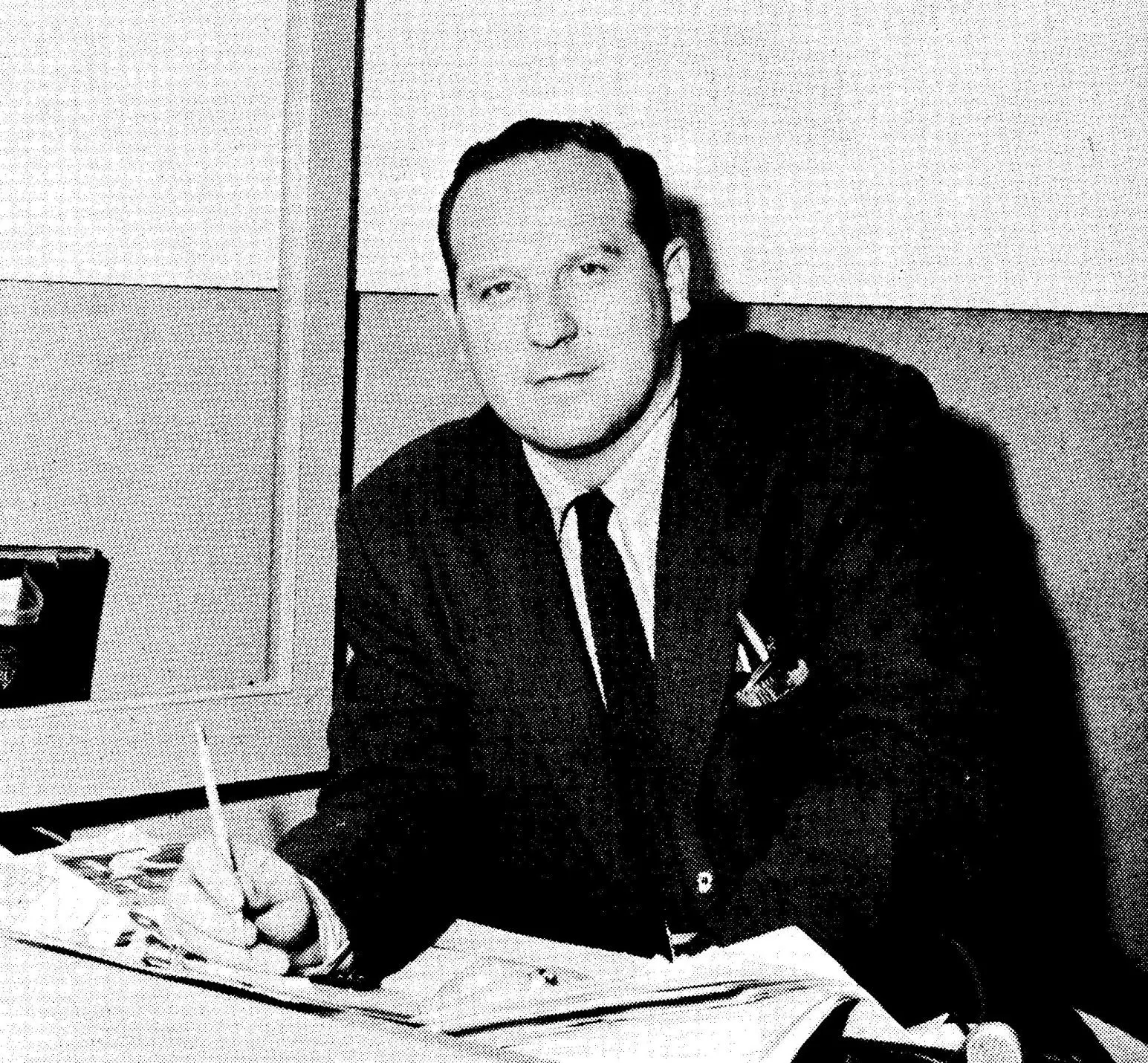
Opening Day, April 15, 1947
Three years of war, visa complications, and institutional caution separated that Bear Mountain dinner from the morning Allan Roth finally walked into Ebbets Field as a Dodger employee. He reported for work on Opening Day, 1947, the same afternoon Jackie Robinson played his first major league game. Two of the most consequential arrivals in Brooklyn baseball history happened on the same April afternoon.
Roth brought with him specially designed seventeen-by-fourteen-inch scoring sheets, and he set about recording virtually every pitch thrown in a Dodgers game. Not just the outcome, but the pitch type, the count, the location, where the ball was hit, who was on base, what the score was. He estimated he spent five hours after each game updating his breakdowns. In the off-season he dug deeper, building statistical profiles that reached back across careers and across ballparks.
He was, as Vin Scully would later say, "a computer before there was one."
Among everything Roth tracked, one number occupied the center of his philosophy: on-base percentage (OBP). Not batting average, which ignored walks and measured only hits per at-bat. Not slugging percentage, which weighted power but missed the patient hitter who drew four walks on a Tuesday afternoon and never made it into the game story. On-base percentage. The percentage of times a man reached base by any means. To Roth, it was the foundation of everything else. An out was an out, and avoiding it was the primary obligation of every hitter who stood in the box.
He was the only full-time statistician in major league baseball. He would remain so for nearly thirty years after he started.
Roth reported to Ebbets Field on the same afternoon Jackie Robinson played his first major league game. Two of the most consequential arrivals in Brooklyn baseball history happened on the same April day.
The Pipeline to the Booth
The Dodgers broadcast booth in the 1950s was one of the finest in baseball, and part of the reason was a man most listeners never heard of.
Vin Scully joined the Dodgers as a broadcaster in 1950, three years into Roth's tenure. Jerry Doggett came aboard in 1956. Both men understood quickly that the quiet Canadian with the briefcase full of hand-drawn spreadsheets was an asset unlike anything else in the game. Roth frequently worked in the broadcast booth itself during games, doing his calculations by hand while the innings unfolded around him. When Scully needed a batter's performance against a particular pitcher, a situational split, a historical context for a moment that had just happened on the field, he turned to Roth. The answer was always there.
Scully, describing Roth decades later, reached for an image that captured the man perfectly. When you needed something in the middle of a broadcast, Scully said, Roth would reach down to a brimming suitcase and, "like Mary Poppins, come up with the perfect answer." His yellow pads, his graph paper charts, his hand-calculated splits covered everything. Where batters hit the ball and off what kinds of pitches. How they performed in day games against night games. What happened with runners in scoring position versus bases empty. Long before any of these categories had names that anyone outside a Brooklyn press box would recognize, Roth had the numbers ready.
Scully and Doggett were among the first broadcasters in the country to routinely weave statistical context into a live game call, and they could do it because Roth made it possible. The partnership between the statistician and the voices of the Dodgers was a quiet revolution in how baseball was communicated to its audience. It just took the rest of the industry half a century to understand what had been happening in that Brooklyn booth.
New York Times baseball writer Alan Schwarz, one of the most respected voices on the history of baseball statistics, put it simply: "Allan Roth was as vital to Branch Rickey as Robin was to Batman."
"Goodby to Some Old Baseball Ideas"
In August 1954, Life Magazine ran a feature under Branch Rickey's byline titled "Goodby to Some Old Baseball Ideas." The article laid out a comprehensive formula for measuring offensive production, with on-base percentage at its center.
It argued that batting average was an inadequate measure of a hitter's true value. Walks deserved as much credit as singles. The percentage of plate appearances ending on base was the number that mattered most.
Roth's back is visible in the photograph on the article's opening page. He is pictured more fully on the third page, alongside the multipart equation that organized everything he had been doing in Brooklyn for seven years. The ideas in the piece were his. The byline belonged to Rickey. That arrangement, quiet and uncomplaining, was characteristic of how Roth operated throughout his career.
The article was, according to Britannica, masterminded by Roth. In it, Rickey predicted that resistant baseball executives would eventually accept the new statistical framework. "Eventually" turned out to mean about fifty years.
The baseball world largely looked away. The newspaper kept running batting averages. Managers kept valuing hitters the way they always had. The box score remained unchanged. Roth kept working.
He followed the Dodgers to Los Angeles in 1958, carrying his boxes of statistics across the country. He charted pitches at the Los Angeles Memorial Coliseum the same way he had charted them at Ebbets Field. He fed numbers to Scully and Doggett the same way. He left the organization after the 1964 season, the only full-time statistician in baseball from the day he started to the day he left. When he departed, that was still true. No other major league team had hired one.
The ideas in the Life Magazine piece were Roth's. The byline belonged to Rickey. That arrangement, quiet and uncomplaining, was characteristic of how Roth operated throughout his career.
The Vindication That Took Fifty Years
After leaving the Dodgers, Roth wrote a statistical column for The Sporting News and later joined NBC as a statistics provider for game broadcasts, eventually moving to ABC and feeding data to broadcasters including Al Michaels. He had built a career out of a conviction that the right numbers, in the right hands, at the right moment, could change how people understood the game. He spent forty-five years in baseball doing exactly that.
He died on March 3, 1992, in the quiet way he had worked. The baseball world was not yet ready to fully understand what it had lost. Bill James, who had spent the 1980s building the sabermetric movement from a research station in Kansas, wrote that Roth was decades ahead of his time and was the person who started it all. The SABR chapter in Los Angeles was named in his honor, a recognition from the community of researchers who understood the lineage.
In 2003, Michael Lewis published Moneyball, and the mainstream finally discovered the idea that Allan Roth had proven in a Brooklyn press box before most of the book's readers were born. On-base percentage was suddenly everywhere. The front offices that had ignored it for decades now competed to maximize it. The market inefficiency Billy Beane had exploited was, at its root, simply the failure of the game to learn what Roth had already taught.
In 2010, the Canadian Baseball Hall of Fame inducted Allan Roth. In 2019, SABR awarded him the Henry Chadwick Award posthumously, their highest honor for historical research. Both recognitions were deserved and both arrived decades after they should have.
But perhaps the most fitting tribute came not from an institution but from Vin Scully, who spent seventeen seasons reaching into that brimming suitcase for the number that told the story of what had just happened on the field. Scully never forgot what Roth had made possible.
The broadcasts that generations of Dodger fans remember as the soundtrack of their summers were built, in part, on yellow pads filled with hand-drawn calculations. They came from a Canadian salesman who demanded ten minutes of Branch Rickey's undivided attention and changed the game with what he did with them. "Long before there was Mary Poppins," Scully said, "there was Allan Roth."
What He Left Behind
The modern analytics department of any major league team employs dozens of people, runs servers full of Statcast data, and produces reports that would be unrecognizable to the game of 1947. The tools are different. The scale is different. The job description, at its core, is not.
Find the numbers that actually predict winning. Strip away the ones that merely feel important. Put the right information in front of the people making decisions. Do it before every game, after every game, across every season, without credit, without complaint, without stopping.
Allan Roth was the first person in the history of major league baseball to do that job. He did it alone, by hand, on yellow legal pads, for seventeen years. He was not celebrated when he was doing it. He was mocked, occasionally, and overlooked, constantly. The game he helped invent took half a century to acknowledge what he had built.
But the numbers do not forget. Every analytics department in baseball today traces its lineage, directly or indirectly, to a 26-year-old from Montreal who sat down across from Branch Rickey in a crowded restaurant at Bear Mountain, waited for a break in the noise, and asked for ten minutes.
He earned every one of them.