
Random Baseball Facts

Over the past year, during my research for baseball stories for this blog, I've come across a lot of facts, mini stories, records. Today's blog post looks at some of the ones that I've collected over time. Periodically, I will post them as I come across them.
The Pittsburgh Pirates’ Chief Wilson hit 36 triples in a single season, a record that has never been seriously approached (1912).
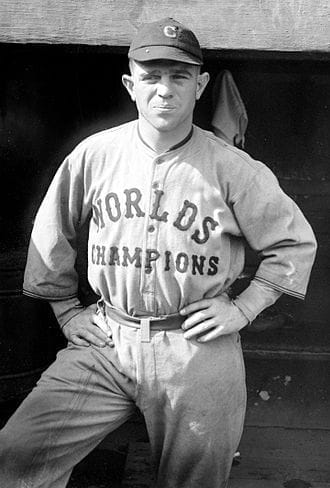
Cleveland’s Joe Sewell struck out only three times over a full season of 576 plate appearances (1932).
Rickey Henderson stole 130 bases in one season for the A’s, a single‑year total greater than some whole teams (1982).
Ernie Banks played 2,528 regular‑season games for the Cubs without ever appearing in a postseason game (1971).
In the deadball era, Jack Chesbro won 41 games for the New York Highlanders, a total unlikely ever to be seen again (season year missing; 1904).
Ed Walsh logged 464 innings for the White Sox in a single season (1908).
Honus Wagner captured seven NL batting titles in the first decade of the 1900s (between 1900–1909).
The “Dead Ball Era” is generally considered to span from the turn of the century until the early 1920s, when scuffed balls, cavernous parks, and a single game ball kept offense low (1900–1919).
Ken Griffey Jr. became the only player to hit the B&O Warehouse beyond right field at Camden Yards during a Home Run Derby (1993 All-star break).
The famous Sports Illustrated April Fools’ feature introduced “Sidd Finch,” a fictional Mets prospect who allegedly threw 168 mph (April 1, 1985).
The first modern World Series between AL and NL champions matched Boston against Pittsburgh in a best‑of‑nine showdown (1903).
After early trial runs, the World Series resumed as an annual event when the Giants faced the A’s again (1905).
Branch Rickey built a pioneering farm system with the Cardinals that supplied the famous “Gashouse Gang” and became the blueprint for modern player development (key years mid‑1920s to early 1930s).
The first elections to the National Baseball Hall of Fame were held before the museum in Cooperstown opened (election year: 1936).
Little League Baseball was founded in Williamsport, Pennsylvania, and grew into the flagship youth baseball organization in the United States (1939).
The New York Yankees were the first MLB club to wear numbers on their backs on a permanent basis, initially corresponding to batting order (1929).
The 1962 Mets lost 120 games, one of the worst records in modern history, yet teams like the 1916 A’s still edge them in winning‑percentage futility (Mets 40–120 in 1962; A’s 36–117 in 1916).
The early Tigers won three straight AL pennants under Ty Cobb but failed to win a World Series in that stretch (pennant years: 1907–1909).
The 1914 “Miracle Braves” went from last place on July 4 to first by season’s end, finishing 94–59 and sweeping the World Series .
Babe Ruth set a then‑astonishing single‑season home run record in 1920 with 54 homers, then broke his own marks twice more in the early 1920s (record‑setting seasons 1920, 1921, 1927).
The 1969 Mets completed one of the fastest franchise turnarounds in history, going from expansion laughingstock to 100‑win World Series champion (franchise debut 1962; title year 1969).
Nolan Ryan’s final no‑hitter came at age 44, when he shut out the Blue Jays for the Rangers (May 1, 1991).
In 1970, Dock Ellis of the Pirates threw a no‑hitter against the Padres in San Diego, later claiming he was under the influence of LSD (June 12, 1970).
The Cubs’ World Series drought stretched from 1908 until the team finally won again in 2016, a 108‑year gap between titles (1908).
Fan “unbelievable facts” lists note that some franchises still have fewer no‑hitters than Nolan Ryan alone, underscoring how outlandish his seven no‑hitters are (conversation compiled in 2022).
Negro League legends like Satchel Paige and Josh Gibson starred in segregated leagues that MLB now recognizes as major‑league quality, with their stats folded into the historical record (prime years roughly 1920s–1940s).
Jackie Robinson’s debut with the Brooklyn Dodgers broke the modern color barrier, marking the start of MLB integration (April 15, 1947).
Larry Doby integrated the American League shortly after Robinson by joining the Cleveland Indians and later helping them win a title (July 5, 1947).
Hank Aaron broke Babe Ruth’s career home run record with a shot in Atlanta that became a nationally televised cultural moment (April 8, 1974).
Cal Ripken Jr. broke Lou Gehrig’s consecutive games record when he played in Game 2,131 and took a lap around Camden Yards (September 6, 1995).
The designated hitter rule was introduced in the American League, creating a lasting stylistic split between the AL and NL (AL DH adoption; 1973).
MLB’s expansion era added franchises in new markets like Houston, San Diego, Montreal, Toronto, and others, growing from 16 to 30 clubs over several waves (expansions in 1961–1962, 1969, 1977, 1993, 1998).
The first official interleague regular‑season games were played in the late 1990s, finally putting Yankees–Mets and Cubs–White Sox into the standings (interleague debut year; 1997).
The 1994 players’ strike wiped out the World Series for the first time since 1904, cutting short the Expos’ best season and Tony Gwynn’s .394 chase (strike year; 1994).
Barry Bonds passed Hank Aaron for the all‑time home run record with number 756, a milestone clouded by the steroid era ( August 7, 2007).
The debate over how to treat steroid‑era statistics—especially for players like Bonds, McGwire, and Sosa—has influenced Hall of Fame voting and public perception since the mid‑2000s (peak controversy period early‑ to mid‑2000s).
The 2004 Red Sox became the first team ever to overcome a 3–0 deficit in a best‑of‑seven postseason series, rallying against the Yankees in the ALCS ( 2004).
The “Bartman game” in the 2003 NLCS, when a fan reached for a foul ball down the left‑field line, became a symbol of Cubs heartbreak as the team collapsed afterward (October 14, 2003).
The 1986 World Series swung when a routine grounder skipped through Bill Buckner’s legs at first base, allowing the Mets to win Game 6 and eventually the Series (October 25, 1986).
World Series, which he waved fair down the Fenway left‑field line, is one of the most replayed swings in history (October 21, 1975).
Bobby Thomson’s “Shot Heard ’Round the World” won the pennant for the New York Giants in a playoff against the Dodgers (home run date; October 3, 1951).
Bill Mazeroski ended the 1960 World Series with a walk‑off home run for the Pirates against the Yankees, the first time a Series ended on a homer (game date; October 13, 1960).