
A Baker's Dozen: 13 Legendary World Series That Rival the 2025 Dodgers-Blue Jays Classic (Part 2 of 2)

Yesterday, we looked at World Series ranked 13 through 7 in our baker's dozen of legendary Fall Classics. Today, we count down the top six, building to the greatest World Series ever played. These are the series that set the standard for October baseball.
6. 1912: Boston Red Sox over New York Giants (4-3-1)
The 1912 World Series went eight games. One ended in a tie due to darkness after 11 innings. Four went down to the final at-bat. Two games went to extra innings.
This was Christy Mathewson's (RHP, NYG) Giants against a young Red Sox team featuring Tris Speaker (OF, BOS) and a 23-year-old pitcher named Smoky Joe Wood (RHP, BOS). Wood won 34 games during the regular season with a 1.91 ERA. Mathewson was 37 years old and still one of the best pitchers in baseball.
Game 7 (technically Game 8, counting the tie) went 10 innings. The Giants led 2-1 in the bottom of the 10th. Fred Merkle (1B, NYG) hit what looked like a go-ahead RBI single, but the Red Sox came back. Clyde Engle (OF, BOS) hit a fly ball to center that Fred Snodgrass dropped. Speaker followed with an RBI single. After an intentional walk, Larry Gardner (2B/3B, WAS) hit a sacrifice fly to score the winning run.
The Giants made crucial errors in the final inning, including Snodgrass's drop and Chief Meyers (C, NYG) missing a foul pop-up that gave Speaker another chance. Mathewson took the loss. The Red Sox won their second championship in franchise history.
5. 1924: Washington Senators over New York Giants (4-3)
Walter Johnson (RHP, WAS) was 36-years-old. He'd spent 18 years with the Washington Senators, winning 400-plus games but never playing in a World Series. Finally, in 1924, the Senators won the pennant.
Johnson started Game 1 against the Giants. He struck out 12 batters but lost in 12 innings, 4-3. The Giants hit him hard in Game 5, scoring six runs in an easy win. Johnson was 0-2 in his first World Series, and it looked like his career might end without a championship.
The Senators forced Game 7. Manager Bucky Harris started Curly Ogden (RHP, WAS), a right-hander, for exactly one batter. Ogden struck out one, walked another, and was pulled for George Mogridge (LHP, WAS), a lefty. Harris later revealed the strategy: start the right-hander to lock the Giants into their lineup, then switch to the lefty.
The Giants led 3-1 in the eighth inning. Harris hit a ground ball to third baseman Freddie Lindstrom (3B, WAS). The ball hit a pebble and bounced over Lindstrom's head. Two runs scored. The game was tied.
In the ninth inning, Harris called for Johnson. "You're the best we've got, Walter," Harris said. "We've got to win or lose with you."
Johnson pitched four scoreless innings. In the 12th, Muddy Ruel (C, WSH) hit a foul pop-up that catcher Hank Gowdy (C, couldn't catch because he stepped on his own discarded mask. Given new life, Ruel doubled. After a single put runners on first and second, Earl McNeely hit a ground ball to third. Again, the ball hit something on the field and bounced over Lindstrom's head. Ruel scored. Washington won, 4-3.
Johnson finally had his championship. The Senators' only World Series title in franchise history came on two bad-hop ground balls and one of the greatest relief performances ever.
4. 2001: Arizona Diamondbacks over New York Yankees (4-3)
This was the post-9/11 World Series. The nation needed baseball, and baseball delivered.
The Diamondbacks were only four years old as a franchise. The Yankees were trying to win their fourth straight championship. Randy Johnson (LHP, ARI) and Curt Schilling (RHP, ARI) formed one of the most dominant postseason pitching tandems ever. But the Yankees had Mariano Rivera (RHP, NYY), the most untouchable closer in baseball history.
Arizona won Games 1 and 2 at home by a combined score of 13-1. Johnson threw a complete-game shutout in Game 2, allowing just four hits while striking out 11. The Yankees looked overmatched. Then the series shifted to New York, and everything changed.
Roger Clemens (RHP, NYY) and Rivera combined on a three-hitter in Game 3 for a 2-1 Yankees win. Game 4 saw the Diamondbacks take a 3-1 lead into the bottom of the eighth. Arizona brought in closer Byung-Hyun Kim (RHP, ARI) to get a six-out save. Tino Martinez (1B, NYY) hit a two-run homer in the bottom of the ninth to tie it. The game went to extras. Past midnight, into November. Derek Jeter (SS, NYY) hit a walk-off homer in the 10th to win it, 4-3.
Game 5 was almost the same script. Diamondbacks led 2-0 in the ninth. Kim came in again. Scott Brosius (3B, NYY) hit a two-run homer to tie it. Alfonso Soriano (2B, NYY) doubled home the winner in the 12th. The Yankees had somehow won three straight one-run games.
Johnson pitched Game 6 on three days rest and shut out the Yankees through seven innings. Arizona won 15-2 to force Game 7.
Schilling started Game 7 on three days rest. He went seven innings, allowing just one run. But the Yankees had Rivera, who entered in the eighth with a 2-1 lead. He struck out the side in the eighth inning. He'd converted 23 straight postseason saves. The Yankees were six outs away from another championship.
Mark Grace (1B, ARI) singled to lead off the ninth. Damian Miller (C, ARI) bunted him to second. After a hit batter loaded the runners, Tony Womack (SS/2B, ARI) doubled to tie the score. Craig Counsell (INF, ARI) was hit by a pitch to load the bases. Luis Gonzalez (OF, ARI) stepped in.
The Yankees brought the infield in. Rivera threw a cut fastball inside. Gonzalez fought it off and blooped it over the drawn-in infield into shallow center. Jay Bell (SS, PIT) scored from third. Arizona won, 3-2.
The Diamondbacks became the fastest expansion team to win a World Series. Johnson went 3-0 with a 1.04 ERA. And the Yankees' dynasty finally ended.
3. 2025: Los Angeles Dodgers over Toronto Blue Jays (4-3)
Where do we even start with this one? The series just ended two nights ago and it already feels like it belongs in the history books.
Game 3 went 18 innings. Eighteen. The longest postseason game in nearly two decades. Both bullpens got emptied. Players were moved to different positions. The game lasted six hours and took two days to complete after starting late the night before. The Dodgers finally won it, but not before using practically everyone on their roster.
Then there was Yoshinobu Yamamoto (RHP, LAD). The Dodgers signed him for $325 million before the 2024 season. He went 17-7 with a 2.87 ERA during the 2025 regular season, but the World Series is where he made his name. Game 2, he threw the first complete game in a World Series since 2014. Nine innings, two runs, one walk, nine strikeouts.
The Blue Jays pushed the series to Game 6, and Yamamoto started again on normal rest. Six strong innings. The Dodgers won to force Game 7.
Nobody expected to see Yamamoto again. He'd thrown 96 pitches the night before. But in the eighth inning of Game 7, with the score tied 4-4, Dodgers manager Dave Roberts called on him anyway. Zero days rest. Yamamoto entered in the ninth inning.
He got through it. He got through the 10th too. Vladimir Guerrero Jr. (1B/DH, TOR) led off the 11th with a double, and it looked like the Blue Jays might walk it off. Yamamoto walked the next batter. Then he got Addison Barger (2B, TOR) to walk on four pitches, loading the bases with one out.
Alejandro Kirk (C, TOR) came up. He fouled off a cutter. Took a curve for strike two. Then hit a splitter weakly to the right side. Betts scooped it, flipped to second, relay to first. Double play. Series over.
Yamamoto finished with a 3-0 record and a 1.02 ERA. He threw 17.2 innings total, allowing just two earned runs. Andrew Friedman, the Dodgers' president of baseball operations, called it "the greatest accomplishment I've ever seen on a major-league baseball field."
The pitching performance alone puts 2025 in the top tier. Add the 18-inning Game 3, the back-and-forth nature of the series, and the 11-inning Game 7, and you've got a World Series that will be talked about for generations.
2. 1991: Minnesota Twins over Atlanta Braves (4-3)
Five one-run games. Three extra-inning affairs. Game 7 going 10 innings with the score 0-0 until the last possible moment. The 1991 World Series might actually rival 1975.
Both teams finished dead last in their divisions the year before. The Twins went 74-88 in 1990, then won 95 games to capture the AL West in 1991. The Braves went from 65 wins to 94. Last to first, both of them.
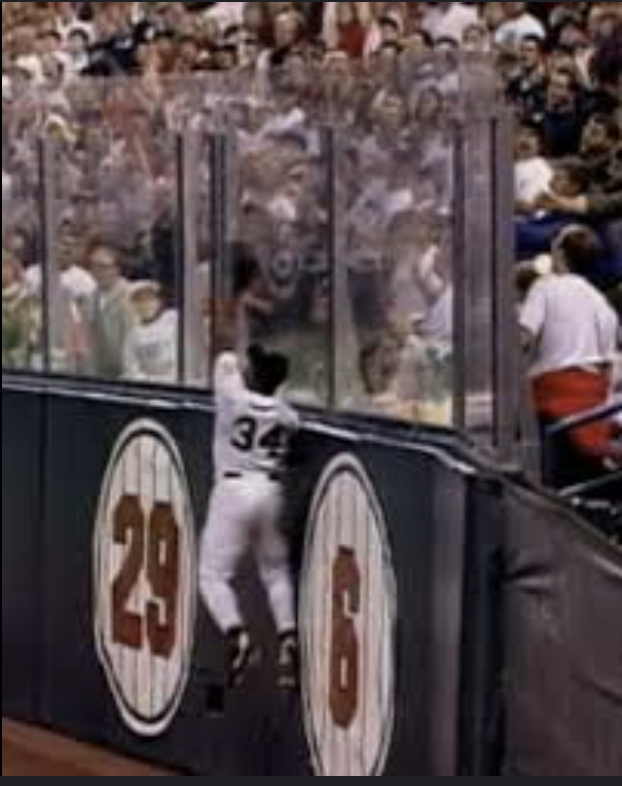
The home team won every single game. Games 1 and 2 went to the Twins in Minnesota. Games 3, 4, and 5 belonged to the Braves in Atlanta. Back to Minneapolis, the Twins needed two wins. Kirby Puckett (OF, MIN) made sure they got at least one more game. In Game 6, Puckett made a leaping catch to rob Ron Gant (OF, ATL) of an extra-base hit, drove in the game-tying run with an RBI triple, then walked it off with a home run in the 11th inning.
That set up Game 7. Jack Morris (RHP, MIN) versus John Smoltz (RHP, ATL). Thirty-six years old, Morris was pitching for his hometown team. He'd signed with Minnesota as a free agent just one year earlier. Smoltz, only 24, was already establishing himself as one of the best pitchers in the National League.
Both pitchers were brilliant. Morris went seven innings without allowing a run. Smoltz matched him. When the eighth inning came, Minnesota manager Tom Kelly told Morris he was bringing in closer Rick Aguilera (RHP, MIN) Morris refused. "I'm not coming out of this game," he told Kelly, according to catcher Brian Harper (C, MIN).
Kelly let him stay. Morris retired the Braves in order in the ninth. Then the 10th. He threw 126 pitches total. In the bottom of the 10th, Dan Gladden (OF, MIN) led off with a double. After a sacrifice bunt and two intentional walks loaded the bases, Gene Larkin stepped to the plate as a pinch hitter. He hit the first pitch to left field for a single. Gladden scored. Twins win, 1-0.
Morris went 2-0 with a 1.17 ERA in the series. Randy Johnson would later match his three wins in a single World Series in 2001, and Yamamoto just joined them in 2025. But nobody else has thrown 10 shutout innings to win Game 7. That belongs to Morris alone.
1. 1975: Cincinnati Reds over Boston Red Sox (4-3)
You want drama? Try five one-run games. Three contests going to extra innings. Carlton Fisk (C, BOS) willing a home run fair in the 12th inning of Game 6. Then a Game 7 that came down to Joe Morgan's ninth-inning single.
The 1975 World Series set the standard that every October classic gets measured against. The Big Red Machine rolled through the regular season with 108 wins, then met a Red Sox team led by the crafty Luis Tiant (RHP, BOS). Tiant threw a complete-game shutout in Game 1, twirling his body in that distinctive delivery that kept hitters off balance.
Boston jumped ahead 3-0 in the series? No, wait. Cincinnati won Game 2 in the ninth. The series seesawed back and forth, with neither team able to grab control. Then came Game 6, delayed three days by rain. The wait was worth it.
Fred Lynn (OF, BOS) put Boston up 3-0 with a first-inning three-run homer. The Reds clawed back to tie it, then went ahead 6-3 by the eighth inning. Bernie Carbo (OF, BOS) pinch-hit a three-run homer in the bottom of the eighth to tie it again. The game went to extras. In the 11th, Joe Morgan hit a long drive to right that Dwight Evans (OF, BOS) somehow caught before doubling a runner off first base. One of the greatest defensive plays in World Series history.
Then, in the 12th, Fisk led off against Pat Darcy (RHP, CIN). He connected. The ball sailed toward the left field pole at Fenway Park. Fisk stood at home plate, waving his arms, willing the ball to stay fair. It clanged off the foul pole. Red Sox win, 7-6.
Game 7 couldn't possibly match that intensity, right? Wrong. The Red Sox took a 3-0 lead in the third inning, but the Reds chipped away. Tony Perez (1B, CIN) hit a two-run homer in the sixth. Pete Rose (OF/1B, CIN) singled home the tying run in the seventh. In the ninth, Ken Griffey (OF, CIN) led off with a walk, stole second, and scored on Morgan's single to center. Final score: 4-3, Reds. The greatest World Series ever played.
WHERE DOES 2025 FIT?
The 2025 World Series belongs somewhere in the middle of this list. It's not quite as perfect as 1975 or 1991. Game 7 was incredible, but the series also had blowouts in Games 5 and 6. The Dodgers outscored Toronto 37-30 overall, which isn't as close as some of the other classics.
But Yamamoto's performance was once-in-a-lifetime. Pitching on zero rest to close out Game 7? That had never been done before. Add the 18-inning Game 3, the Dodgers becoming the first repeat champions in 25 years, and the sheer drama of the final at-bat, and you've got a World Series that will be remembered for decades.
The best part about baseball is that we'll never run out of chances for more great World Series. The 2025 series just proved that. Every October brings the possibility of something we've never seen before. Yamamoto's heroics. Mazeroski's home run. Fisk waving it fair. These moments connect us to the past and remind us why we keep watching.
Two nights ago in Toronto, we witnessed history. Not the best World Series ever played, but certainly one of the best. And that's saying something when you're competing against 125 years of October baseball.