

The morning of September 30, 1967 – the next to the last day of the regular season – the Minnesota Twins found themselves tied for first place in the American League with just two games to play. Having rallied from a 5.0-game deficit in early August, the Twins seemed poised to capture their second pennant in three years.
Twenty-four hours later, their dreams had crumbled. A 6-4 loss to Boston on Saturday, followed by a 5-3 defeat on Sunday, dropped Minnesota to a tie for second place, one game behind the Red Sox in baseball's greatest four-team pennant race.
How close did the Twins come to winning it all? What drove their surge? And which players led Minnesota's charge? Let's dive into the story of the 1967 Twins -- a talented team that came within 48 hours of glory.
The Setting: Minnesota's Baseball Renaissance
The Twins entered 1967 just two years removed from their 1965 American League pennant, which had been the franchise's first since relocating from Washington in 1961. That '65 team had established Minnesota as a baseball hotbed, drawing over 1.4 million fans to Metropolitan Stadium and losing a hard-fought seven-game World Series to the Los Angeles Dodgers.
After a disappointing sixth-place finish in 1966, the Twins began 1967 with renewed optimism and a roster still loaded with stars from their pennant-winning squad:
• Harmon Killebrew (3B/1B, MIN), one of baseball's premier power hitters
• Tony Oliva (OF, MIN), the two-time batting champion
• Bob Allison (OF, MIN), the veteran slugger
• Dean Chance (RHP, MIN), the 1964 Cy Young Award winner
• Jim Kaat (LHP, MIN), a 25-game winner in 1966
"We felt we had unfinished business after '65," Killebrew recalled years later. "We believed we had the best talent in the American League, and 1967 was our chance to prove it."
The Season Arc: From Contenders to Favorites to Heartbreak
The Twins' 1967 season unfolded in distinct phases:
Early Season (April-May): Minnesota started slowly, hovering around .500 through the first six weeks. Injuries to Tony Oliva (OF, MIN) (right knee) and Jim Kaat (LHP, MIN) (shoulder) contributed to the sluggish start.
The First Surge (June): When Sam Mele was fired as manager on June 9 and replaced by Cal Ermer, the Twins responded with improved play. They went 16-12 in June to climb into contention.
Mid-Season Consistency (July): Minnesota maintained a steady pace, going 17-13 in July while staying within striking distance of Chicago and Boston.
The Push to First Place (August): The Twins caught fire in August, posting a 21-11 record to seize first place on August 26. They would hold at least a share of the lead for 24 of the season's final 36 days.
The Final Month (September): Minnesota entered September a half-game back but struggled with consistency, alternating winning and losing streaks while battling Boston, Detroit, and Chicago in the four-team race.
The Final Weekend: After splitting the first two games of their season-ending series with Boston, the Twins entered the season's final day needing a win to force at least a playoff for the pennant. Jim Kaat, returning from an elbow injury, couldn't hold an early lead as Boston claimed the flag.
"We controlled our own destiny," Cal Ermer lamented after the final game. "You can't ask for more than that. We just didn't get it done when it counted most."
The Numbers: A Statistical Overview
The 1967 Twins were a team built around power hitting and solid pitching:
|
Category |
Twins |
AL Rank |
Notes |
|
Runs Scored |
671 |
2nd |
94 more than league average |
|
Home Runs |
131 |
2nd |
Led by Killebrew's 44 |
|
Team OPS |
.678 |
2nd |
Behind only Boston |
|
Team ERA |
3.60 |
4rd |
Led by Chance's 2.73 |
|
Fielding % |
.978 |
6th |
Middle of the pack defensively |
Minnesota's run differential of +96 was actually better than Boston's (+93), suggesting they were every bit the Red Sox's equal in overall team quality. Their Pythagorean record of 89-73 was just two wins shy of their actual 91-71 mark.
What these numbers reveal is a balanced, powerful team that had all the ingredients for a championship run. So what kept them from crossing the finish line?
The Key Players: Minnesota's Pennant Push Heroes
Several Twins players delivered exceptional performances during the 1967 season, particularly in the crucial final months:
Harmon Killebrew (3B/1B, MIN)
Despite playing in all but one game during the 1967 season, "The Killer" delivered an MVP-caliber season:
• .269/.408/.558 slash line (173 OPS+)
• 44 home runs (tied for AL lead with Yastrzemski)
• 113 RBIs (3rd in AL)
• 6.5 WAR
Killebrew was particularly devastating down the stretch. In September, he hit .292 with 11 home runs and 29 RBIs, carrying the Twins offense as they battled for the pennant.
"Killebrew was simply unbelievable in September," teammate Rich Rollins recalled. "He put the entire offense on his back. Every time we needed a big hit, Harmon delivered."
His performance in key games was remarkable. On September 22 against the Yankees, Killebrew homered twice and drove in five runs in a crucial 9-2 victory. On September 29 at Boston, his two-run homer off José Santiago provided the margin of victory in a 6-4 win that pulled Minnesota into a first-place tie with just two games remaining.
Dean Chance (RHP, MIN)
Chance recaptured the form that had won him the Cy Young Award with the Angels in 1964:
• 20-14 record, 2.73 ERA (128 ERA+)
• 220 strikeouts in 283.2 innings
• 18 complete games (league leading), 5 shutouts
• 5.9 WAR (2nd among AL pitchers)
Chance was the Twins' most reliable starter throughout the season, but particularly in August when the team made its move. That month, he went 6-1 with a 1.71 ERA, including three shutouts.
"Dean was our stopper," catcher Jerry Zimmerman (C, MIN) said. "When we needed to end a losing streak or begin a winning one, Chance was the guy we wanted on the mound."
His most impressive performance came on August 6 against Boston, when he shut out the Red Sox on three hits, striking out 15 batters. The victory pulled Minnesota within 2.5 games of first place and announced the Twins as serious contenders.
Tony Oliva (OF, MIN)
Despite battling right knee problems that would eventually shorten his career, Oliva remained one of the AL's premier hitters:
• .289/.347/.463 slash line (130 OPS+)
• 34 doubles (league leading), 17 home runs, 83 RBIs
• 4.1 WAR
Oliva's batting average might seem modest by today's standards, but in the pitcher-dominated 1967 season, his .289 mark ranked sixth in the American League and second on the Twins behind Carew's .292. His true value came in clutch situations -- Oliva hit .336 with runners in scoring position.
"Tony was the best pure hitter on our team," Killebrew said. "Even with a bad knee, he could hit any pitch to any field. When we needed contact, there was nobody better."
Oliva saved his best for the stretch run, hitting .320 in September with 19 RBIs in 25 games. In the critical final series against Boston, he went 5-for-13 with two doubles.
Jim Kaat (LHP, MIN)
Kaat's season was a study in perseverance. After winning 25 games in 1966, he struggled with shoulder problems early in 1967 before finding his groove:
• 16-13 record, 3.04 ERA (115 ERA+)
• 13 complete games
• 4.2 WAR
Kaat's importance to the Twins' pennant chase was demonstrated by his August performance, when he went 6-2 with a 2.13 ERA as Minnesota surged into first place.
"When Kaat got hot in August, that's when we became the team to beat," teammate Jim Perry (RHP, MIN) recalled. "He and Chance gave us an outstanding one-two punch."
The cruellest twist in the Twins' season came on September 16, when Kaat was forced to leave a game against the White Sox with an elbow injury while pitching a shutout. He missed two weeks before returning for the season finale against Boston -- a game that could have forced a playoff had the Twins won.
"Losing Kaat in mid-September was devastating," Cal Ermer said. "He was our hottest pitcher, and his absence forced us to scramble our rotation during the most important stretch of the season."
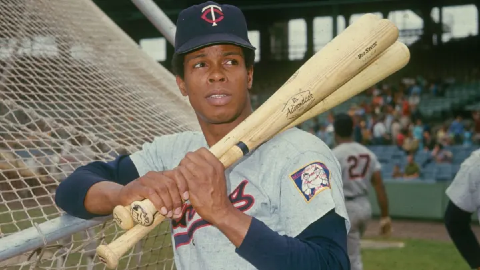
Rod Carew (2B, MIN)
The 21-year-old rookie second baseman provided a dynamic presence at the top of the lineup:
• .292/.341/.409 slash line (113 OPS+)
• 51 RBIs, 7 triples
• 5 stolen bases
• American League Rookie of the Year
• 2.8 WAR
Carew's performance was especially impressive considering he was simultaneously serving in the Marine Corps Reserves, often playing baseball on weekend passes.
"Rod was a natural from day one," teammate Zoilo Versalles (SS, MIN) said. "Even as a rookie, he had the best bat control I'd ever seen. You knew you were watching someone special."
Carew hit .308 in September, providing crucial offensive production from the second spot in the batting order. His defensive skills improved dramatically over the course of the season, and by September, he had become a reliable double-play partner for Versalles.
Cesar Tovar (OF/IF, MIN)
The Twins' super-utility player emerged as one of their most valuable contributors:
• .267/.325/.365 slash line
• 173 hits (3rd on team)
• 19 stolen bases (led team)
• Played seven different positions
• 2.4 WAR
Tovar's versatility allowed Ermer to optimize his lineup against both right-handed and left-handed pitching. He primarily played center field and third base but could fill in anywhere.
"Cesar was our secret weapon," Cal Ermer said. "He could hit anywhere in the lineup, play any position, and always seemed to make something happen on the bases."
In September, Tovar hit .304 with 15 runs scored and 11 stolen bases, providing crucial spark at the top of the lineup.
Turning Points: Five Moments That Shaped the Twins' Season
1. The Managerial Change (June 9)
When Sam Mele was fired after a 25-25 start and replaced by Cal Ermer, the Twins' season took its first significant turn. Ermer, who had managed the Twins' Triple-A affiliate in Denver, brought a more aggressive approach to the dugout.
"Cal pushed us to be more aggressive on the bases, to take extra bases and put pressure on the defense," Rod Carew recalled. "It changed our mentality from waiting for the home run to creating runs in multiple ways."
The Twins went 66-46 (.589) under Ermer, a 95-win pace over a full season.
2. The August Surge (August 8-23)
From August 8-23, Minnesota went 12-3 to vault from 1.5 games back into a tie for first place. This stretch included a critical four-game sweep of the California Angels and a three-game sweep of the Washington Senators.
During this run, the Twins outscored opponents 82-41, with their pitching staff posting a 2.21 ERA. Dean Chance went 4-0, and the offense averaged 5.5 runs per game.
"That was when we really started to believe," Killebrew said. "Everything was clicking -- pitching, hitting, defense. We felt unstoppable."
3. Kaat's Injury (September 16)
With the Twins in first place and Jim Kaat pitching brilliantly (seven shutout innings against Chicago), disaster struck. Kaat felt something pop in his elbow while delivering a pitch in the eighth inning.
The diagnosis was a partial tear in his elbow, and he was initially ruled out for the season. Without Kaat, the Twins' rotation suddenly looked vulnerable at the worst possible time.
"Losing Kaat was like losing our left arm," catcher Jerry Zimmerman said. "He was pitching as well as anyone in baseball, and suddenly we had to patch together the rotation during the most important games of the year."
Minnesota went 8-7 after Kaat's injury before he returned for the season finale.
4. The Final Weekend (September 30-October 1)
Game 1: Friday, September 30: The Twins roll the dice on the next the last game of the season starting the ailing left hand or Jim Kaat. He lasted just 2 1/3 innings and then they called on the bullpen. Jim Perry, Ron Klein, and Jim Merritt all struggled to keep the Red Sox back quiet. The BoSox veteran RHP Jose Santiago went seven innings allowing seven hits and only two runs. The Red Sox were led by Carl Yastrzemski, who went three for four with his 44th home run while driving in four runs. Harmon Killebrew tied Yaz with his 44th home run, but it was not enough to stop the Red Sox from winning this key game.
"I still wonder if I made the right decision with Kaat," Ermer admitted years later. "He wanted the ball, and he was our best big-game pitcher when healthy. But maybe asking him to come back from that injury on the season's final day was too much."
Game 2: Minnesota over the scoring with two runs in the first three innings and lead the game and going into the bottom of the 6th inning 2-0. Twin staff ace who was just coming off his 20th win was not able to hold the Red Sox down and the sixth inning and their five runs, put the Twins in a hole that they could not recover from.
Inside the Final Weekend: So Close Yet So Far
The two-game season-ending series at Fenway Park deserves closer examination, as it represents one of baseball's most dramatic final weekends.
Game 1: Saturday, September 30– Red Sox 6 Twins 4
Minnesota grabbed control early, scoring three runs in the first inning on a Tony Oliva RBI single and Harmon Killebrew's two-run homer off José Santiago.
Jim Merritt pitched effectively into the seventh inning before Al Worthington (RHP, MIN) secured the final eight outs for the save. The victory pulled Minnesota into a tie with Boston, with Detroit also knotted at the top following their win over California.
The Twins' clubhouse was jubilant afterward. "We've got them right where we want them," Killebrew told reporters. "Two games to go, and we control our own destiny."
Game 2: Saturday, September 30 – Red Sox 5, Twins 3
The pivotal middle game featured Dean Chance against Boston's Jim Lonborg. Both were pitching on short rest, but Lonborg proved more effective, pitching a complete game, allowing just one earned run and seven hits to the Twins.
Chance struggled from the outset, allowing three runs in three innings before being relieved. Boston took control with two runs in the fourth inning, and Carl Yastrzemski's 44th homer in the seventh provided insurance.
The loss was particularly painful because Minnesota had several chances to break the game open, leaving nine runners on base. Killebrew struck out with the bases loaded in the fifth inning, a rare failure in his otherwise brilliant September.
"That was the game that got away," Tony Oliva lamented years later. "We had Lonborg on the ropes several times but couldn't get the big hit. If we win that game, everything changes."
What Went Wrong: Four Factors That Cost the Twins
Despite their talent and strong performance, several factors ultimately prevented Minnesota from claiming the pennant:
1. Jim Kaat's Elbow Injury (September 30)
In the bottom of the third inning at Fenway Park, with the Twins leading 1-0, Kaat felt a sharp sensation in his elbow while throwing a pitch to Red Sox pitcher José Santiago. As Kaat later recalled, "it was like I was hit in the funny bone" and his elbow felt like it was "vibrating". He threw a few more pitches, but his command was gone, and he was forced to leave the game.
The injury was a turning point in the closely contested four-team pennant race. After Kaat left the game, the Red Sox came from behind to win 6-4. They won again the next day, securing the American League pennant and leaving the Twins in second place.
2. Defensive Inconsistency
While the Twins had several excellent defenders, including Cesar Tovar and shortstop Zoilo Versalles (a former Gold Glove winner), their overall defense was inconsistent. The team ranked 7th (131 errors) in fielding percentage in the American League.
"Our defense let us down at key moments," Cal Ermer acknowledged. "You can't give good teams extra outs, especially in September."
The defensive issues were particularly pronounced in the middle infield, where rookie Rod Carew was still developing his skills at second base, and Versalles was struggling with inconsistency.
3. Road Performance Down the Stretch
The Twins' road record in September was just 8-7, including crucial series losses in Chicago. By comparison, Boston went 8-3 on the road during the same period.
Minnesota's home/road split for the season was dramatic: 52-29 at Metropolitan Stadium but just 39-42 on the road. Their struggles away from home proved costly in the season's final month.
"We just couldn't get the big hit on the road," Tony Oliva recalled. "At home, our offense was so much more productive. On the road, we'd get runners on but couldn't bring them in."
4. The Yastrzemski Factor
Sometimes, the simplest explanation is the correct one: the Twins ran into a player having one of the greatest individual months in baseball history. Carl Yastrzemski's September performance (.417 average, 9 home runs, 26 RBIs) was virtually unstoppable.
In the final two-game series against Minnesota, Yastrzemski went 7-for-11 with a home run and six RBIs. The Twins simply had no answer for him.
"We tried everything against Yaz," Twins catcher Jerry Zimmerman said. "Inside fastballs, breaking balls away, changeups. Nothing worked. He was seeing the ball like it was a beach ball."
The Aftermath: What Happened Next
The 1967 near-miss had lasting implications for the Twins franchise:
The 1968 Season: Continued Contention
Minnesota remained competitive in 1968, finishing 79-83 but staying in contention until late August. The offense struggled in the "Year of the Pitcher," and injuries again plagued key players like Oliva and Killebrew.
The 1969 Redemption: Western Division Champions
Under new manager Billy Martin, the Twins rebounded to win the first-ever American League West Division title in 1969. Many key players from the 1967 team – Killebrew, Oliva, Carew, Tovar, and Perry – played crucial roles in the division championship.
"The disappointment of '67 drove us in '69," Killebrew recalled. "We knew how close we had come, and we were determined not to let another opportunity slip away."
Minnesota faced Baltimore in the first American League Championship Series but was swept in three games by the powerful Orioles.
The Core Remains: A Dynasty That Might Have Been
The Twins won additional division titles in 1970 under Bill Rigney and 1987 under Tom Kelly, but many feel the late 1960s team represented a potential dynasty that never fully materialized. The core of Killebrew, Oliva, Carew, and Kaat could have produced multiple pennants with better luck.
"That group of players should have won more than they did," former Twins executive Howard Fox reflected years later. "They had Hall of Fame talent at multiple positions. The 1967 season was their best chance, and coming that close without winning left a mark."
The Individual Legacies
Several key players from the 1967 Twins went on to Hall of Fame careers:
• Rod Carew: Inducted in 1991 after winning seven batting titles
• Harmon Killebrew: Inducted in 1984 after hitting 573 career home runs
• Jim Kaat: Inducted in 2022 by the Veterans Committee after winning 283 games
Tony Oliva, who many believe would have reached the Hall of Fame if not for knee injuries, was finally inducted by the Veterans Committee in 2022.
The Fan Perspective: A Painful Memory
For Twins fans who lived through the 1967 pennant race, the final weekend at Fenway Park remains a painful memory. The team had been in first place as late as September 27 but couldn't hold on.
"It still hurts after all these years," longtime Twins fan Roger Erickson of St. Paul told the Minneapolis Star Tribune on the 50th anniversary. "I remember listening to that final game on the radio and just feeling sick when Boston got those runs off Kaat. We were so close."
The pain was particularly acute because the Twins had controlled their own destiny. They didn't need help from other teams -- they just needed to win two of three in Boston.
"That's what made it so tough to take," Killebrew reflected decades later. "We had everything in our own hands. But sometimes in baseball, the other team just plays better when it matters most."
The Legacy: What Might Have Been
The 1967 Minnesota Twins represent one of baseball's great "what if" teams. What if Jim Kaat hadn't injured his elbow? What if they had won just one more game during their September road trips? What if Killebrew had connected with the bases loaded in the pivotal second game at Fenway?
"One play, one pitch, one hit -- that was all that separated us from a pennant," Cal Ermer maintained until his death in 2010. "That's what makes baseball such a beautiful, heartbreaking game."
For Minnesota, the 1967 season stands as both a testament to how good they were and a painful reminder of how close they came. They faced baseball's version of a perfect storm -- a four-team race where every game mattered, a historic performance by Yastrzemski, and crucial injuries at the worst possible time.
In the end, they fell just one game short – close enough to touch their dream, but just far enough away to spend decades wondering what might have been.