

When Kyle Schwarber [(OF, PHI)] connected for his fourth home run on August 28, 2025, sending a fastball deep into the Philadelphia night, he joined baseball's most exclusive power club. The feat is so rare that despite over 150 years of major league history, only 21 players have ever hit four home runs in a single game.
Think about that for a moment. More men have walked on the moon (12) than have hit four homers in a big league game. Thousands of players have stepped into a major league batter's box millions of times, yet only a select few have managed this perfect power storm.
"Four homers in one game is baseball's perfect game for hitters," says MLB Network analyst Dan Plesac. "No-hitters happen a few times every year. Perfect games (24 to date) might be a once every-few-years-event if we're lucky. But four-homer games? That's lightning in a bottle."
Let's explore this remarkable achievement, the players who've accomplished it, and what makes it so exceptionally rare.
A CLUB WITH EXCLUSIVE MEMBERSHIP
The four-homer club spans baseball history, from the dead-ball era to the modern power age:
- Bobby Lowe (2B, BOS) - May 30, 1894
- Ed Delahanty (OF, PHI) - July 13, 1896
- Lou Gehrig (1B, NYY) - June 3, 1932
- Chuck Klein (OF, PHI) - July 10, 1936
- Pat Seerey (OF, CWS) - July 18, 1948
- Gil Hodges (1B, BRO) - August 31, 1950
- Joe Adcock (1B, MLN) - July 31, 1954
- Rocky Colavito (OF, CLE) - June 10, 1959
- Willie Mays (OF, SFG) - April 30, 1961
- Mike Schmidt (3B, PHI) - April 17, 1976
- Bob Horner (3B, ATL) - July 6, 1986
- Mark Whiten (OF, STL) - September 7, 1993
- Mike Cameron (OF, SEA) - May 2, 2002
- Shawn Green (OF, LAD) - May 23, 2002
- Carlos Delgado (1B, TOR) - September 25, 2003
- Josh Hamilton (OF, TEX) - May 8, 2012
- Scooter Gennett (2B, CIN) - June 6, 2017
- J.D. Martinez (OF, ARI) - September 4, 2017
- Eugenio Suárez (3B, CIN) - April 26, 2025
- Nick Kurtz (1B, OAK) - July 25, 2025
- Kyle Schwarber (OF, PHI) - August 28, 2025
This list includes some of baseball's greatest sluggers (Gehrig, Mays, Schmidt) alongside unlikely heroes (Gennett, Seerey) who had their moment of baseball immortality.
The 19th Century Pioneers
Bobby Lowe (May 30, 1894)
Bobby Lowe (2B, BOS), a versatile infielder for the Boston Beaneaters, became the first player in major league history to hit four home runs in a single game. On May 30, 1894, during the second game of a holiday doubleheader against the Cincinnati Reds, Lowe accomplished the unprecedented feat at Boston's Congress Street Grounds. Standing at approximately 5-foot-10 and weighing about 150 pounds, Lowe was not an imposing physical presence but possessed surprising power for his era. His historic performance came during the high-offense period of the 1890s, when the pitching distance had been increased from 50 feet to 60 feet, 6 inches just one year prior, and pitchers were still adjusting to the change. Lowe's four home runs contributed to Boston's 20-11 victory. What makes his achievement even more remarkable is that he hit all four homers consecutively. The Boston Daily Globe reported that fans were so impressed they spontaneously collected money and presented Lowe with $160 (equivalent to over $5,000 today) after the game. During his 18-year career, Lowe accumulated home runs total, meaning his four-homer day represented nearly 6% of his career total.
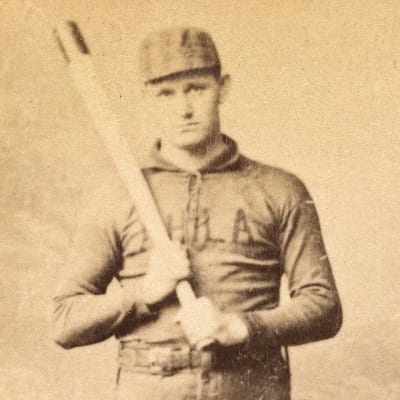
Ed Delahanty (July 13, 1896)
Just two years after Lowe, Ed "Big Ed" Delahanty (OF, PHI) of the Philadelphia Phillies became the second player to hit four home runs in a game, achieving the milestone on July 13, 1896, against the Chicago Colts. Standing 6-foot-1 and weighing approximately 170 pounds] Delahanty was one of the premier power hitters of the 19th century. What makes his four-homer game particularly unusual is that two of his four home runs were inside-the-park. This peculiarity reflects the expansive dimensions of 19th-century ballparks and the less sophisticated fielding techniques of the era. Despite Delahanty's heroics, which included five hits and seven RBIs, the Phillies lost the game 9-8. Delahanty finished his career with 101 home runs and a .346 batting average, establishing himself as one of baseball's first great sluggers. His life ended tragically in 1903 when, at age 35, he fell to his death from a railway bridge near Niagara Falls under mysterious circumstances.
These dead-ball era feats stand apart because home runs were so rare in this period. The entire 1908 American League hit only home runs -- for the entire season across all teams.
THE IMMORTALS: LEGENDS JOIN THE CLUB
Nearly four decades passed before another player hit four homers in a game. On June 3, 1932, Lou Gehrig (1B, NYY) became the first player in the modern era to achieve the feat. Gehrig's performance was nothing short of spectacular. He hit four consecutive home runs and narrowly missed a fifth on a 400-foot flyout. His season numbers show why he was capable of such a display: Gehrig finished 1932 with a .349/.451/.621 slash line, 34 home runs, and a 181 OPS+ . The Yankees first baseman was at the peak of his powers, producing 8.2 WAR that season while playing in the shadow of Babe Ruth. What makes Gehrig's feat even more impressive is that he did it in Philadelphia's Shibe Park, a stadium that wasn't particularly friendly to left-handed power hitters.
Four years later, Chuck Klein (OF, PHI) joined the club, hitting four homers at Pittsburgh's Forbes Field on July 10, 1936. Klein was a pure hitter, finishing his career with a .320 batting average and leading the NL in home runs four times.
These performances by Hall of Famers established the four-homer game as baseball's premier single-game power achievement.
THE TOTAL BASE KINGS: ADDING EXTRA HITS
While hitting four homers is impressive enough, some players went even further, adding additional hits to set records for total bases in a game.
Joe Adcock (1B, MLN) hit four homers and a double against the Brooklyn Dodgers on July 31, 1954, setting a then-record with 18 total bases. Adcock, a powerful right-handed hitter who averaged 24 home runs per season from 1953-1961, did his damage against four different Dodgers pitchers. His record stood for nearly 50 years until Shawn Green (OF, LAD) had perhaps the greatest offensive game in baseball history on May 23, 2002. Green hit four home runs, a double, and a single against the Milwaukee Brewers, setting the current major league record with 19 total bases.
Green's day by the numbers:
- 6-for-6 at the plate
- 4 home runs
- 1 double
- 1 single
- 7 RBI
- 6 runs scored
- 19 total bases
Green was in the midst of his best season, finishing 2002 with 42 home runs, a .944 OPS, and 5.3 WAR. His ISO (Isolated Power) of .289 (.200 is considered a legitimate power hitter) that season ranked fourth in the National League.
The most recent addition to the "19 total bases club" came when rookie Nick Kurtz (1B, OAK) matched Green's record on July 25, 2025. The Oakland first baseman hit four homers and added a triple against the Texas Rangers. Kurtz, in just his second month in the majors, became the youngest player ever to hit four home runs in a game at 22 years, 142 days old.
THE UNEXPECTED HEROES: LIGHTNING IN A BOTTLE
Perhaps the most fascinating aspect of the four-homer club is that it includes several players who weren't known as elite power hitters.
No player exemplifies this better than Scooter Gennett (2B, CIN). Before his four-homer game on June 6, 2017, Gennett had never hit more than 14 home runs in a season. He entered that game against the Cardinals with just three homers on the season. By day's end, he had more than doubled his season total. Gennett finished the game 5-for-5 with four homers and 10 RBIs. His career numbers make the feat even more surprising: a lifetime .279hitter with a .324 OBP and .776 OPS who averaged home runs per 162 games.
Pat Seerey (OF, CWS) offers another example. Known more for his strikeouts than his power, Seerey hit four homers against the Philadelphia Athletics on July 18, 1948, in an 11-inning game. Seerey was a .224 career hitter who struck out in nearly [23%] of his plate appearances -- an astronomical rate for his era.
Perhaps most surprising was Mark Whiten (OF, STL), who not only hit four home runs against the Cincinnati Reds on September 7, 1993, but also tied the major league record with 12 RBIs in the game. Whiten was a career .259 hitter with a .341 OBP and .795 OPS, solid numbers but hardly suggesting a four-homer outburst.
"That's what makes baseball so great," says former major leaguer Mark DeRosa. "On any given day, a journeyman can have the game of his life and do something the all-time greats never did."
THE STATISTICAL OUTLIERS
Looking at the members of the four-homer club through a statistical lens reveals some fascinating insights:
- Home Run Frequency: The average member of the four-homer club hit a home run every 22.1 at-bats in their career. However, this average is skewed by the power hitters. Scooter Gennett hit a homer every 31.2 at-bats, while Lou Gehrig homered every 16.2 at-bats.
- Career WAR: The club includes several players with career WAR totals over 100 (Mays at 156.1, Gehrig at 114.1) and others with career WAR under 10 (Gennett at 8.5, Seerey at -0.1).
- wRC+: This advanced metric shows the dramatic difference in overall offensive ability among the members. Gehrig (173), Mays (154), and Schmidt (147) were among the greatest hitters ever, while Seerey (89) and Lowe (97) were below-average offensive players for their careers.
- Context: The eras matter too. Hitting four homers in 1894 (Lowe) or 1896 (Delahanty) happened when the entire league might hit only a few hundred homers in a season. Doing it in the power-friendly 2000s, and now in 2025, presents a different context.
- Career Years: Several members had their career years when they hit four homers: Green posted 5.3 WAR in 2002, Gennett produced 2.3 WAR in 2017, and Whiten never matched his 2.9 WAR from 1993.
THE MODERN ERA: A HISTORIC PATTERN
For decades, the four-homer game was baseball's rarest feat. From 1894 to 2001, only 12 players achieved it -- averaging one every years. However, since 2002, nine players have joined the club -- one every 2.6 years on average.
This acceleration hit its peak in 2025, which became the first season in Major League history with three four-homer games:
- Eugenio Suárez (3B, CIN) - April 26, 2025
- Nick Kurtz (1B, OAK) - July 25, 2025
- Kyle Schwarber (OF, PHI) - August 28, 2025
What explains this increase? Several factors come into play:
- Launch angle revolution: Modern hitting approaches emphasize getting the ball in the air, increasing the likelihood of home runs.
- Pitcher usage: Pitchers throw fewer innings, meaning hitters face more relievers. This can create favorable matchups late in games.
- Ballpark dimensions: Several modern parks are more homer-friendly than their predecessors.
- Equipment advances: Modern bats are engineered for maximum exit velocity while staying within regulation.
Baseball analyst Tom Verducci notes: "The four-homer game remains extremely rare, but the conditions for it are more favorable now than at any point in baseball history."
THE SITUATIONAL FACTORS: STARS ALIGNING
What specific circumstances have to align for a four-homer game? Several patterns emerge:
- Multiple at-bats: Obviously, a player needs at least four plate appearances, and ideally five or six to increase the odds.
- The right ballpark: Of the 21 four-homer games, 14 occurred in hitter-friendly parks. Both Kurtz and Suárez hit their four homers in Cincinnati's Great American Ball Park, known for surrendering home runs.
- Weather conditions: Warm temperatures and favorable wind patterns help. Schmidt's four-homer game at Wrigley Field featured winds blowing out to left field at mph.
- Facing the right pitchers: Most four-homer games featured at least one homer off a relief pitcher. Schwarber hit his four homers against three different pitchers.
- Team context: Having baserunners ahead creates more at-bats. Teams that bat around multiple times give their players more opportunities.
The ultimate example of perfect conditions came when Shawn Green hit his four homers in Milwaukee. The temperature was degrees, the Dodgers scored 16 runs (creating extra at-bats), and Miller Park's dimensions were favorable to left-handed power.
THE NEAR-MISSES: SO CLOSE TO HISTORY
For every player who has hit four homers in a game, dozens have come agonizingly close. Since, more than 500 players have hit three homers in a game, but only 19 pushed it to four.
Some notable near-misses:
- Albert Pujols: Hit three homers in a game times but never got to four despite 703 career home runs.
- Babe Ruth: Baseball's first great slugger hit three homers in a game times but never reached four.
- Johnny Mize: Hit three homers in a game a record 6 times but couldn't add one more in any of those games.
Sammy Sosa: Came closest in an August 2001 game when he hit three homers against Colorado, then flied out to the warning track in his