
Putting Schwarber's RBI Pace of 140 RBIs in Historical Context

So where would Kyle Schwarber's projected 140 RBIs place him historically? While impressive by modern standards, it wouldn't crack the top 20 all-time. In fact, 140 RBIs would place him outside the top 40 RBI seasons between 1880-1999, our area of focus at Diamond Echos. This isn't a knock on Schwarber; rather, it's a testament to just how extraordinary these historical RBI seasons were. For the most part, modern baseball, with its focus on home runs, walks, and strikeouts, simply doesn't produce the gaudy RBI totals of earlier eras.
What makes Schwarber's total impressive in modern context is that it comes in an era when 100 RBIs is considered an excellent season. The last player to reach 140 RBIs was Aaron Judge (OF, NYY) in 2024, when he recorded 144. Before that, Alex Rodriguez posted a remarkable 156 RBIs in 2007, and we can’t ignore Sammy Sosa’s (OF, CHC) 160 in 2001.
As of earlier this week, Philadelphia Phillies left-handed hitter Kyle Schwarber, who leads the majors in RBIs, was on pace to record 140 for the season. This article is to compare this projected season to where it would have finished among the top RBI seasons in baseball between the 1880s and 1999.
When we talk about baseball's greatest RBI men, we're talking about the sport's most feared sluggers—guys who made pitchers wake up in cold sweats the night before games. While today's analytics might discount the RBI as a situational skill, these historic seasons stand as monuments to run production that modern players can only dream about matching.
The Untouchable Record: Hack Wilson's 191 RBIs (1930)
No discussion of RBI seasons can begin anywhere but with Hack Wilson's 1930 campaign. The stocky Cubs outfielder (all 5-foot-6 of him) drove in an astonishing 191 runs, a record that has stood for over 90 years and shows no signs of being broken.
Wilson's season was a perfect storm—he hit .356 with 56 home runs while playing in the most offense-friendly season of the modern era. His .723 slugging percentage and 1.177 OPS look like video game numbers. While Wilson wasn't a one-season wonder (he had 159 RBIs in 1929), he never again approached these heights.
From a sabermetric perspective, Wilson's 177 OPS+ shows just how dominant he was, even in a high-offense era. His total of 423 total bases that season ranks among the all-time greats, and he did all this while walking 105 times.
What's often forgotten about Wilson's legendary season is that he had plenty of opportunities—the 1930 Cubs had three players with on-base percentages over .400 hitting ahead of him. Still, nobody has driven in runs at this rate before or since, regardless of opportunity.
Editor's note: Hack Wilson's 191 RBI record was initially recorded as 190, but MLB officially changed it to 191 in 1999 after baseball historian Jerome Holtzman discovered a discrepancy in the official records.
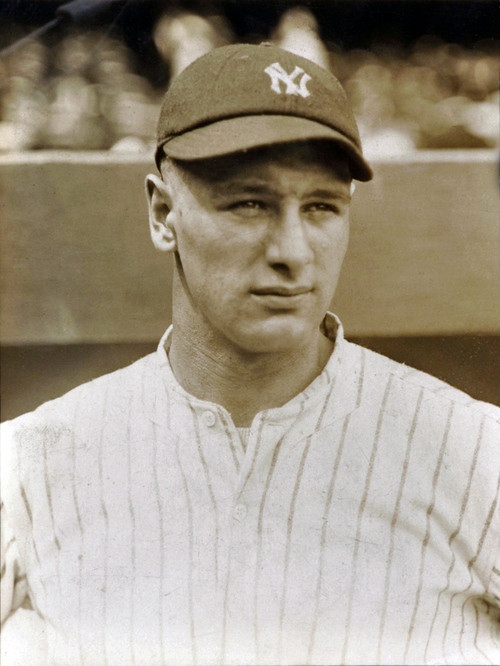
Lou Gehrig: The RBI Machine (1931, 185 RBIs)
If anyone was built for driving in runs, it was Lou Gehrig. The Iron Horse appears six times in the top 40 RBI seasons, with his 1931 campaign (185 RBIs) sitting at #2 all-time.
Hitting behind Babe Ruth certainly helped Gehrig's cause, but his own skills were beyond question. In 1931, Gehrig hit .341/.446/.662 with 46 homers. His 194 OPS+ that season was actually higher than Wilson's in his record-setting year.
What makes Gehrig's RBI prowess even more impressive is his consistency. From 1927 to 1937, he drove in 150+ runs seven times. While modern analysis might attribute this partly to opportunity, Gehrig's .341 batting average with runners in scoring position throughout his career shows he genuinely elevated his game when it mattered most.
Hank Greenberg's Monster 1937 (184 RBIs)
Hank Greenberg nearly toppled Wilson's record in 1937 when he drove in 184 runs for the Tigers. The tall first baseman (later an outfielder) combined raw power with an exceptional batting eye to become one of baseball's greatest run producers.
Greenberg's 1937 numbers included 40 homers, 49 doubles, and 14 triples. His 172 OPS+ and 7.7 WAR show a player at the absolute peak of his powers. Unlike some RBI leaders who had high strikeout totals, Greenberg maintained a reasonable 101 strikeouts while walking 102 times.
What's particularly notable about Greenberg's big season is that he did it in a significantly less offense-happy environment than Wilson's 1930 campaign. League-wide, runs per game had dropped from 5.55 in 1930 to 4.87 in 1937.
Jimmie Foxx: Three-Time 150+ RBI Man (1938, 175 RBIs)
"Double X" was perhaps the most feared right-handed hitter of his generation. His 1938 season stands as his RBI high-water mark with 175 for the Boston Red Sox. Foxx's raw power was legendary—he hit 50 homers that year while batting .349 with a staggering 1.166 OPS.
From a sabermetric perspective, Foxx's 183 OPS+ that season shows just how far above his peers he performed. His .462 OBP resulted from combining power with patience (119 walks), and his .704 slugging percentage reflected his ability to hit for both average and power.
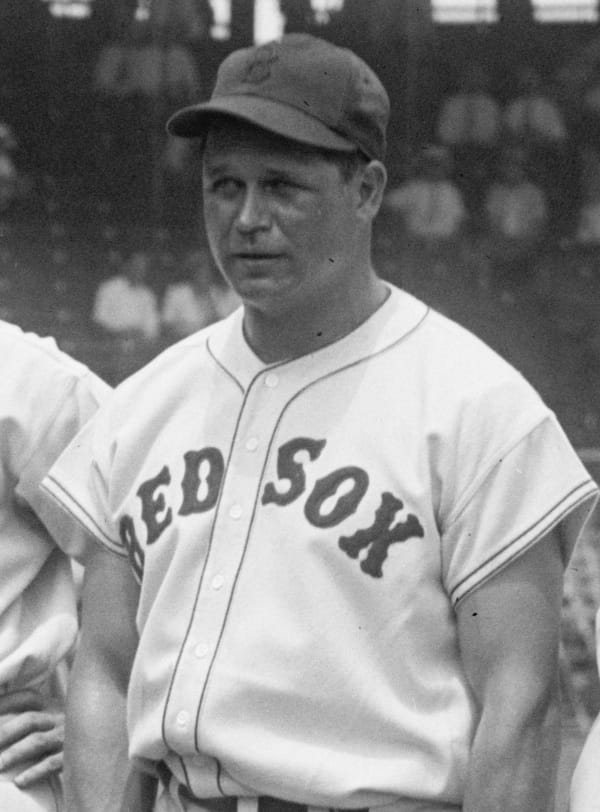
Like Gehrig, Foxx was a consistent RBI machine. He drove in 169 runs in 1932 and 163 in 1933, giving him three seasons with 163+ RBIs. Only Gehrig and Ruth can claim similar consistency at that level.
Chuck Klein's Overlooked Gem (1930, 170 RBIs)
Often overshadowed by Wilson's record-setting season the same year, Chuck Klein's 170 RBIs in 1930 would top the list in almost any other era. Playing in the bandbox Baker Bowl in Philadelphia, Klein took full advantage of the short right-field porch (just 280 feet down the line).
Klein's 1930 slash line was otherworldly: .386/.436/.687 with 40 homers and 59 doubles. While his ballpark certainly helped (his home/road splits were dramatic), Klein was a legitimate star with a 159 OPS+ that season.
What's particularly impressive about Klein's big year is his contact rate—just 50 strikeouts in 648 at-bats. In today's swing-and-miss era, a power hitter with that kind of contact ability seems almost unimaginable.
The Babe's Best: Ruth's 168 RBIs (1921)
Somewhat surprisingly, Babe Ruth's career-high in RBIs came in 1921, not during the legendary 1927 season with the "Murderers' Row" Yankees. In 1921, Ruth drove in 168 runs while hitting .378 with 59 homers.
From a sabermetric standpoint, Ruth's 1921 campaign might be the most impressive on this list despite not having the highest raw RBI total. His 239 OPS+ that year is the highest of anyone on our list, showing just how far ahead of his contemporaries he was. His .512 OBP and .846 slugging percentage that season are almost unfathomable.
Ruth appears five times in the top 40 RBI seasons, showing remarkable consistency even while frequently batting third rather than fourth in the lineup. While most RBI men were cleanup hitters, Ruth often drove in runs from the third spot, making his totals even more impressive.
Joltin' Joe: DiMaggio's 167 RBIs (1937)
Joe DiMaggio burst onto the scene as a 22-year-old in 1937 and immediately became one of baseball's elite run producers. His 167 RBIs that season came with 46 homers and a .346 batting average.
What's most remarkable about DiMaggio's big year is his plate discipline. He struck out just 37 times in 621 at-bats—less than 6% of his plate appearances. His 166 OPS+ shows he was far above league average, even in a strong Yankees lineup.
DiMaggio would later drive in 155 runs in 1948, a season often overlooked due to coming after his military service interrupted his career. His combination of power and contact ability made him the perfect RBI man.
Sam Thompson: 19th Century RBI King (1887, 166 RBIs)
Any discussion of historic RBI seasons must include Sam Thompson, whose 166 RBIs in 1887 stands as one of the 19th century's greatest achievements. Thompson later had another massive season with 165 RBIs in 1895.
Thompson's gaudy numbers came in a different baseball era—one with different rules and vastly different playing conditions. Still, his ability to drive in runs at this rate in a dead-ball environment speaks to his exceptional skill as a hitter.
His .372 batting average and .565 slugging percentage in 1887 were elite numbers for the era. Thompson's 166 OPS+ shows he was well above his peers, even in the context of his time.
Manny Being Manny: Ramirez's 165 RBIs (1999)
Jumping forward to the more modern era, Manny Ramirez's 1999 season with Cleveland stands as one of the greatest RBI campaigns in recent memory. His 165 RBIs came with 44 homers and a .333 batting average.
Ramirez benefited from a loaded Indians lineup that scored 1,009 runs that season, but his personal numbers were stellar regardless of context. His 174 OPS+ and .442 OBP show a hitter at the absolute peak of his powers.
Unlike many of the other players on this list, Ramirez had a high strikeout total (131) to go with his 96 walks. His .663 slugging percentage reflected his status as perhaps the most feared right-handed hitter of his generation.
Al Simmons' Twin Peaks (1930, 165 RBIs and 1929, 157 RBIs)
Playing alongside Jimmie Foxx on the Philadelphia Athletics, Al Simmons established himself as one of baseball's premier run producers. His 1930 season saw him drive in 165 runs while hitting .381 with 36 homers.
What's particularly impressive about Simmons' big year is that he did it in just 138 games—far fewer than most others on this list. His 175 OPS+ that season shows just how dominant he was, even in a high-offense environment.
Simmons also drove in 157 runs in 1929, giving him back-to-back monster seasons. His low strikeout totals (34 in 1930) and high batting averages made him exceptionally efficient at bringing runners home.
Hal Trosky's Forgotten Gem (1936, 162 RBIs)
One of the more overlooked seasons on our list belongs to Hal Trosky, who drove in 162 runs for Cleveland in 1936. Just 23 years old, Trosky hit .343 with 42 homers and 45 doubles.
Trosky's career was relatively short due to debilitating migraines, making his big 1936 campaign something of an anomaly. His 146 OPS+ that season, while impressive, is lower than most others on this list, suggesting he benefited from a high-offense environment.
Still, 162 RBIs is 162 RBIs, and Trosky's combination of youth and production suggests he might have been one of baseball's all-time greats had health issues not derailed his career.
Ted Williams' RBI Masterpiece (1949, 159 RBIs)
The Splendid Splinter appears just once on our list, with 159 RBIs in 1949. While Williams wasn't primarily known as an RBI man (his on-base skills and batting average usually get top billing), his 1949 season shows he could drive in runs with the best of them.
Williams hit .343 with 43 homers that year, but what really stands out is his ridiculous .490 OBP, thanks to 162 walks against just 48 strikeouts. His 191 OPS+ that season is among the highest on this list.
What makes Williams' RBI total so impressive is that he did it while frequently being pitched around. Pitchers simply didn't want to challenge him, yet he still managed to drive in 159 runs. His .368 batting average with runners in scoring position that year shows how clutch he was when given the chance.
Vern Stephens: Shortstop Slugger (1949, 159 RBIs)
The same year Williams drove in 159 runs, his Red Sox teammate Vern Stephens matched him. What makes Stephens' total remarkable is that he did it as a shortstop—a position not typically known for huge RBI totals.
Stephens hit .290 with 39 homers in 1949, and while his 137 OPS+ is the lowest among the top RBI seasons, his positional value makes his achievement stand out. No shortstop has approached this RBI total since.
Batting behind Williams certainly helped Stephens' cause, but his own power was legitimate. He drove in 144 runs the following season, proving 1949 wasn't just a fluke.
Sammy Sosa's 66-HR, 158-RBI Campaign (1998)
The 1998 home run chase between Mark McGwire and Sammy Sosa captivated baseball fans, but Sosa's 158 RBIs that season often gets overlooked. While McGwire focused on the long ball (70 HR, 147 RBI), Sosa combined power with run production.
Sosa's numbers that year included 66 homers and a .308 batting average. His 160 OPS+ shows he was well above league average, though not quite at the historic levels of some others on this list.
What's particularly impressive about Sosa's season is that he did it for a Cubs team that made the playoffs, adding meaningful context to his RBI total. His .378 average with runners in scoring position that year shows he elevated his game when it mattered most.
Juan Gonzalez: Two-Time RBI Champion (1998, 157 RBIs)
The same year Sosa drove in 158, Juan Gonzalez was right behind him with 157 RBIs for the Rangers. "Igor" was perhaps the most underrated slugger of the 1990s, combining raw power with a knack for driving in runs.
Gonzalez hit .318 with 45 homers and 50 doubles in 1998. His 149 OPS+ shows he was well above average, though like Sosa, not quite at the historic levels of the pre-war sluggers on this list.
What makes Gonzalez's total impressive is his efficiency—he drew just 46 walks while driving in those 157 runs. He'd previously driven in 144 runs in just 134 games during his 1996 MVP season, showing his RBI prowess wasn't a one-year fluke.
Ken Williams' Surprising Season (1922, 155 RBIs)
One of the more surprising names on our list is Ken Williams, who drove in 155 runs for the St. Louis Browns in 1922. Williams combined power (39 homers) with speed (37 steals) in a way few others on this list could match.
Williams hit .332 with a 1.040 OPS that season, producing a 164 OPS+ that shows he was legitimately elite, not just a product of his environment. The fact that he did this for the typically mediocre Browns, rather than a powerhouse team, makes his achievement even more impressive.
Despite this monster season, Williams is largely forgotten today—a player whose peak was outstanding but too brief to earn him lasting recognition.
Joe Medwick: NL Triple Crown (1937, 154 RBIs)
"Ducky" Medwick remains the last National League player to win the Triple Crown, leading the league in batting average (.374), home runs (31), and RBIs (154) in 1937. His RBI total stands as one of the highest in NL history.
Medwick's 182 OPS+ that season shows just how dominant he was relative to his peers. He collected an astounding 237 hits, including 56 doubles and 10 triples, showcasing his all-around hitting ability.
What's impressive about Medwick's big year is that he did it with relatively modest home run power by modern standards. His 31 homers are the lowest total among the top RBI seasons of the live-ball era, showing he drove in runs through consistent hitting rather than just the long ball.
Tommy Davis' Dodger Blue Special (1962, 153 RBIs)
Tommy Davis had a season for the ages in 1962, driving in 153 runs while winning the batting title with a .346 average. What makes Davis' season stand out is that he wasn't primarily a slugger—he hit "just" 27 homers that year.
Davis collected 230 hits in 1962, showing he was more of a high-average, gap-to-gap hitter than a traditional slugger. His 148 OPS+ that season is solid, though not spectacular by the standards of this list.
The context of Davis' big year is worth noting—he did this for a Dodgers team that played in cavernous Dodger Stadium during its first season. Unlike many others on this list who played in hitter-friendly parks, Davis drove in his runs in a pitcher's paradise.
Albert Belle's Angry 152 (1998, 152 RBIs)
Few players swung the bat with more bad intentions than Albert Belle, who drove in 152 runs for the White Sox in 1998. Belle hit .328 with 49 homers and a league-leading 48 doubles that season.
Belle's 172 OPS+ shows he was truly elite, and he did all this while playing half his games in the pitcher-friendly Comiskey Park. His .655 slugging percentage that year ranks among the highest on this list.
What's most impressive about Belle's big season is that, unlike many others here, he did it without exceptional protection in the lineup or a particularly high-scoring team context. His RBIs were more about his own skill than opportunity.
Rogers Hornsby's Triple Crown (1922, 152 RBIs)
The great Rogers Hornsby won the Triple Crown in 1922, leading the NL with a .401 average, 42 homers, and 152 RBIs. His 1.181 OPS that season translated to a 207 OPS+, one of the highest on our list.
Hornsby's combination of average and power was unmatched in National League history. He struck out just 50 times in 623 at-bats while drawing 65 walks, showing exceptional plate discipline to go with his power.
The context of Hornsby's big year is important—he did this in the early 1920s when the National League was still transitioning out of the Dead Ball Era. His 42 homers were monumental in an era when 20 home runs often led the league.
Hardy Richardson: 19th Century Surprise (1890, 152 RBIs)
Our list wraps up with another 19th-century surprise: Hardy Richardson's 152 RBIs for the Boston Reds of the Players League in 1890. Richardson hit .328 with 16 homers and 28 doubles that season.
The context of Richardson's achievement is unique—the Players League was a one-year venture formed by players revolting against owner control. Statistics from this league are recognized in the official record, though they come with some asterisks due to the unusual circumstances.
Richardson's 134 OPS+ that season, while impressive, is the lowest on our list, suggesting his raw numbers benefited from the high-offense environment of 1890. Still, driving in 152 runs in any context is a remarkable achievement.
Why We Don't See These RBI Totals As Often
The historical RBI seasons we've examined represent a different era of baseball. Several factors contributed to these massive totals:
- Higher batting averages across the league meant more runners on base.
- Contact-oriented approaches resulted in fewer strikeouts.
- Batting orders were constructed to maximize RBI opportunities for middle-of-the-order hitters.
- Many of these seasons came in extremely offense-friendly environments (especially 1930).
- Star players rarely received intentional walks with men on base.
Modern baseball's emphasis on home runs and on-base percentage, combined with specialized bullpens and defensive shifts, has made 140+ RBI seasons increasingly rare. The game has changed, and with it, our expectations for what constitutes an exceptional RBI season.
While sabermetrics has rightfully pointed out that RBIs are highly dependent on opportunity, these historic seasons represent a perfect marriage of opportunity and skill—great hitters who maximized their chances to drive in runs.
Whether we'll ever see another 150+ RBI season remains an open question. But as Kyle Schwarber pursues 140 RBIs in 2025, he's chasing ghosts from baseball's past—the RBI titans whose run-producing prowess set standards that have stood the test of time.