
The Detroit Drive: How the 1967 Tigers' Late Surge Fell 1 game short

As the sun set over Tiger Stadium on October 1, 1967, the Detroit Tigers sat silently in their clubhouse, processing how their remarkable season had ended one game short of glory. After leading the American League as late as September 16 and mounting a furious finish, they had run out of calendar, finishing 91-71, tied with Minnesota for second place, one agonizing game behind Boston. The 1967 AL standings show Boston at 92-70, with Detroit and Minnesota tied for second at 91-71, one game behind.
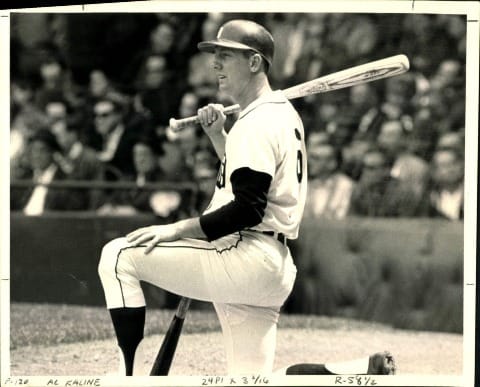
"One more win," right fielder Al Kaline (OF, DET) said softly in the hushed locker room. "Just one more win somewhere along the line, and we'd be celebrating right now."
For Detroit, the 1967 season represented both a stunning revival and a painful near-miss. Let's examine the Tigers' perspective on baseball's greatest pennant race -- how they surged into contention, the key players who led the charge, and what ultimately kept them from completing their own "Impossible Dream."
The Setting: Detroit's Baseball Renaissance
The Tigers entered 1967 as a franchise in transition. Once a perennial contender (including a World Series championship in 1945), Detroit had spent much of the 1950s and early 1960s in the American League's middle tier. A third-place finish in 1966 (88-74) had provided hope, but few predicted championship contention in 1967.
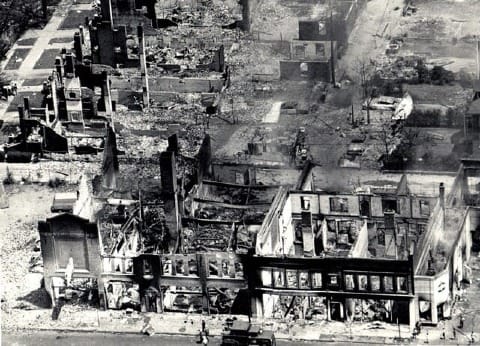
Detroit was also a city seeking positive narratives. The devastating riots of July 1967 had left 43 dead, thousands injured, and millions in property damage. The city's social fabric was strained, and racial tensions remained high throughout the summer.
Against this backdrop, the Tigers emerged as a unifying force. Their diverse roster – featuring Black stars like Willie Horton (OF, DET) and Gates Brown (OF, DET) alongside white standouts like Al Kaline and Denny McLain (RHP, DET) represented a model of cooperation that transcended the city's divisions.
"The team gave the city something to rally around during a difficult time," Tigers broadcaster Ernie Harwell recalled. "For a few hours each day, Detroiters could set aside their differences and just be fans together."
The Season Arc: From Contenders to Leaders to Heartbreak
The Tigers' 1967 campaign unfolded in distinct phases:
- Early Promise (April-May): Detroit started strongly, going 24-14 through their first 38 games to establish themselves as contenders. Denny McLain's dominant pitching and Norm Cash's power hitting led the early surge.
- Summer Slump and the Kaline Injury (June-July): The Tigers maintained contact with the leaders, going 28-30 over the next two months despite an injury to Al Kaline, who broke his hand on June 27 when he slammed his bat into a bat rack in frustration after a strikeout.
- August Surge (August 1-31): Detroit went 21-14 with a +30 run differential during the month. On August 27, the Tigers were just 1.5 games behind the Minnesota Twins.
- The Surge to First (September 1-16): The Tigers continued to drive toward the American League pennant. They opened the month going 11 and seven. 11-7 claiming sole possession of first place on September 16 with a win over the Washington Senators 5-4.
- The Stretch Run (September 17-October 1): They went 6-7 in their final 13 games. The team Lost two of the last three games to the California angels, including the devastating 8-5 loss on the last game of the year that allowed the Red Sox to win American League pennant. “We picked the worst possible time to play our worst game," manager Mayo Smith said of the September 30-October defeats. "And it cost us everything we'd worked for."
The Key Players: Detroit's Pennant Push Heroes
Several Tigers delivered exceptional performances during the 1967 season, particularly in the crucial final month:
Al Kaline (RF, DET)
Despite missing 31 games with a broken hand, Kaline remained the Tigers' heart and soul:
- .308/.411/.541 slash line (176 OPS+)
- 25 home runs, 78 RBIs in just 131 games
- Gold Glove defense in right field
- 7.5 WAR
His return from injury in late July stabilized the lineup, hitting seven home runs and driving in 17 runners in August and his September/Oct. performance was spectacular: .343 batting average, but his lack of power, no doubt due to the hand injury in September he managed only three at the right home runs, 9 RBIs, and a .963 OPS in the season's final months.
Bill Freehan (C, DET)
The All-Star catcher emerged as one of baseball's best all-around players:
- .282/.389/.447 slash line (144 OPS+)
- 20 home runs, 74 RBIs
- Tied for the lead among AL catchers with a .993 fielding percentage
- 6.1 WAR
Freehan's durability was remarkable -- he caught 13 of the final 14 games as the pennant race reached its climax. In September, Freehan hit .313 with 2 home runs 16 RBI and maintained almost a .400 on-base percentage, providing crucial production from the cleanup spot.
Denny McLain (RHP, DET)
Before his historic 31-win season in 1968, McLain established himself as Detroit's ace in 1967:
- 17-16 record, 3.79 ERA
- 161 strikeouts in 253.0 innings
- 3 shutouts
- 3.9 WAR
McLain pitched well in August 2.75 ERA, 0.955 WHIP, 52. Innings before running out of gas in September.
Dick McAuliffe (2B, DET)
The fiery second baseman emerged as Detroit's spark plug:
- .239/.364/.411 slash line (126 OPS+)
- 22 home runs, 9 runs scored
- Led team with 7 triples
- 5.1 WAR
Mickey Lolich (LHP, DET)
The left-handed counterpart to McLain provided consistency and durability:
- 14-13 record, 3.04 ERA (107 ERA+)
- 174 strikeouts in 204. innings
- 11 complete games, league leading 6 shutouts
- 2.7 WAR
Earl Wilson (RHP, DET)
The hard-throwing right-hander provided a potent third option in the rotation:
- 22-11 record, 3.27 ERA (100 ERA+)
- 184 strikeouts in 264.0 innings
- 0 Shutouts
- 2.2 WAR
Wilson led the team in wins and provided exceptional value with his bat as well, hitting .185 with 4 home runs -- exceptional production for a pitcher.
Willie Horton (LF, DET)
The Detroit native provided power and emotional leadership:
- .274/.338/.481 slash line (137 OPS+)
- 19 home runs, 67 RBIs
- 20 Doubles
- 3.5 WAR
During the riots, Horton had famously left Tiger Stadium still in uniform to go to his childhood neighborhood, 12th Street, where he stood on a car and pleaded with people to stop the violence.
Inside the Final Week: The Desperate Push
The end of the 1967 season was a frantic, compressed sprint. Rainouts earlier in the year forced the Tigers into a grueling schedule that culminated in two doubleheaders on the final two days of the season. The entire pennant race came down to this final, brutal weekend.
September 24-25
Before their key series with the Angels at the end of the season, the Tigers lost two disappointing games to the Washington Nationals 5-4 and 2-0. If they won either game they would have pushed to within a half a game of Minnesota. That missed opportunity would come back and haunt them the next week.
September 26: Lolich Shines
Left hand or Mickey Lolich spun a forehead shut out to beat the Yankees one nothing and set the table for the key double, double-header against the California Angels.
Saturday, September 30: The Day the Dream Died
The season effectively came down to this single day: a doubleheader against the Angels at Tiger Stadium.
- Game 1: Tigers 5, Angels 0. In the afternoon opener, Joe Sparma was magnificent, pitching a complete-game shutout. The Tigers did their part, and for the few hours between games, the city of Detroit was electric with hope. They controlled their own destiny. One more win in the nightcap would put them in the driver's seat for the pennant.
- Game 2: Angels 8, Tigers 6. The was running out. The Tigers built a lead, but the bullpen, stretched thin from the long season, couldn't hold it. Fred Gladding surrendered the lead in a disastrous eighth inning. As the final out was recorded on a crushing loss, the out-of-town scoreboard delivered the bad news: Boston had defeated Minnesota. With two games to go, the Tigers needed to win the doubleheader on the last day of the season plus get some help. That help in the form of a Red Sox loss did not happen.
Sunday, October 1: Mathematically alive
With the pennant on the edge of slipping away, the Tigers still had to play doubleheader. The atmosphere in the stadium before game, one was intense.
- Game 1: Tigers 6, Angels 3. Detroit won the first game, with the amazing Mickey Lolich pitching a complete game. It would soon be a hollow victory.
- Game 2: Angels 8, Tigers 5. A Boston loss on the last day of the season and a Tiger's sweep of October 1 doubleheader would have created a one-game playoff for the American League Pennant. The Tigers took a three to one lead at the end of the bottom of the second inning. The Angels scored seven runs over the course of the next three innings, and even a two run outburst in the bottom of the seventh couldn’t get Detroit close enough to win the game.
A Legacy Forged in Heartbreak
The profound disappointment of 1967 did not break the Tigers; it forged them. The near-miss became the fuel for what came next. "We used 1967 as fuel," Al Kaline recalled. "Every day in spring training, someone would mention how we fell one game short. It created a sense of unfinished business that drove us all season."
That drive culminated in the 1968 World Series championship, as Detroit dominated the American League with a 103-59 record before defeating the St. Louis Cardinals in a classic seven-game series. The victory, Detroit's first since 1945, finally took the sting out of the 1967 heartbreak.
The championship was not an endpoint, but proof of concept for a talented core that would remain competitive for years. From 1967-1972, Detroit posted the American League cumulative record (540-426, .559), proving their 1967 performance was no fluke. The almost mini-dynasty was validated in 1968 when they won American League pennant and beat the St. Louis Cardinals and Bob Gibson in the World Series. "That group should have won multiple pennants," manager Mayo Smith maintained years later. "They were that talented and that cohesive as a team."
This mini-dynasty was built on the individual greatness of its stars, many of whom went on to distinguished careers. Al Kaline was inducted into the Hall of Fame, Bill Freehan became an 11-time All-Star, Mickey Lolich became a World Series MVP, and Willie Horton's number was retired to honor his immense importance to the city. Only Denny McLain's career took a different, dramatic turn, as arm injuries and off-field problems derailed what could have been a Hall of Fame trajectory.
The City Connection: Healing Detroit's Wounds
Beyond the baseball implications, the 1967 Tigers played a crucial role in Detroit's recovery from the devastating riots of July 1967. The team's diverse roster and exciting pennant race helped bring together a city that had been torn apart by racial tension and violence.
"Baseball can't solve social problems," Willie Horton acknowledged. "But our team gave people something positive to focus on during a very difficult time. For a few hours each day, Detroiters could forget their differences and just be fans together."
The near-miss in 1967, followed by the World Series championship in 1968, coincided with the beginning of Detroit's recovery efforts. The Tigers became a symbol of the city's resilience -- a team that had fallen just short but refused to stay down.
"The '67 team helped start the healing process," Detroit mayor Jerome Cavanagh said in 1968. "The '68 team helped complete it."
The Final Verdict: A Dream Fulfilled
While Boston's "Impossible Dream" captured national attention, the Tigers had their own improbable narrative. "Boston got the 'Impossible Dream' label, but our season was just as remarkable in many ways," Mayo Smith said. "To be 6.5 games out on August 27 and battling for first place a month later – that was our version of the impossible dream."
In the end, the legacy of the 1967 Tigers is twofold. It is found in the poignant reflection of Al Kaline, who said, "Sometimes the journey matters more than the destination," and in the pragmatic assessment of Bill Freehan, who concluded, "We didn't win in '67, but we learned how to win. And sometimes that's the most important step."
The Tigers may have finished one game short of a pennant, but they created something perhaps more valuable: the foundation for a championship team and a unifying force for a city in desperate need of healing.