
The Later Career: Challenges and Transitions (part 2)

As Doby entered his 30s, his career entered new phases that presented both challenges and opportunities.
The Chicago Years
After a decade with Cleveland, Doby was traded to the Chicago White Sox:
The Fresh Start: The 1956-57 seasons showed continued excellence:
- Hit 24 home runs with 102 RBIs in his first Chicago season
- Posted solid .268/.392/.466 slash line with the White Sox
- Provided veteran leadership to developing team
- Maintained defensive value despite advancing age
The Aging Adjustment: Began showing signs of physical decline:
- Speed diminished noticeably by 1957
- Defensive range gradually reduced
- Required more maintenance for physical readiness
- Began transitioning from center field to corner outfield positions
The Chicago Reception: Found different environment with White Sox:
- Initially received warmer welcome than in Cleveland
- Developed strong relationship with Sox owner Bill Veeck, who had moved to Chicago
- Appreciated by Chicago's Black community
- Created more comfortable off-field situation
The Mentor Role: Assumed leadership position with younger players:
- Helped guide developing White Sox roster
- Shared knowledge accumulated through his challenging journey
- Provided perspective on handling pressure situations
- Began showing coaching aptitude that would serve him later
Former White Sox teammate Minnie Miñoso, himself a pioneering Black Latin player, recalled: "Larry became like a big brother to me in Chicago. He had been through everything before and understood what I was experiencing. He never complained about his own challenges but was always there to help others with theirs. That's the kind of man he was."
The Career Conclusion
Doby's final MLB seasons reflected the realities of baseball's limited opportunities for aging Black players:
The Cleveland Return: Briefly returned to Indians in 1958:
- Traded back to Cleveland for final full season
- Hit 13 home runs in limited action
- Showed flashes of former excellence
- Maintained professional approach despite reduced role
The Final Tour: Concluded career with brief stops in Detroit and Chicago:
- Played final 39 games between Tigers and White Sox in 1959
- Struggled with diminishing physical skills
- Received limited opportunities to contribute
- Faced reality of baseball's limited opportunities for aging Black players
The Japan Opportunity: Extended career internationally:
- Joined Chunichi Dragons in Japan's NPB for 1962 season
- Among first prominent MLB players to extend career in Japan
- Demonstrated willingness to continue playing despite MLB doors closing
- Created early connection between American and Japanese baseball
The Transition Challenge: Faced difficult adjustment to post-playing life:
- Like many players, struggled initially with career conclusion
- Sought to remain in baseball but found limited opportunities
- Experienced financial challenges common to players of his era
- Needed to develop new identity beyond active player
Baseball executive Bill Veeck, who had signed Doby to both Cleveland and Chicago, observed: "Larry's career ended much like it began—with too little fanfare and appreciation for what he had accomplished. He had been a genuinely great player who never received the recognition he deserved, either during his career or immediately after."
The Pioneer Redux: Managerial Breakthrough
Doby's contributions to baseball integration extended beyond his playing career when he became the second Black manager in Major League Baseball history.
The Coaching Journey
Before reaching the managerial ranks, Doby developed through coaching positions:
The Montreal Connection: Began coaching career with Montreal Expos:
- Joined Expos coaching staff in 1969
- Served as batting instructor for developing franchise
- Worked extensively with young hitters like Rusty Staub
- Established reputation for teaching ability and player relationships
The Cleveland Return: Came back to Indians as coach:
- Served as first base coach and hitting instructor
- Rejoined organization where he had greatest playing success
- Maintained connection with Cleveland fan base
- Developed deeper coaching experience
The White Sox Staff: Joined Chicago coaching staff:
- Served under Chuck Tanner with White Sox
- Developed reputation as excellent strategist
- Created strong player relationships across racial lines
- Positioned himself for potential managerial opportunity
The Reputation Development: Established specific coaching identity:
- Known for calm, measured approach
- Developed expertise in hitting instruction
- Built relationships based on respect rather than friendship
- Created reputation for honesty and direct communication
White Sox player Bill Melton recalled Doby's coaching approach: "Larry didn't say much, but when he spoke, you listened. He had this quiet authority that came from everything he'd experienced in the game. He could explain hitting mechanics perfectly, but more importantly, he understood the mental side of the game better than almost anyone."
The Historic Appointment
In 1978, Doby became just the second Black manager in MLB history:
The White Sox Opportunity: Appointed mid-season by Bill Veeck:
- Named White Sox manager on June 30, 1978
- Replaced Bob Lemon with struggling team
- Became AL's first Black manager
- Appointment came 31 years after his playing integration
The Limited Chance: Faced challenging circumstances:
- Inherited 34-40 team with limited talent
- Given no assurances beyond 1978 season
- Provided minimal personnel input
- Managed under significant scrutiny
The Results Context: Produced modest on-field results:
- Led team to 37-50 record in remainder of 1978
- Improved certain aspects of team performance
- Worked with limited roster talent
- Demonstrated solid tactical knowledge
The Brief Tenure: Received only abbreviated opportunity:
- Not retained for 1979 season
- Given only 87 games to prove managerial ability
- Received less opportunity than most first-time managers
- Never received another MLB managerial chance
White Sox owner Bill Veeck, who had also signed Doby as a player, explained the historical significance: "Larry breaking the managerial color line in the American League completed a circle that began when I signed him in 1947. The significance goes far beyond wins and losses. He demonstrated once again his willingness to accept challenges that others wouldn't have to face, and he did it with the same dignity he showed as a player."
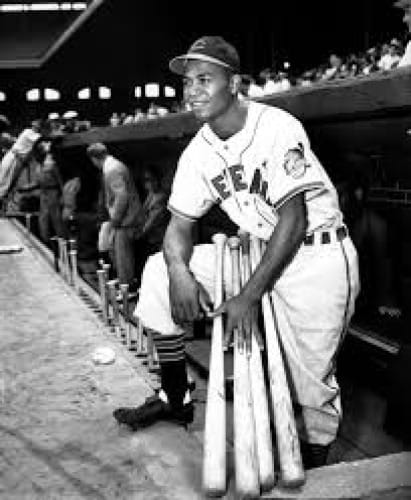
The Second Pioneer Parallels
Doby's managerial experience echoed his playing integration in several ways:
The Frank Robinson Parallel: Like his playing career, came second to another pioneer:
- Frank Robinson became first Black manager with Cleveland in 1975
- Doby followed as second, just as he had followed Robinson in playing integration
- Received significantly less attention than Robinson's breakthrough
- Created pattern of being the "second pioneer" in multiple contexts
The Limited Opportunity: Faced truncated chance similar to other Black managerial pioneers:
- Given less than full season to demonstrate ability
- Not provided opportunity to build program over multiple seasons
- Judged on more limited evidence than many white counterparts
- Reflected common pattern of shorter opportunities for minority managers
The Evaluation Challenge: Performance difficult to assess given circumstances:
- Team lacked talent to contend regardless of manager
- Mid-season appointment limited strategic implementation
- Inherited systems and personnel not of his choosing
- Created unfair basis for determining managerial ability
The Closed Door: Never received second managerial opportunity:
- Despite solid baseball credentials, never managed again
- Returned to coaching roles after managerial stint
- Experienced pattern common to early Black managers
- Demonstrated persistent barriers even after initial breakthrough
Baseball historian Adrian Burgos noted: "Doby's managerial tenure reflects the 'glass cliff' phenomenon we now recognize—where minorities often receive leadership opportunities only in troubled situations where success is unlikely. He was given a struggling team mid-season with no assurance of continuing, then judged on limited results. It's a pattern we've seen repeatedly with pioneering minority managers."
The Legacy: Impact Beyond Statistics
Larry Doby's significance transcends his substantial on-field accomplishments, extending to profound impacts on baseball, race relations, and American society.
The Historical Placement
Doby occupies a unique position in baseball's integration narrative:
The "Second Pioneer" Significance: Being second carried distinct importance:
- Demonstrated integration wasn't a one-team experiment
- Extended integration to American League's different regional footprint
- Proved successful integration could occur in various contexts
- Created momentum that made further integration inevitable
The Hasty Implementation: His abrupt transition holds historical significance:
- Highlighted different integration approaches between leagues
- Demonstrated challenges of integration without proper preparation
- Created contrasting case study to Robinson's carefully planned process
- Provides valuable insights into integration dynamics
The Cleveland Connection: Integration of Cleveland holds special significance:
- Occurred in Midwest city with complex racial dynamics
- Represented integration in industrial heartland rather than coastal metropolis
- Created model for other Midwestern teams
- Connected baseball integration to broader industrial Midwest civil rights movement
The Championship Impact: Unique status as integration pioneer on championship team:
- First Black player to win World Series (1948 with Cleveland)
- Demonstrated integrated teams could succeed at highest level
- Helped dismantle myth that integration would harm team cohesion
- Created powerful counterargument to segregationist claims
Baseball integration scholar Jules Tygiel assessed Doby's historical placement: "While Robinson rightfully receives primary attention, Doby's role was equally essential to baseball's integration. The American League had different power structures and regional influences than the National League, and breaking that barrier required its own pioneer. Doby's success in Cleveland demonstrated that integration could work in various contexts and wasn't dependent on a single team's approach."
The American League Transformation
Doby's success catalyzed sweeping changes throughout the American League:
The Team Integration Timeline: Directly influenced AL integration pace:
- New York Yankees signed Elston Howard in 1950 (debuted 1955)
- Chicago White Sox integrated with Minnie Miñoso in 1951
- St. Louis Browns added Satchel Paige in 1951
- Detroit Tigers finally integrated with Ozzie Virgil in 1958
- Boston Red Sox became last team to integrate with Pumpsie Green in 1959
The Playing Style Impact: Influenced changing AL playing patterns:
- Helped shift AL offensive approach to include more power
- Demonstrated value of athletic outfielders in spacious AL parks
- Contributed to increasing emphasis on OBP before it was widely valued
- Represented new model of complete player that teams sought to emulate
The Talent Pipeline Creation: Opened pathways for Negro Leagues talent:
- Created precedent for AL teams to scout Negro Leagues actively
- Demonstrated value proposition of previously excluded talent
- Helped establish evaluation methods for Negro Leagues statistics
- Influenced development of team integration strategies
The Fan Demographic Change: Influenced AL attendance patterns:
- Helped attract Black fans to previously all-white AL ballparks
- Created new marketing opportunities for forward-thinking teams
- Demonstrated economic benefits of inclusive approach
- Influenced community outreach strategies in AL cities
Baseball executive Bill Veeck, who signed Doby to Cleveland, later reflected: "Larry's success demonstrated conclusively that integration wasn't just morally right—it was good business. Teams that integrated more quickly gained access to an enormous talent pool their competitors were ignoring. Larry helped prove that baseball integration made sense competitively, financially, and morally."
The Social Impact
Beyond baseball, Doby's pioneer role created broader social influence:
The Regional Significance: His AL integration had specific geographic importance:
- Broke barriers in Midwest and later Chicago
- Created integration model in industrial heartland
- Demonstrated possibility in regions with different racial dynamics than Brooklyn
- Influenced integration in other aspects of Midwestern society
The Quiet Dignity Approach: His integration style offered alternative model:
- Demonstrated effectiveness of quiet perseverance
- Provided different template than Robinson's more assertive style
- Showed multiple approaches to confronting discrimination could succeed
- Created broader range of response models for future pioneers
The Media Relationship: Developed distinctive approach to press:
- Used selective engagement rather than broad accessibility
- Maintained privacy while acknowledging responsibility
- Carefully chose moments of public commentary
- Created sustainable model for handling public scrutiny
The Community Connection: Established deep connections in Black communities:
- Maintained active presence in Cleveland's Black community
- Supported civil rights initiatives behind the scenes
- Used platform for community advancement without publicity
- Created model of responsibility without self-promotion
Civil rights historian Dr. Raymond Doswell noted: "Doby's impact extended well beyond baseball. In cities like Cleveland and Chicago, his presence challenged segregation norms throughout society. When Black citizens could point to Larry Doby succeeding at the highest level of America's pastime, it became harder to justify exclusion in other areas of public life. He was a living argument against the logic of segregation."
The Recognition Journey
Doby's path to appropriate recognition has been long and incomplete:
The Hall of Fame Delay: Faced extended Cooperstown wait:
- Not elected during initial eligibility despite clear qualifications
- Waited until 1998 for Veterans Committee selection
- Elected 39 years after his final MLB game
- Received recognition decades after contemporaries with similar statistics
The Media Attention Pattern: Consistently received less coverage:
- Robinson's story dominated integration narrative
- Achievements regularly overlooked in historical accounts
- Received fraction of scholarly attention devoted to other pioneers
- Only recently began receiving appropriate historical assessment
The Public Awareness Gap: Remains less known than his accomplishments warrant:
- Recognition primarily limited to serious baseball historians
- General public awareness significantly lower than other pioneers
- Accomplishments rarely featured in popular baseball narratives
- Legacy not prominently included in baseball education
The Recent Reassessment: Gradually receiving appropriate historical placement:
- Scholarly work increasingly acknowledges his significance
- MLB has enhanced recognition efforts in recent decades
- Statistical analysis has validated his elite performance level
- Historical narrative slowly incorporating his proper importance
During his Hall of Fame induction in 1998, Doby addressed this recognition pattern with characteristic grace: "I don't want to sound bitter, and I'm not. But I think I've been overlooked somewhat because I came in the back door. If I had come in the front door, with all the publicity Jackie got, things might have been different. But I'm happy for the recognition I've received, even if it came later than it might have."
The Personal Legacy
Beyond institutional recognition, Doby's impact lives on through those he influenced:
The Family Foundation: Established strong family legacy:
- Married longtime wife Helyn after integration
- Raised five children despite challenging baseball lifestyle
- Created stable family environment despite professional pressures
- Demonstrated values-centered approach to parenting
The Mentorship Impact: Influenced generations of players:
- Provided guidance to subsequent Black American League players
- Mentored younger teammates regardless of background
- Shared wisdom from his pioneer experience
- Created lasting impact through those he counseled
The Relationship Pattern: Developed meaningful connections despite challenges:
- Formed lasting friendships with initially hostile teammates
- Maintained relationships across racial lines when unusual
- Created connections based on mutual respect rather than expedience
- Demonstrated reconciliation's possibility through personal example
The Later-Life Dignity: Maintained remarkable perspective:
- Spoke of challenges without bitterness
- Acknowledged difficulties while emphasizing progress
- Used platform to educate rather than condemn
- Created model for processing historical injustice
Doby's son, Larry Doby Jr., described his father's perspective: "My father never dwelled on the negative aspects of what he went through. He would acknowledge the challenges when asked, but he preferred to focus on progress and possibilities. He wanted his experience to serve as education, not accusation. That's the legacy he wanted to leave—one of reconciliation rather than resentment."
The Modern Reassessment: Doby's Place in Baseball History
As baseball history receives more nuanced examination, Larry Doby's significance continues to be reevaluated and more properly acknowledged.
The Statistical Validation
Modern analytical approaches confirm Doby's elite status:
The WAR Perspective: Advanced metrics validate his excellence:
- Accumulated 56.7 career WAR despite late start and early finish
- Produced five seasons of 5+ WAR (recognized as All-Star level)
- Averaged 5.5 WAR per 162 games played
- Ranks among top players of his era by this comprehensive measure
The Era Adjustment: Accounting for historical context enhances his case:
- Played primarily in pitcher-friendly era of 1950s
- Performed in Cleveland Stadium, which suppressed offense
- Faced disadvantages not experienced by white contemporaries
- Context-adjusted metrics (OPS+, ERA+) show even greater excellence
The Peak Value Analysis: Concentrated excellence particularly impressive:
- From 1949-1955, ranked among baseball's most valuable players
- 1950-1954 peak represents elite-level performance by any measure
- Produced more value in 10 full seasons than many accumulate in longer careers
- Concentrated excellence comparable to other Hall of Famers with abbreviated careers
The Comparable Players: Statistical peers universally recognized as greats:
- Most similar statistical profiles include numerous Hall of Famers
- Production parallels contemporaries who received earlier recognition
- Advanced metrics place him alongside universally acknowledged stars
- Creates compelling case based purely on performance
Baseball statistician Jay Jaffe, using his JAWS system that combines peak and career values, concluded: "Doby's statistical case for the Hall of Fame is unimpeachable. His peak value from 1950-1954 ranks among the best outfield performances of his era, and his career value, despite its abbreviated nature, exceeds many enshrined outfielders. The delay in his recognition reflects historical oversight rather than any legitimate questions about his qualifications."
The Historical Importance Reconsideration
Beyond statistics, Doby's historical significance receives increasing recognition:
The Integration Complexity: Growing appreciation for integration's nuances:
- Recognition that breaking AL color line carried unique challenges
- Acknowledgment that different integration models served complementary purposes
- Growing understanding of regional variations in integration experience
- Appreciation for pioneers beyond the most famous first
The Barrier-Breaking Pattern: Recognition of Doby's multiple pioneering roles:
- First Black player in American League
- First Black player to directly go from Negro Leagues to MLB
- First Black player to win a World Series
- Second Black manager in MLB history
The Character Assessment: Increasing value placed on his approach:
- Growing appreciation for dignity under extreme pressure
- Recognition of quiet strength as form of courage
- Acknowledgment of different but equally valuable response to discrimination
- Reassessment of various approaches to pioneering roles
The Comprehensive Impact: Fuller understanding of his multi-dimensional influence:
- Playing excellence combined with historical significance
- On-field performance alongside off-field dignity
- Athletic accomplishment in context of societal change
- Personal excellence within institutional transformation
Baseball historian Adrian Burgos noted: "As we develop more sophisticated understanding of baseball's integration, Doby's significance grows rather than diminishes. His experience helps us understand the complexity of integration as a process rather than an event, the regional variations in how it unfolded, and the different approaches pioneers took to similar challenges. This fuller historical context places Doby's contributions in their proper light."
Conclusion: The Quiet Hero's Complete Legacy
Larry Doby's journey from Newark's sandlots to Cooperstown represents one of baseball's most significant yet underappreciated stories. His path—breaking the American League's color barrier, overcoming extraordinary obstacles, achieving genuine greatness on the field, and opening doors for generations that followed—embodies the complex intersection of sport, race, and American society during a transformative period in the nation's history.
What distinguishes Doby's legacy is not just what he accomplished but how he accomplished it. His approach—characterized by quiet dignity, persistent excellence, and remarkable resilience—offered a distinct model of courage that complemented but differed from other pioneers. In a society that often celebrates the loudest voices, Doby demonstrated the power of steadfast determination and excellence as its own form of eloquence.
The statistical record confirms his greatness: seven consecutive All-Star selections, two home run titles, a career OPS+ of 140, and nearly 57 WAR despite an abbreviated career. Yet these numbers tell only part of the story. Each hit, each home run, each outstanding defensive play came against the backdrop of abuse, isolation, and obstacles that his white contemporaries never faced. That he produced at an elite level while carrying this additional burden makes his achievements all the more remarkable.
Perhaps most importantly, Doby's legacy extends beyond baseball to the broader American experience. As writer David Halberstam observed: "In many ways, Doby was as much a pioneer as Robinson. But because he came second, he never got the media attention or the historical respect he deserved. But those who shared the field with him knew how good he was as a player and how dignified he was as a man."
That Larry Doby is now receiving more appropriate recognition—through scholarly reassessment, institutional commemoration, and growing public awareness—represents a form of historical justice. His contribution to baseball and American society was never less significant for being less celebrated. As baseball and the nation continue to reckon with their complex histories, Larry Doby's example of excellence, dignity, and quiet courage provides an essential perspective on how barriers are broken and progress achieved—not always with fanfare, but always with profound and lasting impact.
As Doby himself reflected near the end of his life: "I can't change history. All I can do is tell my story and hope it helps people understand what we went through and how far we've come. If my experience helps even one person face their challenges with greater courage or hope, then everything I endured was worthwhile."
In those words lies perhaps the most profound element of Larry Doby's legacy—not just what he endured, but what his endurance made possible for others.