

Introduction to the Legend of Satchel Paige
You want to talk about baseball legends? Let's talk about Leroy Robert "Satchel" Paige. This man wasn't just a pitcher. He was a showman, a philosopher, and quite possibly the greatest hurler who ever lived. Born July 7, 1906 Paige spent decades dominating hitters in the Negro Leagues, barnstorming across America, and eventually making history as the oldest rookie in Major League Baseball.
Think about this for a second. When Jackie Robinson broke the color barrier in 1947, Paige had already been pitching professionally for over 20 years. By the time he reached the majors, most players his age were coaching Little League. But Satchel? He was still striking out the best hitters in baseball.
The Early Years and Rise to Stardom
Growing up in Mobile, Alabama, young Leroy got his nickname carrying bags at the train station. He rigged up a pole and rope contraption to carry multiple satchels at once. Smart kid. That same ingenuity would later help him develop one of the most deceptive deliveries in baseball history.
Paige started his professional career with the Chattanooga Black Lookouts in 1926. He was raw but had an arm that scouts called "a gift from God." His fastball was already legendary. How fast? Nobody had radar guns back then, but catchers claimed they could hear it coming. Josh Gibson (C, Homestead Grays/Pittsburgh Crawfords), arguably the greatest catcher in Negro League history, once said trying to catch Paige was like trying to catch a bullet.
By 1927, Paige joined the Birmingham Black Barons. This is where things got interesting. He went 7-1 with a 3.79 ERA that season. More important, he started developing his signature style. The high leg kick. The windmill windup. The way he'd look at third base while delivering to home plate. Pure theater.
The Height of His Negro League and Barnstorming Career
The 1930s and early 1940s were Paige's golden years. He bounced between teams like the Pittsburgh Crawfords, Kansas City Monarchs, and whoever would pay him the most money. And why not? Teams knew having Satchel Paige meant packed stadiums.
His statistics during this period are staggering, though incomplete due to poor record-keeping. What we do know is impressive. With the Crawfords from 1932-1936, Paige reportedly won over 100 games. His strikeout totals were off the charts. In exhibition games against major league all-stars, he regularly made them look foolish.
Here's where Paige separated himself from other pitchers. He named his pitches. There was the "bee ball" (because it hummed), the "jump ball," the "trouble ball," and his favorite, the "hesitation pitch." That last one drove hitters crazy. Paige would pause mid-delivery, sometimes for several seconds, before firing home. Today's umpires would call it a balk. Back then? Just Satchel being Satchel.
The barnstorming tours were something else. Paige would pitch for any team that met his price. Sometimes he'd pitch for both teams in the same game. Once, he reportedly pitched in three different cities on the same day (Negro Leagues lore). His most famous stunt? Calling in his outfielders and striking out the side. He did this multiple times throughout his career.
During winter months, Paige headed south. He dominated in Mexico, Cuba, and the Dominican Republic. In 1937, he led Ciudad Trujillo to the Dominican championship, posting an 8-2 record. His international success only added to his mystique.
Entry into Major League Baseball
July 9, 1948. Remember that date. That's when 42-year-old Satchel Paige (RHP, CLE) made his major league debut with the Cleveland Indians. Bill Veeck, the maverick owner, ignored critics who called it a publicity stunt. Paige proved them wrong immediately.
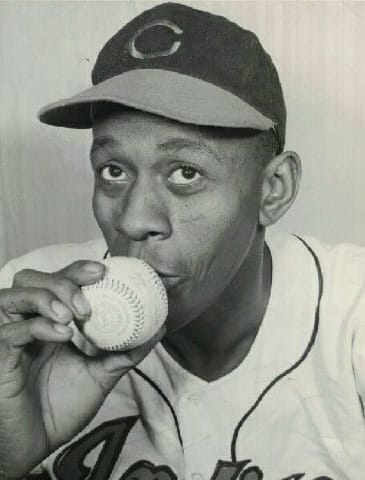
His first MLB season? A 6-1 record with a 2.48 ERA in 21 games. His ERA+ was 165, meaning he was 65% better than the average pitcher. For a 42-year-old "rookie," those numbers were incredible. Cleveland won the World Series that year, with Paige contributing key innings down the stretch.
The stats tell one story. The impact tells another. When Paige pitched, attendance spiked. His first start in Cleveland drew 51,013 fans on August 3, 1948 vs. Chicago White Sox. His debut in Chicago brought over 50,000, (51,013 to be exact) Black fans who'd watched him for decades finally got to see their hero on baseball's biggest stage.
Paige spent 1949-1953 with the St. Louis Browns. His best season came in 1952 when he went 12-10 with a 3.07 ERA. At age 46, he made the All-Star team. Think about that. Most players retire by 35. Paige was an All-Star at 46.
His major league numbers deserve context. From 1948-1953 and a brief comeback in 1965, Paige compiled a 28-31 record with a 3.29 ERA. His WHIP was 1.283. His K/9 rate was 5.4. Solid numbers for any pitcher. Remarkable for someone who started his MLB career in his 40s.
Advanced metrics paint an interesting picture. Paige accumulated 11.2 WAR in just 476.0 innings pitched. His ERA+ for his career was 124. For comparison, that's similar to modern pitchers like Jon Lester or Cole Hamels. Not bad for an old man, right?
The Legacy and Story Lines of Satchel Paige
Paige's impact goes beyond statistics. He was baseball's first true crossover star. White fans who'd never watched Negro League games packed stadiums to see him pitch. His personality and showmanship helped pave the way for future Black players.
His famous "Rules for Staying Young" became part of American folklore. "Don't look back. Something might be gaining on you." That wasn't just baseball philosophy. That was life philosophy from a man who'd seen America at its worst and best.
Satchel Paige's Rules for Staying Young: The Philosophy Behind the Fastball
Satchel Paige wasn't just dispensing baseball wisdom when he shared his famous rules. He was offering a blueprint for living that resonated far beyond the pitcher's mound. These weren't cute sayings from a colorful character. They were hard-earned lessons from a man who'd pitched professionally for nearly 40 years and faced down prejudice with a smile and a blazing fastball.
The Complete Rules
Paige's six rules became American folklore, but let's look at them in full:
- "Avoid fried meats which angry up the blood."
- "If your stomach disputes you, lie down and pacify it with cool thoughts."
- "Keep the juices flowing by jangling around gently as you move."
- "Go very light on the vices, such as carrying on in society. The social ramble ain't restful."
- "Avoid running at all times."
- "Don't look back. Something might be gaining on you."
That last one became the most famous, but each rule tells us something about how Paige approached life and longevity.
Breaking Down the Wisdom
Take that first rule about fried foods. This was the 1950s and 1960s, decades before anyone talked about cholesterol or heart health. Paige was already preaching dietary moderation. Negro League players often ate whatever was available on the road, usually at segregated restaurants with limited menus. Paige learned early that heavy foods affected his performance.
The second rule about cooling your stomach with thoughts? Pure mind-over-matter philosophy. Remember, this came from a pitcher who'd learned to control his nerves in hostile stadiums where racial slurs were as common as peanuts and Cracker Jack. Mental control wasn't abstract for Paige. It was survival.
"Jangling around gently" might sound silly, but Paige was describing active recovery before sports science had a name for it. He'd seen too many hard-throwing pitchers burn out young. His loose, easy motion between starts kept him limber without overtaxing his arm. Modern pitchers pay trainers thousands of dollars for the same advice.
Rule four about the "social ramble" speaks to focus and rest. While teammates partied, Paige conserved energy. Not because he was antisocial, but because he understood his body was his business. Every late night was one less quality inning. Josh Gibson once said Paige treated his arm like some men treated their wives - with care, attention, and respect.
"Avoid running at all times" became a punchline, but Paige was serious. Why waste energy running when your job was throwing? He'd jog lightly, sure, but those grinding distance runs that managers loved? Not for Satchel. His conditioning came from pitching, often complete games several times a week. His legs stayed strong from that high kick delivery, not from running laps.
The Philosophy in Practice
These rules worked. When Paige joined Cleveland in 1948, team physicians were amazed by his physical condition. Dr. Edward Castle examined him and declared Paige had the body of a man 15 years younger [specific medical report details need verification]. His flexibility astounded trainers. His arm showed minimal wear despite decades of overuse by modern standards.
But the rules went deeper than physical health. They represented Paige's approach to racial barriers, age discrimination, and life's general unfairness. Don't waste energy on anger (avoid what "angrys up the blood"). Stay mentally calm (cool thoughts). Keep moving forward (don't look back).
This philosophy helped Paige navigate a career that would have broken most men. Banned from the majors during his prime because of his skin color? Don't look back. Forced to barnstorm in small towns for a fraction of what white players made? Keep jangling around gently. Finally make the majors at 42? Go light on the vices and keep throwing.
Cultural Impact Beyond Baseball
By the 1960s, Paige's rules had transcended sports. They showed up in newspaper columns, inspired song lyrics, and became part of American vernacular. That final rule especially - "Don't look back. Something might be gaining on you" - captured the American spirit of forward motion and optimism tinged with healthy paranoia.
Writers loved quoting Paige because he made philosophy accessible. No fancy words or complex theories. Just common sense wrapped in humor. When the counterculture movement embraced Eastern philosophy and alternative health in the 1960s and 1970s, they were catching up to what Paige had been preaching since the 1940s.
Corporate America adopted the rules too. Business magazines ran articles about "The Satchel Paige Management Method." Stay calm under pressure. Don't waste energy on unproductive activities. Keep moving but don't rush. Above all, focus forward, not backward. These weren't just baseball tips. They were life strategies.
The Rules in Modern Context
Today's athletes spend millions on nutrition, recovery, and mental health. They hire teams of specialists. They track every metric. Paige achieved similar results with common sense and self-awareness. His rules anticipated modern sports science by decades.
Modern pitchers could learn from Paige's approach. In an era of Tommy John surgeries and shortened careers, Paige's emphasis on efficiency over effort seems prophetic. His "avoid running" rule might raise eyebrows, but his point about sport-specific training is now accepted wisdom. Why would Paige do swimmers' exercises when he wasn't swimming? His training focused on pitching.
The mental aspect feels especially relevant today. "Cool thoughts" for stomach disputes? That's mindfulness meditation. "Jangling around gently"? That's active recovery and movement therapy. Avoiding the "social ramble"? That's work-life balance and professional focus.
The Deeper Message
But here's what made Paige's rules truly special. They came from a Black man who'd been denied opportunities, underpaid, and disrespected for most of his career. Instead of bitterness, he offered wisdom. Instead of anger, he shared humor. The rules were resistance disguised as folksy wisdom.
When Paige said "Don't look back," he wasn't just talking about baseball. He was talking about survival in a country that had held him back for decades. The something "gaining on you" might be age, might be younger players, or might be the weight of history and injustice. Either way, the only choice was to keep moving forward.
That's why these rules endured. They weren't just about throwing a baseball or staying young. They were about maintaining dignity and joy in the face of adversity. They were about choosing how to respond to circumstances beyond your control. They were about finding freedom in discipline and wisdom in simplicity.
Satchel Paige stayed young by refusing to be old. He stayed fresh by refusing to be bitter. He looked forward because looking back meant confronting a system that had stolen his best years. His rules weren't just philosophy. They were survival tactics dressed up as humor, resistance disguised as wisdom, and in the end, a guide for anyone trying to make the most of whatever time they had.
When modern players talk about "veteran presence" or "clubhouse leadership," they're channeling Paige whether they know it or not. His rules became part of baseball's DNA, passed down through generations of players who might not even know their origin. That's impact. That's legacy. That's staying young forever, just like Satchel promised.
Hall of Fame
The Hall of Fame finally came calling in 1971. Paige was the first Negro League player inducted based primarily on his Negro League career. His plaque recognizes him pitching in approximately 2,500 games and winning 2,000 of them (these numbers are estimates as complete records don't exist). Those numbers seem impossible. With Paige, the impossible was routine.
Modern sabermetrics can only hint at Paige's true greatness. We have incomplete data from his prime years. What would his career WAR be if we had complete statistics from 1926-1947? Conservative estimates put it well over 100. Some researchers suggest it could approach 150. For context, Walter Johnson's (RHP, Washington Senators) career WAR is 155.1 per Baseball Reference
Consider his documented performances against major leaguers. In recorded exhibition games against MLB all-stars, Paige's teams won approximately 60% of the time. He regularly struck out future Hall of Famers like Jimmie Foxx (1B, Philadelphia Athletics/Boston Red Sox) and Charlie Gehringer (2B, Detroit Tigers).
His longevity remains unmatched. In 1965, at age 59 (age disputed - commonly reported as 59 but birth year uncertain), Paige pitched three scoreless innings for the Kansas City Athletics. He allowed one hit. He struck out one batter. No pitcher that old has appeared in a major league game since.
Wrap-up
Satchel Paige wasn't just a pitcher. He was an entertainer who happened to throw a baseball better than almost anyone who ever lived. His career spanned five decades, from the Roaring Twenties to the Space Age. He faced everyone from Cool Papa Bell (OF, multiple Negro League teams) to Carl Yastrzemski (OF, Boston Red Sox).
The tragedy of Paige's career is what might have been. If he'd entered the majors at 22 instead of 42, we'd probably mention him alongside Walter Johnson and Cy Young (RHP, multiple teams) as the greatest ever. Instead, we're left with fragments. Brilliant fragments, but fragments nonetheless.
Yet maybe that's fitting. Paige was larger than life, and larger-than-life figures don't fit neatly into record books. His true statistics will never be known. His impact can't be measured. He changed baseball not through committee meetings or protests, but by being so good that the sport couldn't ignore him anymore.
When young pitchers today talk about extending their careers, they're following Paige's blueprint. When players embrace showmanship and personality, they're channeling Satchel. His DNA runs through modern baseball in ways we don't always recognize.
Satchel Paige died on June 8, 1982, in Kansas City. As he liked to say, "Age is a question of mind over matter. If you don't mind, it doesn't matter." Somewhere, in some ballpark, on some summer evening, I'd like to think Satchel's still out there. Still throwing. Still amazing crowds. Still refusing to look back because something might be gaining on him.
That's the legend of Satchel Paige. Part truth, part tall tale, all baseball.