
Three Straight Pennants, Zero Championships: What Went Wrong for the 1907-09 Detroit Tigers?

Imagine being on top of the world, three years in a row, only to fall at the final hurdle each and every time. That was the story of the Detroit Tigers from 1907 to 1909. For three straight seasons, they clawed their way to the top of the American League, capturing the pennant in a remarkable run for a team that was still so young. But every October, the dream died. They made it to the World Series three times, and they lost it all three times.
Rise of a Powerhouse (1907-1909)
Let's be clear: the Tigers of this era weren't just good. They were a juggernaut. Over that three-year stretch, they racked up 280 wins against just 175 losses. That consistent, grinding excellence made them the American League's first real dynasty, even if they never got the rings to prove it.
So what was their secret? It was a perfect storm, really. You had young talent bursting onto the scene, savvy veterans holding things down, and the wild, energetic leadership of their manager. The result was a balanced club that could find a way to beat you on any given day. But their greatest weapon? Pure, unadulterated star power.
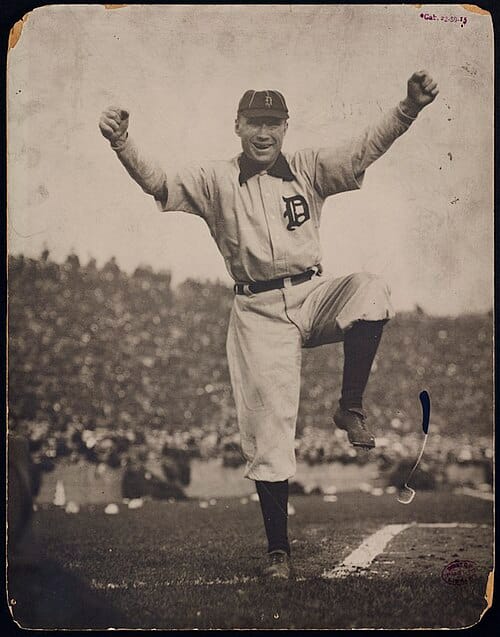
The "Ee-Yah" Man: Manager Hughie Jennings
You can't talk about the spirit of these Tigers teams without talking about their manager, Hughie Jennings. A former star player for the legendary 1890s Baltimore Orioles, Jennings managed from the third-base coaching box with a manic energy that defined his club. He was famous for his constant chatter, his strange whistles, and plucking blades of grass to chew on.
His signature, however, was his piercing battle cry: "Ee-Yah!" He'd shout it to encourage his players and rattle opponents, and it became the unofficial slogan of the team. This wasn't a quiet, strategic manager; he was a fiery, animated leader whose personality was stamped all over his aggressive, high-energy team.
The Stars Align: Cobb & Crawford
You can't even begin to talk about these Tigers teams without starting with their two legendary outfielders: Ty Cobb and Sam Crawford.
The Georgia Peach
Ty Cobb was, simply put, the most feared hitter in baseball. He was only 20 years old when the Tigers won their first pennant in 1907, and you can literally watch him transform from a star into a living legend just by looking at the numbers:
- 1907: .350/.380/.468, 167 OPS+, 6.8 WAR, 53 SB
- 1908: .324/.368/.476, 170 OPS+, 6.2 WAR, 39 SB
- 1909: .377/.431/.517, 192 OPS+, 9.9 WAR, 76 SB
That 1909 season was just absurd—his 9.9 WAR is still considered one of the greatest single seasons ever. But the stats don't tell the whole story. Cobb's true impact was in his presence. His hyper-aggressive baserunning and the psychological games he played with opponents made him a nightmare to play against. His reputation for sharpening his spikes and sliding with them high was already well-established by the 1909 World Series. When Pirates third baseman Bobby Byrne made a tag on Cobb in Game 3, he jumped away immediately, showing teammates a torn uniform and a scratch on his arm. The Pirates responded by adjusting their infield positioning to force Cobb to slide directly into their waiting gloves—and sometimes, deliberately late tags.
Wahoo Sam
Poor Sam Crawford. He was often stuck in Cobb's shadow, but "Wahoo Sam" was an absolute superstar in his own right. But stats only tell part of his story. Who was Wahoo Sam?
First, the nickname: it came from his hometown of Wahoo, Nebraska. Unlike the fiery, abrasive Cobb, Crawford was a quieter, more respected professional. He was a powerful man who swung for the fences in an era when nobody else did. While most hitters used a level swing to slap the ball for singles, Crawford used a looping uppercut, trying to drive the ball over the outfielders' heads. This made him the premier home run and triple hitter of his time. In fact, he still holds the all-time record for career triples with 309.
While he and Cobb reportedly had a frosty relationship, on the field they were a perfect complement. Cobb was the lightning, the constant chaotic energy. Crawford was the thunder—the steady, reliable power source in the middle of the lineup. Just look at how incredibly consistent he was:
- 1907: .323/.366/.460, 160 OPS+, 5.9 WAR
- 1908: .311/.355/.457, 160 OPS+, 5.1 WAR
- 1909: .314/.366/.452, 152 OPS+, 5.6 WAR
He was the reliable, steady force that perfectly complemented Cobb's fiery brilliance. Together, they were arguably the most fearsome outfield duo of their time.
Beyond the Big Two: The Supporting Cast
While Cobb and Crawford grabbed the headlines, these Tigers teams were deep. They had a solid supporting cast that was crucial to their pennant runs. The infield was a bit of a work in progress, but the biggest upgrade came in 1909. The Tigers brought in a rookie shortstop named Donie Bush, who immediately became one of the team's best players. His incredible eye at the plate (88 walks!) and speed on the bases completely changed the top of their lineup.
The Pitching Staff: Underrated Excellence
With all that offense, it was easy to overlook the pitching. But make no mistake, Detroit's arms were consistently great during this run. What made them special wasn't one unhittable ace, but incredible depth. The Tigers could roll out four or five legitimate front-line starters, a huge advantage over the long season.
George Mullin was the one constant, winning a league-leading 29 games in 1909. Bill "Wild Bill" Donovan was brilliant, posting a phenomenal 25-4 record in 1907. And a cast of other "Eds"—Ed Killian, Ed Summers, and Ed Willett—all had dominant seasons, giving the Tigers a fresh arm for any situation.
Regular Season Success: How They Won
Each of the three pennants was won in a slightly different way, showing just how adaptable these Tigers teams were.
- 1907: The first one was built on pitching. The offense was basically the Cobb and Crawford show, and they got hot in September to pull away.
- 1908: This was the nail-biter. The pennant race went down to the final day, with the Tigers squeaking by Cleveland. The offense was more balanced this time.
- 1909: This was the best team of the three. A truly complete club that was firing on all cylinders. Cobb had his historic season, the rookie Donie Bush was a revelation, and the pitching staff was deep and dominant. They ran away with the pennant.
World Series Heartbreak: Three Years of October Pain
For all their regular-season glory, the Tigers just couldn't get it done in the World Series. It was a new story of hope each year, but always with the same painful ending.
1907: Cubs 4, Tigers 0 (plus one tie)
Their first trip to the Series started with a bit of hope—a tie in Game 1—and ended in an absolute drubbing. The mighty Chicago Cubs just dismantled them. The Tigers' bats went completely silent, with Cobb himself hitting a paltry .200. But why? An anecdote from the Cubs' dugout tells the story. Before the series, the Cubs sent scout James "Deacon" White to spy on the Tigers. His report back to manager Frank Chance was simple: "They are a sleepy team." He noted that while talented, the Tigers were over-aggressive and careless on the basepaths, and their defense was undisciplined. Chance used this intel perfectly. The Cubs played fundamental, disciplined baseball and let the Tigers beat themselves, which they promptly did, making countless mental errors. It was a mismatch of talent versus tactics, and tactics won easily.
1908: Cubs 4, Tigers 1
A rematch against the Cubs, a slightly more competitive series, but the same result. The most heartbreaking moment came in Game 1, where the Tigers blew a lead in the ninth inning. They managed to steal one victory, but the Cubs' pitching was just too much. By the final game in Detroit, the fans had given up. Only 6,210 people showed up, the smallest crowd in World Series history. It was a sad, quiet end to another failed campaign.
1909: Pirates 4, Tigers 3
A new opponent, the Pittsburgh Pirates, and a new hope. This one was a real fight, a back-and-forth classic that went the full seven games. It was billed as a showdown between Cobb and the National League's superstar, Honus Wagner. The Tigers showed incredible resilience, forcing a winner-take-all Game 7. But to understand the heartbreak of that final game, you have to understand the man who beat them: a rookie named Babe Adams.
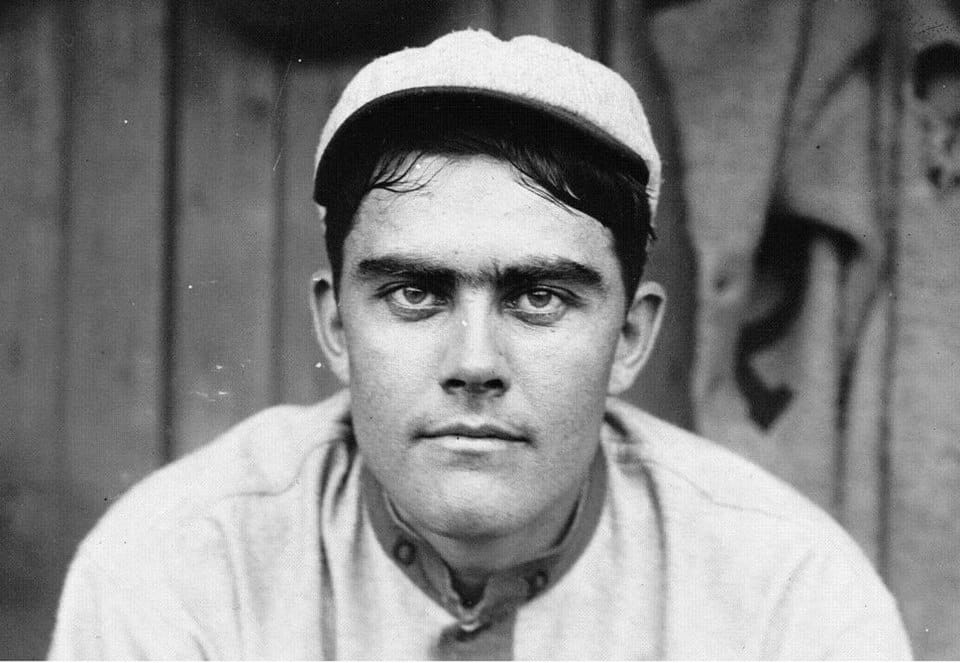
Adams was a little-known, 27-year-old rookie for the Pirates. He was such a surprise that when manager Fred Clarke named him the Game 1 starter—reportedly at the suggestion of owner Barney Dreyfuss—his own players were stunned. But Adams went out and threw a six-hit shutout. He won again in Game 5. For the decisive Game 7, with the entire baseball world watching, Clarke gambled on the rookie for a third time. The pressure on the Tigers, who had already lost two World Series, was immense. The pressure on Adams? Apparently, none. He was reportedly found calmly reading a newspaper in the clubhouse before the game. As legend has it, a nervous Adams was lacing his shoes when Honus Wagner sat beside him and said, "Just throw like you did before, kid. We'll handle the rest." Adams did just that, baffling the Tigers one last time with another complete-game shutout to win the World Series. Wagner outplayed Cobb, but it was the cool-headed rookie who truly broke Detroit's heart.
After that heartbreaking loss, the Tigers' train car was nearly silent as they departed Pittsburgh, Crawford stated emphatically “We'll be back next year." The Tigers didn't make it back, but the moment became part of team lore, symbolizing the quiet resilience that defined those Detroit teams.
What Went Wrong? Analyzing the Three-Year Drought
So, the million-dollar question: how could a team this good, this dominant, fail so spectacularly in the World Series, not once, but three times in a row? It wasn't just one thing; it was a perfect storm of problems.
- Their Stars Picked the Worst Time to Cool Off. This is the most obvious one. Ty Cobb, the man who terrorized the American League, became a ghost in October. Sam Crawford wasn't much better. When your two best players aren't hitting, you're just not going to win.
- They Ran into Buzzsaws. Let's give credit where it's due. The teams they played were incredible. The '07 and '08 Cubs are still considered among the greatest teams ever, and the '09 Pirates won 110 games.
- They Got Out-Managed. From the Cubs exploiting their "sleepy" play to Fred Clarke's brilliant gamble on Babe Adams, the Tigers often found themselves on the losing end of the tactical battle.
- The Weight of History. You have to wonder what was going on in their heads. After losing twice, the pressure in 1909 must have been unbearable at times. That "here we go again" feeling is a powerful and destructive thing in sports.
Legacy: More Than Just FailuresDespite the World Series losses, it feels wrong to call the 1907-1909 Tigers a failure. What they accomplished left a lasting mark. They were the American League's first real dynasty, setting a standard for consistent excellence. They gave fans a chance to see legends like Cobb and Crawford in their prime. And they put Detroit on the map as a true baseball city, laying the foundation for the franchise's future success.
Conclusion: Baseball's First "Almost Dynasty"The 1907-1909 Detroit Tigers are perhaps best remembered as baseball's first "almost dynasty." They're like the 1990s Buffalo Bills of baseball—a team so good, so resilient, but so tragically cursed at the final step. Their story is a fascinating look at the brutal nature of sports. They prove that you can be a legitimately great, historically dominant team and still fall short. Their banners may not hang in Comerica Park, but their story—of sustained greatness and heartbreakingly unfulfilled potential—makes them one of the most compelling and unforgettable teams in baseball history.