

The 2025 World Series between the Dodgers and Blue Jays sits tied at one game apiece heading into Game 3 tonight in Los Angeles. We've already seen stars shine - but October has a funny way of turning role players into immortals.
History shows us that World Series heroes don't always come from the All-Star roster. Sometimes the guy hitting .192 in the regular season becomes the hottest hitter in October. Sometimes a journeyman pitcher throws a perfect game. Sometimes a utility infielder pulls off a triple play nobody will ever forget.
Here are 14 players who weren't supposed to be the story - but became World Series legends anyway.
Pat Borders: The Backup Who Never Stopped Hitting (1992)
Pat Borders wasn't supposed to be a World Series MVP. He hit .242 during the 1992 regular season as Toronto's backup catcher. The Blue Jays had stars - Joe Carter, Dave Winfield, John Olerud, Roberto Alomar. Borders was the guy who caught when the regulars needed a day off.
Then October started and Borders couldn't miss.
He got a hit in all 12 postseason games. Every single one. In the ALCS against Oakland, he went 7-for-22 with a homer. Not spectacular, but he kept the line moving.
The World Series against Atlanta was different.
Game 1: 2-for-3. Toronto lost 3-1, but Borders hit .360 after one game. Game 2: 1-for-3 with a double. Blue Jays won 5-4 to even the series. Game 4: Solo homer. Toronto won 2-1. Game 5: 2-for-4 with two RBIs. Atlanta won 7-2, but Borders was hitting .368. Game 6: 2-for-4 with a double in the 11th-inning clincher. Final score: 4-3.
For the World Series, Borders hit .381/.404/.595 with a 1.000 OPS. He had nine hits in 21 at-bats. He caught every inning of all six games and handled a pitching staff that included Jack Morris, Juan Guzman, and Duane Ward.
Series MVP. First Blue Jays player ever to win it. A .242 hitter who got hot at exactly the right time and helped bring Canada its first World Series championship.
Dave Winfield got his ring. Joe Carter had his moment coming in 1993. But in 1992, it was Pat Borders' October.
Gene Tenace Makes Oakland Forget Reggie (1972)
OK, Gene Tenace spent most of 1972 as Dave Duncan's backup catcher. He hit .225 with five home runs during the regular season. In the ALCS against Detroit, he went 1-for-17 - a brutal .059 average with his only hit driving in the clinching run in Game 5.
Then the World Series started.
Reggie Jackson pulled his hamstring stealing home in the ALCS and couldn't play. The A's faced the Big Red Machine without their biggest bat. Nobody expected much from Tenace stepping into the lineup.
First at-bat of Game 1: home run off Gary Nolan. Second at-bat: another home run. Tenace became the first player ever to homer in his first two World Series plate appearances.
He didn't stop there. By the time Oakland beat Cincinnati in seven games, Tenace had four home runs and nine RBIs - more RBIs than any other A's player had total. He hit .348/.400/.913 with a 1.313 OPS. His slugging percentage was almost a full point.
Career .241 hitter. World Series MVP. Baseball doesn't always make sense.
Al Weis and the .455 Miracle (1969)
Al Weis hit .215 for his career. In 1969, playing for the Miracle Mets, he hit .172 during the regular season with one home run in 103 at-bats.
Then October happened.
The Mets faced the 109-win Baltimore Orioles in the World Series. Baltimore had Frank Robinson, Brooks Robinson, Boog Powell, and a pitching staff that posted a 2.83 ERA. They were supposed to destroy the upstart Mets.
Weis started four of five games and hit .455 with three RBIs. He had as many World Series home runs (one) as he did during the entire regular season. His Game 5 homer off Dave McNally tied the game 3-3, and the Mets scored twice in the eighth to win their first championship.
Donn Clendenon won Series MVP. Weis won the Babe Ruth Award from the New York BBWAA. For a guy who finished his career with seven total home runs, that October still stands as proof that anything can happen in baseball.
Brian Doyle's Impossible October (1978)
On September 29, 1978, Willie Randolph pulled his hamstring. The Yankees needed someone to play second base for the final games of the season, the ALCS, and potentially the World Series.
Enter Brian Doyle, who had played 39 games and posted a .192/.192/.192 line. Zero walks. Zero extra-base hits. An OPS+ of 10.
He played in the famous one-game playoff at Fenway when Bucky Dent homered over the Green Monster. Doyle went 0-for-2 before being lifted for a pinch hitter.
Then came the World Series against the Dodgers.
Doyle started five of six games and went 7-for-16 - a .438 average that led the Yankees. In Game 5, he went 3-for-5 with two runs scored in a 12-2 win. In Game 6, he doubled to drive in the game's first run, then singled in another.
Bucky Dent won Series MVP. Doyle finished second in the voting. His postseason OPS was .848 compared to .392 for his entire career. He appeared on the October 23, 1978 cover of Sports Illustrated.
Willie Randolph said it best: "When I think about '78, Brian Doyle comes to mind even more than the comeback."
Dusty Rhodes: Three Games, Three Hits, Two Homers (1954)
The 1954 Cleveland Indians won 111 games - still an American League record. They had the best pitching staff in baseball and faced the New York Giants in the World Series.
Dusty Rhodes was a 27-year-old outfielder who hit .341 in limited at-bats during the season. Manager Leo Durocher used him as a pinch hitter.
Game 1, tied 2-2 in the 10th inning: Rhodes pinch-hit and homered to win it, 5-2.
Game 2, tied 1-1 in the fifth: Rhodes pinch-hit, homered, and drove in two more runs. Giants win 3-1.
Game 3, Giants leading 2-1: Rhodes pinch-hit again, singled, and drove in two more runs.
Three games. Three at-bats. Two home runs. Seven RBIs. The Giants swept the Indians in four games, and Rhodes hit 1.000 with a 4.000 slugging percentage in his three appearances.
Nobody pitched to him after Game 3. Can't blame them.
Rick Dempsey's Redemption (1983)
Rick Dempsey was a career .233 hitter known for his defense and his rain delay entertainment routines. In 1983, he hit .231 during the regular season.
The Orioles faced the Phillies in the World Series. Philadelphia had Mike Schmidt, Pete Rose, Joe Morgan, and Steve Carlton. Baltimore countered with pitching and defense.
Dempsey caught every inning of all five games and hit .385 with a home run. More impressively, he handled an Orioles pitching staff that posted a 2.04 ERA in the Series.
Game 5 was his masterpiece. With Baltimore leading the series 3-1, Dempsey went 2-for-3 with a solo homer and a double as the Orioles won 5-0 to clinch the championship.
Series MVP. The defense-first catcher who batted .233 for his career finished with a .917 OPS in the World Series that mattered most.
Bucky Dent's October Magic (1978)
Russell Earl "Bucky" Dent wasn't supposed to be a hero. He hit .243 during the 1978 regular season with a .287 OBP and four home runs.
But first came October 2, 1978.
The Yankees and Red Sox finished tied for first place, forcing a one-game playoff at Fenway Park. Boston led 2-0 in the seventh inning when Dent came up with two runners on. Mike Torrez had held the Yankees to two hits through six innings.
Dent hit a fly ball that barely cleared the Green Monster. Three-run homer. Yankees led 3-2, eventually won 5-4, and advanced to the ALCS.
Then came the World Series against the Dodgers. Dent went 10-for-24 with a double and seven RBIs. He hit .417 for the Series and won MVP honors.
A light-hitting shortstop with a .247 career average became forever known as "Bucky [expletive] Dent" in Boston and a Yankees legend everywhere else. That's October baseball.
Donn Clendenon's Second Act (1969)
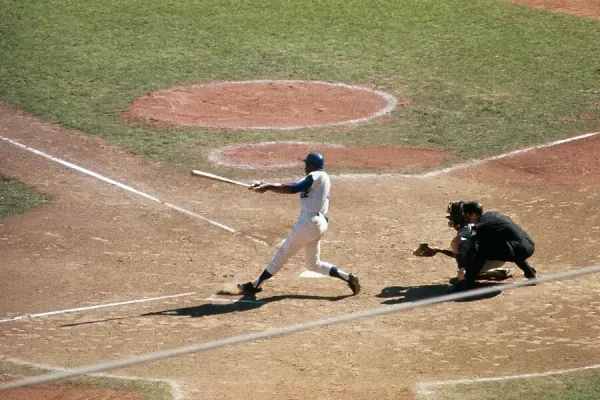
Donn Clendenon was 34 years old when the Mets acquired him from Montreal in June 1969. He'd briefly retired before returning to baseball. He was supposed to be a platoon first baseman.
The Miracle Mets shocked the baseball world by winning 100 games and the NL East. They swept the Braves in the NLCS. Then they faced the 109-win Orioles in the World Series.
Clendenon didn't even play in the NLCS. But manager Gil Hodges started him in four of five World Series games.
Game 2: solo homer in the fourth inning. Mets win 2-1. Game 4: solo homer in the second. Mets win 2-1 in 10 innings. Game 5: two-run homer in the sixth. Mets win 5-3 to clinch the title.
Three homers in four games - a record for a five-game World Series at the time. He hit .357 with a 1.071 slugging percentage and won Series MVP.
Not bad for a guy who almost stayed retired.
Johnny Podres Grows Up Fast (1955)
The Brooklyn Dodgers had lost the World Series to the Yankees five times. Five times. By 1955, it felt like a curse.
Johnny Podres was 23 years old and had gone 9-10 during the regular season with a 3.95 ERA. He wasn't Brooklyn's ace. Carl Erskine and Don Newcombe were better known.
Game 3: Podres pitched a complete game, allowing three runs. Brooklyn won 8-3.
Game 7: Yankees Stadium. Win or go home. Podres pitched a complete game shutout - eight hits, no walks, four strikeouts. Final score: 2-0.
The Dodgers won their only World Series title in Brooklyn history. Podres became the youngest pitcher to throw a Game 7 shutout. He finished the Series with a 1.00 ERA across 18 innings.
Brooklyn finally beat the Yankees. A 23-year-old lefty made it happen.
Pepper Martin Runs Wild (1931)
The Philadelphia Athletics won 107 games in 1931 and featured Lefty Grove, Jimmie Foxx, and Al Simmons - all future Hall of Famers. The St. Louis Cardinals were big underdogs.
Then Pepper Martin happened.
The "Wild Horse of the Osage" hit .300 during the regular season but exploded in October. He went 12-for-24 in the World Series - a .500 average - with five stolen bases, four doubles, and a home run.
Game 1: 3-for-4, stole a base. Game 2: 2-for-3, scored two runs, stole two bases. Game 5: 3-for-4 with a homer and four RBIs.
The Cardinals won in seven games. Martin hit .500/.538/.792 and terrorized the A's defense all series. Grove later said Martin "ran like a wild man" on the bases.
Connie Mack's dynasty was over. Martin had run them out of the building.
Bill Wambsganss and the Triple Play (1920)
Bill Wambsganss hit .154 in the 1920 World Series. He had four hits in 26 at-bats and drove in one run. Those numbers aren't why we remember him.
Game 5 at League Park in Cleveland. Fifth inning. Brooklyn Robins had runners on first and second with nobody out.
Clarence Mitchell hit a line drive up the middle. Wambsganss caught it for out one. He stepped on second base before Pete Kilduff could return - out two. Otto Miller was running from first and couldn't stop. Wambsganss tagged him - out three.
Unassisted triple play. The only one in World Series history.
Earlier that same game, Elmer Smith hit the first grand slam in World Series history. Cleveland pitcher Jim Bagby hit the first pitcher's home run in modern World Series history.
But nobody remembers those. They remember Wambsganss catching, stepping, and tagging in about five seconds. That's baseball immortality right there.
Don Larsen's Perfect Accident (1956)
Don Larsen went 3-21 with a 4.37 ERA for the 1954 Baltimore Orioles. He was a journeyman pitcher with an 81-91 career record who never posted an ERA under 3.00.
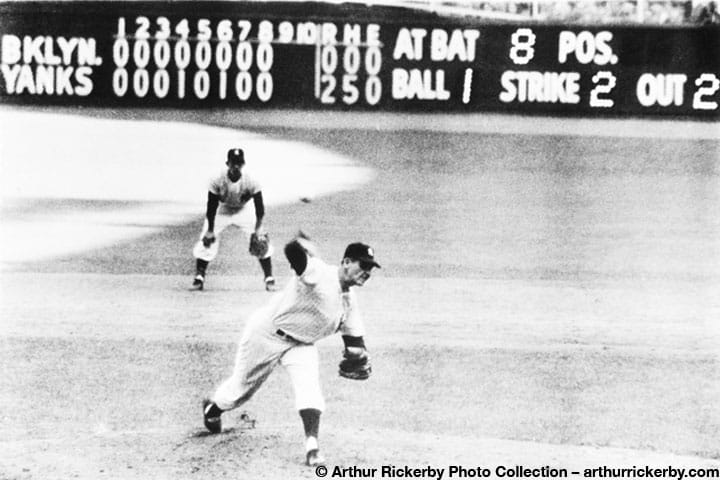
Game 2 of the 1956 World Series: Larsen started and lasted 1.2 innings, giving up four walks. He got pulled after recording five outs.
Game 5, October 8, 1956: Yankees manager Casey Stengel gave Larsen another start.
What followed shouldn't have been possible.
Twenty-seven batters. Twenty-seven outs. No hits, no walks, no errors. The only perfect game in World Series history.
Larsen struck out seven Dodgers, including Dale Mitchell looking at a fastball on the outside corner for the final out. Yogi Berra jumped into his arms. The photo is iconic.
He finished his career 81-91 with a 3.78 ERA. He pitched one perfect game and it happened to be in the World Series. Sometimes baseball just doesn't care about logic.
Hank Gowdy and the Miracle (1914)
The 1914 Boston Braves were in last place on July 4. They rallied to win the National League pennant by 10.5 games - the "Miracle Braves."
They faced Connie Mack's Philadelphia Athletics in the World Series. The A's had won three of the last four championships and featured the "$100,000 infield" and pitching aces Chief Bender and Eddie Plank.
Boston swept them in four games.
Hank Gowdy, the Braves catcher, hit .545 for the Series - 6-for-11 with a double, a triple, a home run, and five walks. He reached base 11 times in 16 plate appearances.
Game 1: 3-for-3 with a double, triple, and walk. Scored two runs. Game 3: 3-for-4 with a two-run homer in the 12th inning.
The Braves' pitching staff posted a 1.15 ERA. But Gowdy's bat made sure they had runs to work with. His 1.960 OPS stands among the best in World Series history for a four-game series.
The Athletics dynasty ended. The Miracle Braves became legends. Gowdy hit nearly .550 and nobody saw it coming.
Fred Merkle's Long Road Back (1912)
September 23, 1908. Bottom of the ninth at the Polo Grounds. Giants and Cubs tied 1-1. Moose McCormick on third, Fred Merkle on first, two outs.
Al Bridwell singled to center. McCormick scored. Fans rushed the field. Game over, right?
Wrong.
Merkle, a 19-year-old rookie, saw the winning run score and headed to the clubhouse without touching second base. Cubs second baseman Johnny Evers called for the ball, stepped on second, and appealed. Umpire Hank O'Day called Merkle out. Force play. Tie game.
The game couldn't be finished because fans had swarmed the field. The makeup game determined the pennant. The Cubs won. The Giants lost by one game.
"Merkle's Boner" became the most infamous play in baseball history. Newspapers crucified him. Fans never forgot. For four years, every mistake he made got compared to that one September afternoon.
Then came the 1912 World Series against the Boston Red Sox.
The Series went eight games - Game 2 ended in an 11-inning tie before being replayed. Merkle played every inning of every game and hit .273 with a .394 slugging percentage. Not spectacular numbers, but solid.
Game 6: Merkle went 2-for-3 with a double and an RBI. Giants won 5-2. Game 7: Merkle went 2-for-5 with an RBI. Giants won 11-4 to force Game 8.
Game 8, 10th inning: Giants led 2-1. Boston tied it. Then Fred Snodgrass dropped a routine fly ball in center field - the "$30,000 muff" that let Boston score the winning run.
The Giants lost 3-2. They lost the World Series.
But this time, Merkle wasn't the goat. He'd played solid baseball all series - 11 hits in 39 at-bats, four RBIs, five runs scored. Snodgrass took the blame. Christy Mathewson's wildness in the 10th got mentioned.
Merkle's name stayed out of it.
He played 16 years in the majors and finished with a .273 career average. He played in five World Series. But that one play in 1908 followed him forever. When he died in 1956, his New York Times obituary led with "Merkle's Boner."
The 1912 World Series didn't erase 1908. Nothing could. But for eight games, Fred Merkle got to be just another ballplayer doing his job - not the kid who forgot to touch second base.
Sometimes redemption isn't about being the hero. Sometimes it's just about not being the goat anymore.
So while we watch tonight's Game 3 in Los Angeles, remember this: the hero might be a backup catcher hitting .242. It might be a utility infielder who hasn't walked all season. It might be a 23-year-old pitcher with a losing record.
That's why October baseball matters. That's why we watch.
Because sometimes the story writes itself - and the guy with a .215 career average ends up hitting .455 when it counts most.