

Twelve Home Runs With a Story Worth Telling
1. The Soldier Comes Home
Hank Greenberg, September 30, 1945
Hank Greenberg had given four years to his country. He had been one of the first major league stars to enlist after Pearl Harbor, walking away from a career that had already produced two MVP awards and 249 home runs. He was 30 years old when he left. He was 34 when he came back.
The Tigers reactivated him in July of 1945, and baseball being baseball, no one quite knew what to expect. The war years had diluted the talent pool considerably. One-armed outfielders and teenagers had filled rosters across both leagues. But Greenberg was not a war-years placeholder. He was Hammerin’ Hank, and he returned swinging, hitting .311 with 13 home runs in just 78 games.
The AL pennant race came down to the season’s final day. Detroit needed to win the finale of a doubleheader against the St. Louis Browns to claim the flag. They were losing 3-2 going into the ninth inning. With the bases loaded and the season on the line, Greenberg drove a Nelson Potter pitch into the left field bleachers. Grand slam. Tigers win. Pennant clinched.
It was the kind of moment Hollywood scriptwriters reject for being too tidy. The returning soldier, the last day of the season, the bases loaded, the pennant at stake. Greenberg circled the bases in the gathering dusk of a St. Louis September afternoon, and somewhere in the noise of that moment was everything baseball had meant to the country during four years of war. The game as proof that life, eventually, goes on.
2. Darkness Falls at Wrigley
Gabby Hartnett, September 28, 1938
They called it the Homer in the Gloamin’, and the name alone tells you everything about the conditions under which it was struck. Late September in Chicago, a day game starting in the afternoon and running long, the light bleeding out of the sky over Wrigley Field until the umpires were genuinely considering calling the game on account of darkness.
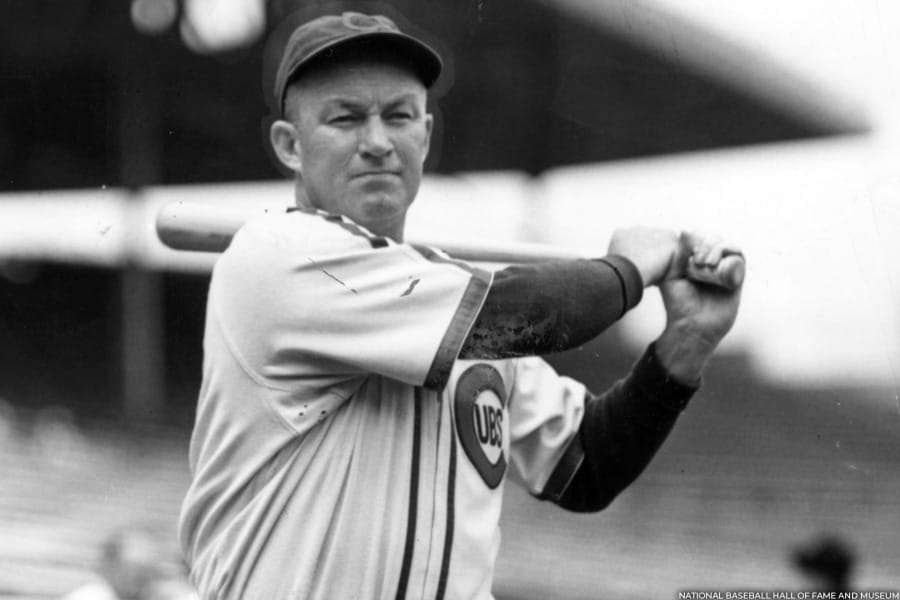
The Cubs and Pirates were tied atop the National League with just days remaining. Gabby Hartnett was not only Chicago’s catcher that afternoon. He was their manager, having taken over the club at midseason. In the bottom of the ninth, with two out and two strikes and the score tied, Hartnett swung at a Mace Brown curveball that he later admitted he could barely see.
He hit it over the left field wall.
The fans who saw it erupted with a noise that veteran observers compared to nothing they had previously witnessed at a baseball game. Players on both teams stood momentarily still, uncertain whether the ball had actually cleared the fence. It had. The Cubs won the pennant three days later.
Mace Brown, who threw the pitch, never quite recovered the reputation he had owned coming into that at-bat. He was a fine reliever, a capable man, and he made one mistake in near-darkness in September. Baseball is not always fair in the weight it assigns to such things.
3. The Shot Heard Round the World
Bobby Thomson, October 3, 1951
When Bobby Thomson died in 2010, the obituaries did not begin with his name. They began with the home run. That is the truest measure of what October 3, 1951 meant. A man’s entire life became subordinate to a single swing of the bat, and the man himself seemed to understand and accept this with considerable grace.
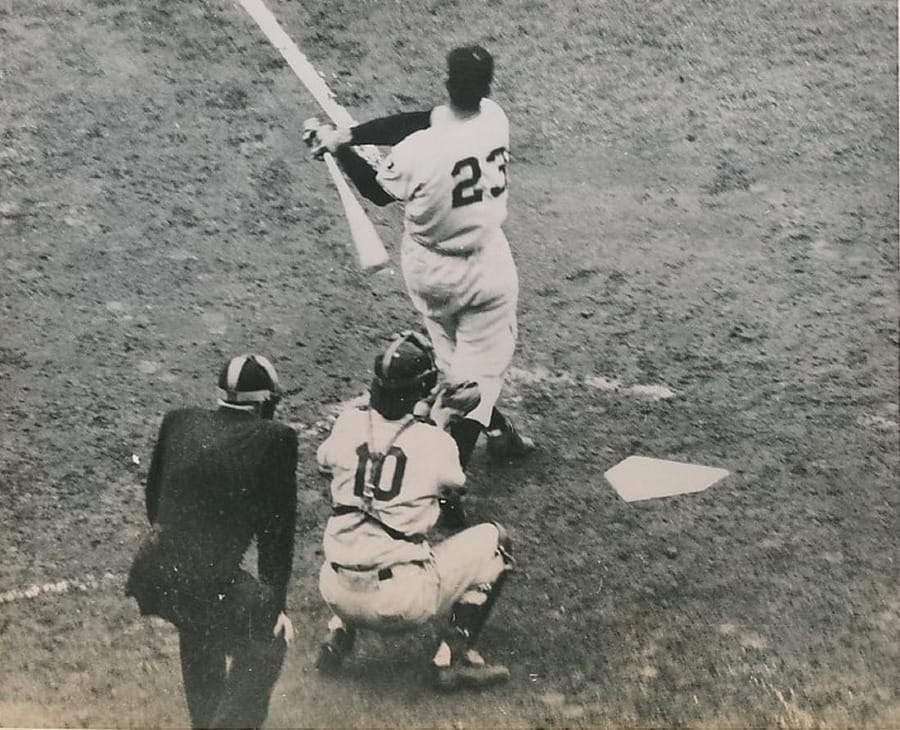
The New York Giants had trailed the Brooklyn Dodgers by 13 and a half games in August. What followed was one of the great sustained runs in baseball history. Thirty-seven wins in their final 44 games forced a three-game playoff for the National League pennant. The series split, sending the teams to a decisive third game at the Polo Grounds.
The Dodgers led 4-1 entering the bottom of the ninth. Then Alvin Dark singled. Don Mueller singled. Monte Irvin popped out. Whitey Lockman doubled, scoring Dark and putting runners on second and third. Brooklyn manager Chuck Dressen pulled starter Don Newcombe and brought in Ralph Branca.
Thomson worked the count and then drove a Branca fastball into the lower left field seats. Russ Hodges, calling the game on radio, lost himself completely. The Giants win the pennant! He said it eight times. He could not stop saying it.
Years later, evidence emerged suggesting the Giants had been stealing opposing catchers’ signs using a telescope and a buzzer system in the Polo Grounds clubhouse. Whether Thomson knew what was coming on that Branca fastball has never been conclusively settled. Thomson denied it. The debate continues. It has not diminished the moment so much as it has complicated it. That may be the most human thing that could be said about any event in baseball history.
4. The Homer the City Wouldn’t Acknowledge
Josh Gibson, circa 1934
The date is uncertain. The exact distance is uncertain. Almost everything about this home run exists in the space between documented history and living memory. That is precisely the point.
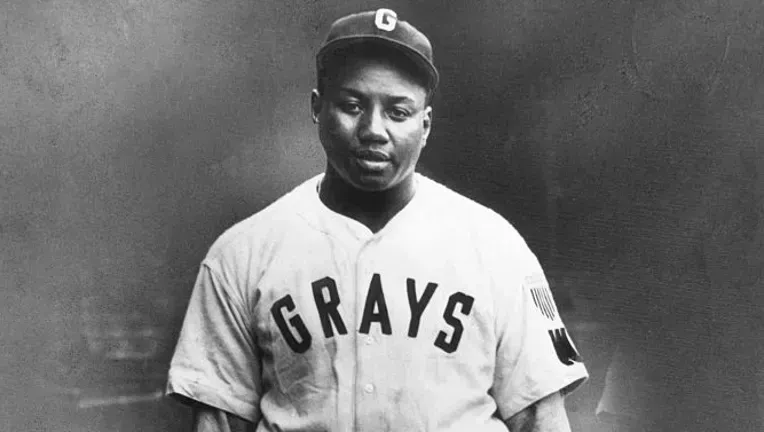
Sometime in the early 1930s, Josh Gibson came to Yankee Stadium as a member of the Homestead Grays and hit a ball that witnesses placed in the third tier of the left field upper deck. Estimates of the distance ranged upward of 580 feet. No official measurement was ever taken, because no official body considered it worth measuring. Gibson played in the Negro Leagues, and the Negro Leagues did not officially exist in the record books maintained by organized baseball.
The New York white press, which covered the Yankees and Giants with exhaustive devotion, largely declined to cover Negro Leagues games even when they were staged in major league ballparks. It fell to the Pittsburgh Courier and the New York Amsterdam News to document what Gibson did and what he meant. They did so reverently and in detail. The mainstream papers looked away.
Gibson was, by any honest accounting, among the two or three greatest hitters the game has ever produced. Contemporary accounts credited him with a career batting average near .360 and somewhere between 800 and 1,000 home runs across all levels of competition. The barnstorming nature of Negro Leagues play makes precise figures impossible. He died in January 1947, three months before Jackie Robinson took the field for the Brooklyn Dodgers. He was 35 years old. He never played a major league game.
The home run at Yankee Stadium was hit in a ballpark that would not have allowed him through the players’ entrance under any other circumstances. That is the story behind the swing.
5. Eleven Weeks Later
Larry Doby, 1947
History compressed Jackie Robinson’s integration of baseball into a single transcendent narrative, and that narrative is deserved. But history also has a tendency to leave the second man in shadow, and Larry Doby spent much of his career standing in a very long one.
Doby joined the Cleveland Indians on July 5, 1947. Eleven weeks after Robinson’s debut with the Dodgers. Where Robinson had been prepared methodically by Branch Rickey, given spring training to adjust, tutored in the art of absorbing hatred without responding to it, Doby was purchased on a Tuesday and in uniform on Wednesday. Several Indians players refused to shake his hand when he was introduced in the clubhouse. He was jeered from opposing dugouts with a consistency and cruelty that the historical record has never fully captured.
His first home run as an Indian arrived against those headwinds, in a ballpark where a significant portion of the crowd wanted him to fail. It left the bat with the particular authority that Doby would make his signature. He was a big man with an uppercut swing and genuine power. The ball landed in the seats with the finality of a statement that no one in that park could argue with.
Doby went on to become the first Black player to hit a home run in a World Series, the first to lead a league in home runs and RBI in the same season, and eventually the second Black manager in major league history, following Frank Robinson by less than a year. He was inducted into the Hall of Fame in 1998. He remained, to his death in 2003, one of the most underacknowledged figures in the history of American sport.
6. Did He Point?
Babe Ruth, October 1, 1932
The film exists. You can watch it. It will not settle the argument.
The grainy, silent footage of Babe Ruth’s at-bat against Charlie Root in the fifth inning of Game Three of the 1932 World Series shows Ruth gesturing toward the Chicago bench. Or toward center field. Or toward Root himself. He then drove the next pitch into the bleachers beyond center field at Wrigley. What the film cannot tell you is what Ruth meant by the gesture, because Ruth himself gave different accounts on different days depending on his audience.
Root went to his grave insisting Ruth was not pointing at the bleachers. He was, Root maintained, either jawing at the Cubs bench, which had been riding him mercilessly all series, or pointing at Root himself in a moment of competitive defiance. Ruth had already hit one home run in the game. The Cubs were heckling him about a missed charity event. The crowd was throwing lemons.
What is beyond dispute is that Ruth hit the ball enormous. An estimated 490 feet into the center field bleachers. And in the moment after he hit it, he laughed. He actually laughed going around the bases, the way a man laughs when something has worked out even better than he planned.
Ruth reportedly told a reporter afterward that yes, he had called his shot. Then he reportedly told another reporter that the whole thing had been misunderstood. The story he told depended on who was asking and what they wanted to hear. He understood mythmaking the way most men understand breathing. Instinctively, effortlessly, as a matter of survival. Whether he called it or not, he knew enough to never completely deny it.
7. The All-Star Game Used to Matter
Ted Williams, July 8, 1941
It is worth pausing to explain what the All-Star Game was in 1941, because it bears almost no resemblance to the exhibition it has become. Players wanted to win it. Managers managed to win it. The best pitcher in each league was not saved for a later start. He was deployed in the middle innings of the Midsummer Classic because the Midsummer Classic mattered.
Ted Williams came to bat in the top of the ninth inning of the 1941 All-Star Game at Briggs Stadium in Detroit with the American League trailing 5-4 and two men on base. He was 22 years old and three months away from finishing the season at .406. A number no one has reached since. He was already, in the estimation of those who watched him daily, the finest pure hitter alive.
He drove a Claude Passeau pitch into the right field upper deck. Three-run home run. American League wins, 7-5.
The accounts of Williams skipping around the bases have been confirmed by multiple witnesses. He was actually skipping, like a kid. It was, by every indication, one of the purest expressions of uncomplicated joy in his career. A career that would be interrupted twice by military service and shadowed throughout by a complicated relationship with the Boston press and public. In that moment in Detroit, none of that existed yet. He was just a young man who had hit a baseball a very long way, and he was happy about it.
8. The Wall That Still Stands
Bill Mazeroski, October 13, 1960
Forbes Field is gone.
The land it occupied in Pittsburgh has been absorbed by the University of Pittsburgh campus. But one section of the outfield wall still stands. It is the left-center field wall over which Bill Mazeroski hit the only walk-off home run in Game Seven of a World Series. The university preserved it. Locals leave flowers there.
The 1960 World Series between the Yankees and Pirates was, statistically, one of the most lopsided seven-game series in history. The Yankees outscored Pittsburgh 55-27. They won their three games by scores of 16-3, 10-0, and 12-0. The Pirates won theirs by a combined 15 runs. Baseball, which operates on its own logic, gave the championship to the team that won four games. Not the team that scored 28 more runs.
Mazeroski led off the bottom of the ninth in Game Seven against Ralph Terry with the score tied 9-9. The first pitch was a ball. The second pitch, a high fastball, he drove over the left field wall at 3:36 in the afternoon.
He ran the bases with his helmet already off, waving it overhead, the crowd surging onto the field around him. He was a second baseman. A defensive specialist, a Gold Glove artist, a man not known for his bat. And he had just hit the most consequential home run in World Series history. Ralph Terry, who threw the pitch, came back two years later and won the World Series MVP. Baseball provides its own corrections in its own time.
9. The Ground Rule That Won a Serie
Harry Hooper, October 13, 1915
Harry Hooper is not a name that commands immediate recognition, which is itself a small injustice. He was the right fielder on three World Series championship Red Sox teams, a leadoff hitter of considerable skill, and eventually a Hall of Famer. The Hall took until 1971 to notice. In the final game of the 1915 World Series against the Philadelphia Phillies, he did something that had never been done before and has rarely been repeated since.
He hit two home runs in the same World Series game.
The circumstances require a brief note on the ground rules of the era. Both of Hooper’s drives were balls hit into overflow crowds that had been allowed to stand in the outfield. This was a common practice when demand exceeded seating. Under the ground rules established for the Series, any ball hit into those standing spectators was ruled a home run. Hooper’s first gave Boston a lead. His second, in the ninth inning, won the game and the championship.
Grover Cleveland Alexander, one of the finest pitchers in National League history, started and lost the deciding game. He had already won two games in the Series. He would go on to win 373 in his career, a number exceeded in NL history only by Christy Mathewson. On that October afternoon in Philadelphia, none of it was enough.
10. The Pennant Race No One Remembers Clearly
Frank Schulte, September 1908
The 1908 National League pennant race is remembered primarily for Fred Merkle’s baserunning failure. It was the moment when a 19-year-old Giants first baseman failed to touch second base on what should have been a walk-off single, turning a pennant-clinching victory into a called-out, game-nullified catastrophe. But the race that year was so compressed, so chaotic, that several other moments contributed equally to its resolution.
Frank Schulte was the Cubs’ right fielder, a capable and underrated player on a Chicago team that would win back-to-back World Series titles. In the madness of that September, with three teams separated by fractions of a game, Schulte hit an inside-the-park home run that benefited substantially from confusion in the Giants outfield. The Giants were already fraying under the pressure of the chase, already shadowed by what Merkle’s mistake had cost them.
The Cubs won the pennant. They then won the World Series. They would not win another for 108 years.
Schulte’s contribution to 1908 has been largely absorbed into the larger Merkle narrative, the way supporting facts tend to disappear into famous stories. He hit the ball. The outfield lost it in the chaos. The pennant race moved another fraction of a degree in Chicago’s direction. History, as it so often does, moved on without him.
11. He Never Touched Home Plate
Chris Chambliss, October 14, 1976
The Yankees had not been to the World Series since 1964. Twelve years. For a franchise that had won 20 pennants between 1921 and 1964, the drought had felt like an institutional crisis. By 1976 they were back in the ALCS against the Kansas City Royals, and the series had gone the distance.
In the bottom of the ninth of Game Five, with the score tied 6-6, Chris Chambliss led off against Mark Littell. He drove the first pitch into the right field seats at Yankee Stadium.
What followed was not a home run trot. It was a survival exercise. Tens of thousands of fans had already begun pouring onto the field before Chambliss reached second base. By the time he reached third he was fighting through a dense and surging crowd, physically pushing people aside, losing his helmet, trying to locate the baseline through a sea of bodies. Whether he touched home plate has never been definitively established. Several witnesses believed he did not.
The Yankees, recognizing the ambiguity, sent Chambliss back out onto the now-completely-overrun field after the stadium nominally cleared. He found the location of home plate. He touched it. The home run was official, the pennant was won, and Chambliss completed the strangest baserunning circuit in postseason history roughly forty minutes after he had begun it.
12. The Weight of What Came After
Dave Henderson, October 12, 1986
The California Angels were one strike away from the World Series. Donnie Moore was on the mound. Dave Henderson was at the plate.
Henderson had been acquired by Boston at the trade deadline as an afterthought, a defensive replacement with a useful arm. He was not supposed to be the man at the center of anything. The Angels had built the 1986 season into the finest in franchise history. They led the Red Sox three games to one in the ALCS and were ahead 5-4 in the top of the ninth of Game Five, one strike from their first pennant.
Moore threw. Henderson swung. The ball went over the left field fence.
Boston won the game in extra innings, won the next two games, and went to the World Series. The Angels went home. And Donnie Moore, who had pitched through the 1986 season with an injury that probably should have kept him off the mound entirely, who had been the Angels’ finest reliever, who had thrown the pitch that would define him publicly for the rest of his life, began a private unraveling that those close to him watched with growing alarm.
He was released in 1988. He attempted a comeback that did not take. By the accounts of those who knew him, he spoke about the Henderson home run with an obsessive frequency, a man unable to leave a moment that would not leave him. In July of 1989, Donnie Moore shot himself at his home in Anaheim. He was 35 years old.
Henderson played until 1994, a solid and respected professional who hit .272 with 197 career home runs. He was asked about the 1986 home run for the rest of his life. He always answered graciously. He understood, better than most, that a single swing can mean entirely different things to the men on opposite sides of it.
Every one of these home runs lasted four seconds or less from bat contact to landing. The stories behind them have lasted decades. That is what baseball does. It gives the briefest of moments an unreasonable amount of room to breathe.