

Velocity is the language of pitching in Major League Baseball right now, and Jacob Misiorowski of the Milwaukee Brewers speaks it better than anyone. The 24-year-old right-hander is the hardest thrower in the majors, and triple digits are routine for him.
On June 26, 2026, Misiorowski fired a 105.5 mph fastball to Chicago's Pete Crow-Armstrong. No starting pitcher had thrown one harder since pitch tracking began in 2008. Earlier, on May 25, he threw 57 pitches of 100 mph or more in a single game, another record.
The timing could not be better. Misiorowski led all qualified pitchers with a 1.80 earned run average, 252 strikeouts, and a 0.80 WHIP, and his Brewers swept the Dodgers in the National League Championship Series. They open the World Series at home on Friday, October 23, their first trip to the Fall Classic since 1982.
Misiorowski's speed also raises an old question. How hard did the great throwers of the past really throw, and how would anyone know? Every era answered with the tools it had, and the tools kept changing the answer.
Modern triple-digit velocity rests on more than a century of mythical and verified fireballers who redefined the physics of the mound. Long before pitch-tracking cameras and radar guns, pitchers earned folklore, awe, and fear through sheer speed. But the story of velocity is really two stories. One is about who threw hard. The other is about how baseball learned to count it.
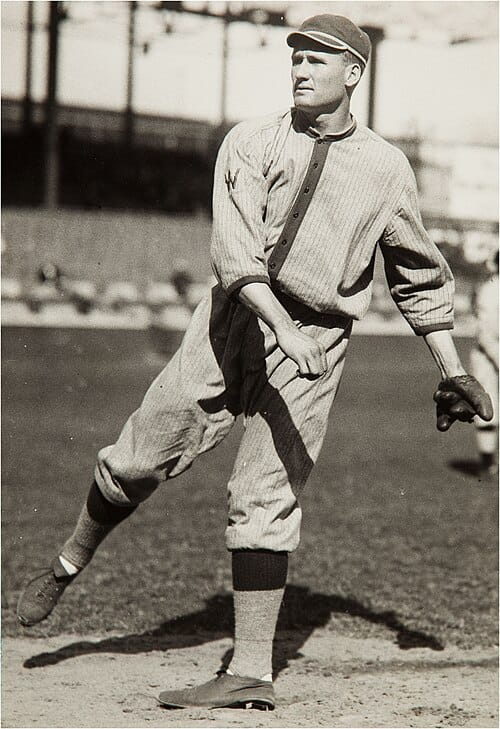
The Rifle Lab and the Big Train
Before 1912, nobody knew how fast a fastball really was. Everyone had an opinion, and nobody had proof. Walter Johnson of the Washington Senators, the sidearm thrower known as the Big Train, was the obvious subject to test.
The answer came from a place that knew speed well. Remington Arms in Bridgeport, Connecticut, had a timing device built to clock bullets, and engineers adapted it for baseball. Johnson threw through a frame strung with wire and into a steel plate, and the device measured the time between the two.
There is a simple reason the numbers from old tests look low. A thrown baseball loses speed the whole way to the plate, roughly 1 mph for every 5.5 feet it travels. A machine that reads the ball near the plate will always show a smaller number than one that reads it at the pitcher's hand. That is true even for the very same pitch.
The result was 122 feet per second, or about 83 mph. That sounds slow for a legend, but it was not. The device caught the ball roughly 7.5 feet past home plate, after the pitch had already slowed. Adjusted to the spot where modern guns measure, Johnson's fastball works out to about 94 mph. He did it with a heavy, dead ball and no modern training. When the news spread in 1913, one magazine proudly reported that Johnson could throw faster than the Twentieth Century Limited, a famous passenger train.
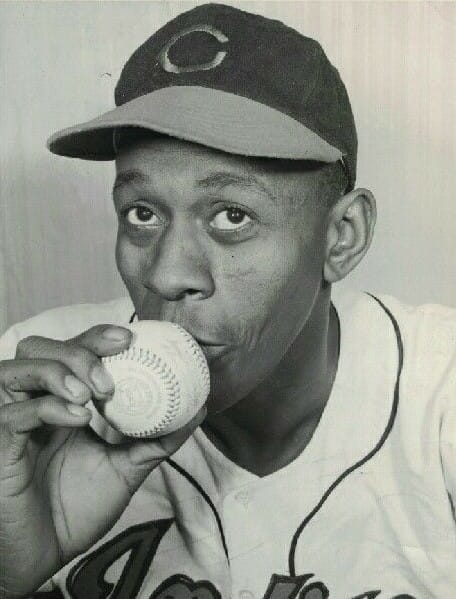
Legends Without Numbers
Satchel Paige never got a test like that. He starred in the Negro Leagues and on barnstorming tours in the 1920s and 1930s, and no machine ever measured him. What survives is testimony. Paige gave his pitches colorful names, including the "bee ball," which hitters said seemed to buzz on the way in.
Paige finally reached the major leagues with Cleveland in 1948, at an age listed as 42. By then, his best fastball was behind him. Many who saw him in his prime ranked him with the hardest throwers of any era. Without a device, that is as precise as history can be.
A Race, a Chronograph, and a Wild Man
Bob Feller of Van Meter, Iowa, got the scientific treatment. Before World War II, the Cleveland Indians star raced a police motorcycle in Chicago. The officer rode at 86 mph. Feller's fastball beat the bike to the target. Some estimates put the pitch near 104 mph, though accounts differ on the year and the details.
The better test came on August 20, 1946, at Griffith Stadium in Washington. Senators owner Clark Griffith staged a promotion, and the Army brought a chronograph used to time artillery shells. Feller threw into it before the game. It read 98.6 mph, a new mark. The old record belonged to Atley Donald of the Yankees, at 94.7 mph in 1939. Feller then pitched the full game and lost, 5 to 4. Because the machine read the ball near the plate, some estimates put his pitch at about 107.6 mph at the hand. Others run lower.
Steve Dalkowski, a 5-foot-11 left-hander from New Britain, Connecticut, never pitched in the majors. Many who saw him swore he was the fastest ever. In 1958 the Baltimore Orioles sent him to the Aberdeen Proving Ground in Maryland for a military test. The machine read 93.5 mph. The test was flawed. Dalkowski had pitched the night before, and he threw from level ground instead of a mound. Observers guessed his true speed at 105 mph or more. Dalkowski himself believed he reached 110.
Control was the problem. In his minor league career he struck out 1,396 batters in 995 innings and walked 1,354. In 1962, manager Earl Weaver kept his instructions simple at Elmira, and Dalkowski had his best year, with 192 strikeouts and a 3.04 ERA in 160 innings. An elbow injury the next spring ended his rise. He died in 2020 at age 80, remembered as the inspiration for Nuke LaLoosh in the movie Bull Durham.
Dick Radatz brought a different kind of fear. Standing 6 feet 6 inches and weighing 230 pounds, he pitched for the Boston Red Sox from 1962 to 1966 and became one of baseball's first dominant power relievers. In 1964 he struck out 181 batters in 157 innings. That remains the record for a pitcher working only in relief. Mickey Mantle grumbled about "that monster," and the nickname stuck. Radatz struck out Mantle 44 times in 63 at-bats. No radar gun tracked him, because the gun era had not yet begun. Hitters did the measuring with their bats, and most came up empty.
The Gun Arrives
The radar gun began with a speeding ticket. In the fall of 1974, Michigan State baseball coach Danny Litwhiler read about campus police using radar on drivers. He saw a way to time pitchers and worked with the maker of JUGS pitching machines. By spring training of 1975, Baltimore manager Earl Weaver was using an early model. Soon scouts everywhere carried one.
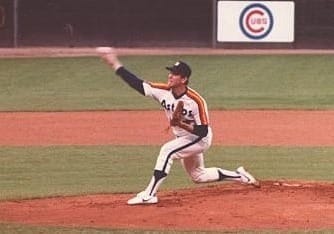
Nolan Ryan got there first, in a way. The California Angels borrowed an infrared system from Rockwell International for Ryan's start on September 7, 1974, at Anaheim Stadium. His speeds lit up the scoreboard, inning after inning. The best reading was 100.8 mph against the White Sox. In an earlier test on August 20, the machine had caught Ryan at 100.9, and that is the number the Guinness book recorded. The device read the ball about 10 feet from the plate. Many experts put his release speed near 108 mph.
Notice the date. Feller was measured on August 20, 1946. Ryan was measured on August 20, 1974. Twenty-eight years apart, the same date, and the same question.
By 1990, radar guns were everywhere, but they did not agree. Rob Dibble of the Cincinnati Reds told Sports Illustrated his best fastball read 101 mph on a JUGS gun and 99 mph on a Decatur ProSpeed. The JUGS read the ball early in its flight. The ProSpeed read it about 10 feet from the plate. Same pitch, two numbers. That fall Dibble and the Reds' "Nasty Boys" bullpen helped sweep Oakland in the World Series, and Dibble shared the NLCS Most Valuable Player award with Randy Myers.
Dibble, along with teammates Myers and Norm Charlton, showed what a bullpen built on speed could do. Long before most clubs had even one reliever who could reach 100 mph, Cincinnati had a trio. They attacked hitters in the late innings with hard stuff and an attitude to match. Today, nearly every team carries such arms, and the Nasty Boys look like the blueprint.
Cameras, Doppler, and the Release Point
The next leap came from cameras. Aroldis Chapman of the Cincinnati Reds threw 105.8 mph at San Diego on September 24, 2010, the fastest pitch ever tracked since 2008. That reading came from a camera system that measured the ball early in flight.
In 2015, Statcast brought Doppler radar to all 30 ballparks. By 2017, its TrackMan radar replaced the camera system for official pitch speed. It reads the ball at release, which is the closest thing the game has to a common yardstick. Misiorowski's 105.5 mph pitch was measured that way.
Extension matters too. A pitcher with a long stride releases the ball closer to the plate, so it gives the hitter less time to react. It feels faster than the radar number suggests. Crow-Armstrong fouled that pitch off, but he saw it up close, and the Brewers credit that kind of reach for much of Misiorowski's success.
The scoreboard number is not the whole story, either. Brewers manager Pat Murphy has pointed out that good hitters can time almost anything. In the National League Division Series opener, the Padres kept fouling off Misiorowski's heat and chased him after four innings. Velocity opens the door, but location, movement, and a second pitch decide who walks through it.
Same Fastball, Different Yardsticks
|
Pitcher |
Year |
Method |
Reading |
Where
measured |
|
Walter Johnson |
1912 |
Remington
chronograph |
83.2 mph |
About 7.5 feet
past plate |
|
Bob Feller |
1946 |
Army
chronograph |
98.6 mph |
Near home
plate |
|
Steve
Dalkowski |
1958 |
Army test site |
93.5 mph |
Tired arm,
level ground |
|
Nolan Ryan |
1974 |
Rockwell
infrared |
100.9 mph |
About 10 feet
from plate |
|
Rob Dibble |
1990 |
JUGS radar gun |
101 mph |
Early in
flight |
|
Aroldis
Chapman |
2010 |
Camera
tracking |
105.8 mph |
Early in
flight |
|
Jacob
Misiorowski |
2026 |
Statcast radar |
105.5 mph |
At release |
Put the numbers side by side and a pattern appears. Johnson's 83 mph becomes about 94. Feller's 98.6 becomes roughly 108 by one method. Ryan's 100.9 also lands near 108. Chapman and Misiorowski were measured near the hand already. These conversions are estimates, and experts argue over them. Still, the best throwers of every age sit in a surprisingly narrow band.
What has changed is how many pitchers reach that band and how well baseball can prove it. When Misiorowski takes the mound in this World Series, watch the scoreboard on that first fastball. Behind every number is 114 years of wires, artillery timers, motorcycles, and radar, all chasing the same question. How hard did he throw it?