

The Man Who Rewrote the Rules: Babe Ruth's Impact on Baseball
How one player's swing rebuilt a sport's strategy, its biggest franchise, and its public trust, all at once.
Baseball almost didn't survive 1919. The Chicago White Sox had just thrown the World Series for gambling money, and the public knew it. Newspapers ran with the story for months. Fans wondered if the sport they loved was actually a fixed show. The game needed a hero, and it did not know one was already standing in the batter's box.
That hero was George Herman Ruth, a former left-handed pitcher from Boston who was about to make everyone forget he ever threw a baseball for a living. What Ruth did next did not just save a scandal-ridden sport. It rewired the way the game was played, who could compete in it, and what an American athlete could become.
A Sport Built on Small Ball
Before Ruth, baseball ran on scarcity. Teams played for one run at a time. A leadoff single meant a bunt to move him over, then a sacrifice fly or a stolen base to bring him home. Home runs were rare and almost accidental, the product of a ball hit into a gap and legged out for extra bases. Power hitting was viewed as reckless, even a little embarrassing, because it usually meant a strikeout.
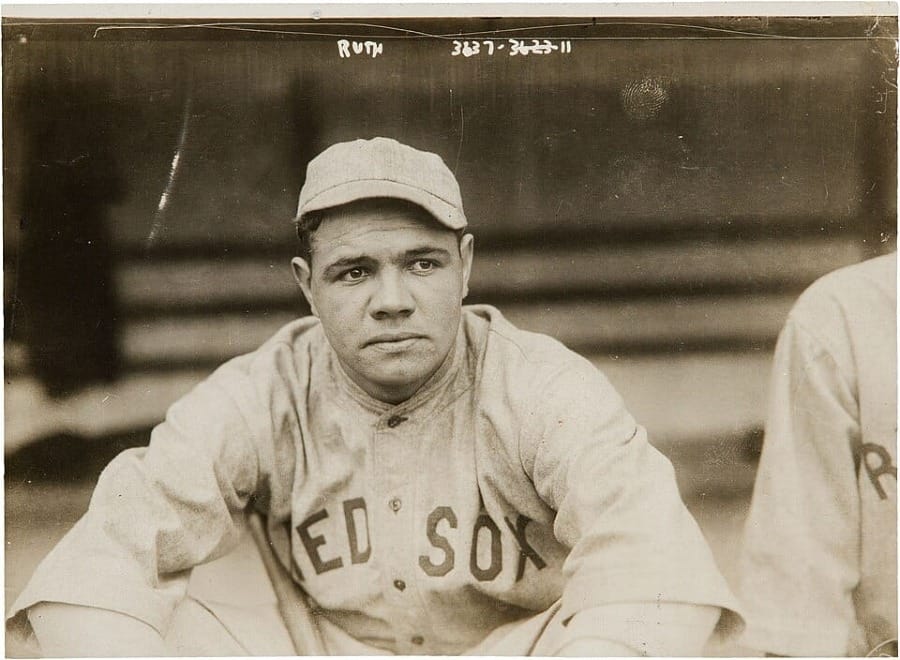
Ruth broke that logic without asking permission. In 1919, still with Boston, he hit 29 home runs, a total that stunned a league built on singles. Then in 1920, his first season in a Yankees uniform, he hit 54. That number alone outpaced every other team in the American League except one. He was not just having a good year. He was making forty years of baseball strategy look outdated overnight.
Managers who had spent careers perfecting the bunt and the hit-and-run watched a new blueprint take shape in real time. Ruth swung from the heels on nearly every pitch, and when he connected, the ball went places outfielders had never bothered to defend. Other players noticed, and so did the crowds. Fans did not travel across town to watch a sacrifice bunt. They came to see something leave the ballpark.
It is easy to forget, looking back, how strange this must have looked to people who had watched baseball their whole lives. A player who struck out often, swung hard on nearly every pitch, and treated home runs as a regular event rather than a rare surprise did not fit any existing model of what a good hitter looked like. Ruth was not refining the old approach. He was replacing it, and the rest of the league eventually had no choice but to follow.
The Swing That Broke the Old Rules
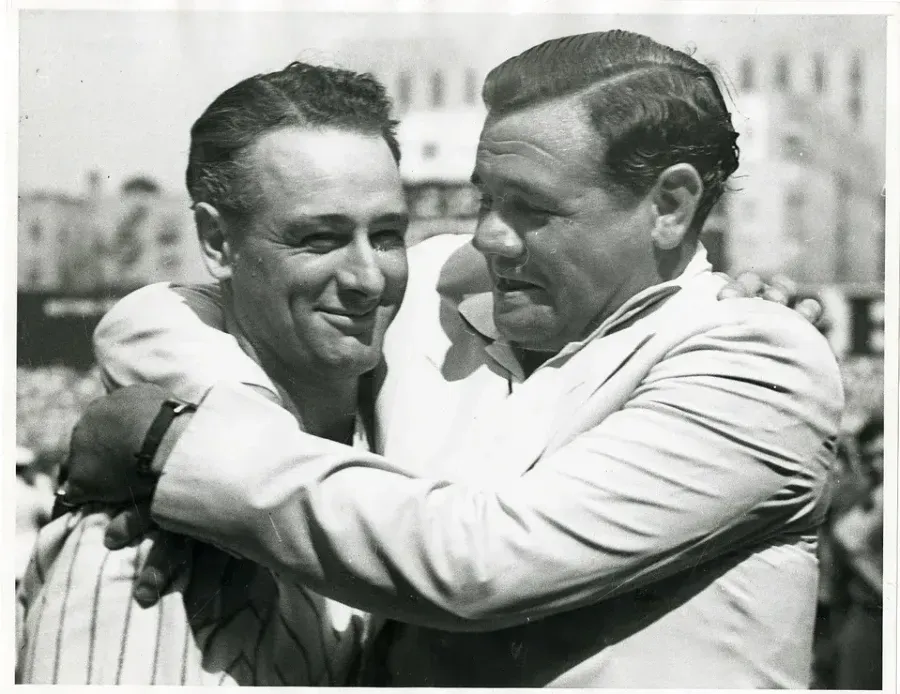
Part of what made Ruth so disruptive was mechanical, not just statistical. Dead-ball era hitters choked up on heavy bats and chopped down at the ball, aiming for line drives and hard grounders that could sneak through the infield. It was a controlled, defensive way to hit, built to avoid strikeouts above almost everything else.
Ruth did the opposite. He gripped his bat, which sometimes weighed as much as 54 ounces, all the way down at the knob. He took a full turn on his swing and lifted the ball on purpose, aiming for loft instead of a low line drive. Traditionalists in the press box called it reckless. Some coaches called it a fluke that would fade once pitchers adjusted.
It never faded, because it was not luck. Ruth had figured out something hitters and coaches would spend the next century trying to measure with cameras and sensors: that an uppercut swing, generating backspin and lift, produced more extra-base power than a chopped, defensive stroke ever could. In an era now obsessed with launch angle and exit velocity, it's worth remembering that Ruth was living that idea in 1920 with nothing but instinct and a very heavy bat. He also made peace with the strikeout as a fair trade for that kind of power, a trade modern hitters still make every day.
Today's biomechanics labs would recognize what Ruth was doing almost instantly. Modern hitting coaches spend hours studying bat path, attack angle, and the point of contact that produces the most backspin. Ruth arrived at those same principles decades early, with no video, no sensors, and no swing coach standing behind him. He simply noticed what worked and kept doing it, even while people who considered themselves experts insisted he was doing it wrong.
Baseball's Unlikely Cleanup Man
Ruth's timing mattered as much as his talent. He arrived at the plate as baseball's biggest stage just as the sport's credibility was cracking apart. The Black Sox scandal had convinced a lot of fans that the games themselves could not be trusted, that owners and gamblers and maybe even players were quietly working against the people paying to watch.
Ruth gave fans something simpler to believe in. He could not un-fix the 1919 World Series, and he never claimed to be the sport's conscience. But his home runs offered proof, inning after inning, that something real and unscripted could still happen on a baseball field. A pitch either left the park or it did not. There was no committee that could rig that outcome after the fact.
That kind of spectacle mattered enormously in 1920, when trust in the sport was thin and the wounds from the scandal were still fresh. Ruth did not clean up baseball through investigations or new commissioners, though those came too. He did it by giving people a reason to look up at the sky and cheer again, at a moment when they badly needed one.
The two stories, the scandal and the swing, unfolded almost side by side. Baseball's new commissioner, Kenesaw Mountain Landis, was busy handing down lifetime bans to the players involved in the fix. At the same time, newspapers that had spent 1919 covering courtroom testimony spent 1920 covering home run counts instead. Ruth did not replace the need for accountability, but he gave the sport something positive to put next to the scandal coverage, and that mattered to a fan base deciding whether to keep paying attention.
The House That His Swing Built
Ruth's impact on the Yankees is its own story of transformation. Before he arrived, New York's American League club was an afterthought, regularly overshadowed by the Giants across town and largely ignored by the city's baseball conversation. The Yankees did not even have a stadium of their own. They rented the Polo Grounds from the Giants and played as tenants in someone else's ballpark.
Ruth changed that arrangement fast. He drew crowds so large that the shared stadium could not comfortably hold them, and the sight of thousands of fans overflowing the Giants' own building became an embarrassment the Giants could not ignore. Within a few years, the Yankees had outgrown their landlord entirely. In 1923, they opened a ballpark built specifically to hold the audience Ruth's bat had created: Yankee Stadium, a building that would carry the nickname "The House That Ruth Built" for the rest of its existence.
That new stadium was not just architecture. It was the physical proof that one player had turned a secondary tenant into the most powerful franchise in the sport. The Yankees won four World Series titles during Ruth's years in pinstripes, and the identity they built in that stretch, wealthy, dominant, impossible to ignore, has never really left the franchise. Every Yankees dynasty since has operated in the shadow of the empire Ruth's bat financed in the 1920s.
It is worth pausing on how unlikely that outcome was. New York already had a beloved National League team in the Giants, with decades of history and a loyal following. The Yankees had none of that. They had no signature stadium, no defining stars, and no real claim on the city's affection. Ruth gave them all three within a few seasons, and he did it simply by being the player every fan in the city wanted to see in person.
A Legacy Bigger Than the Numbers
It is tempting to tell Ruth's story through his statistics, and the numbers are staggering on their own. But the deeper story is about disruption. He took a cautious, low-scoring game and proved that raw power could outdraw and outperform anything small ball had to offer. He took a franchise with no real identity and gave it a stadium, a swagger, and a permanent place at the top of the sport. He took a wounded, scandal-shaken game and gave it something worth believing in again, one towering fly ball at a time.
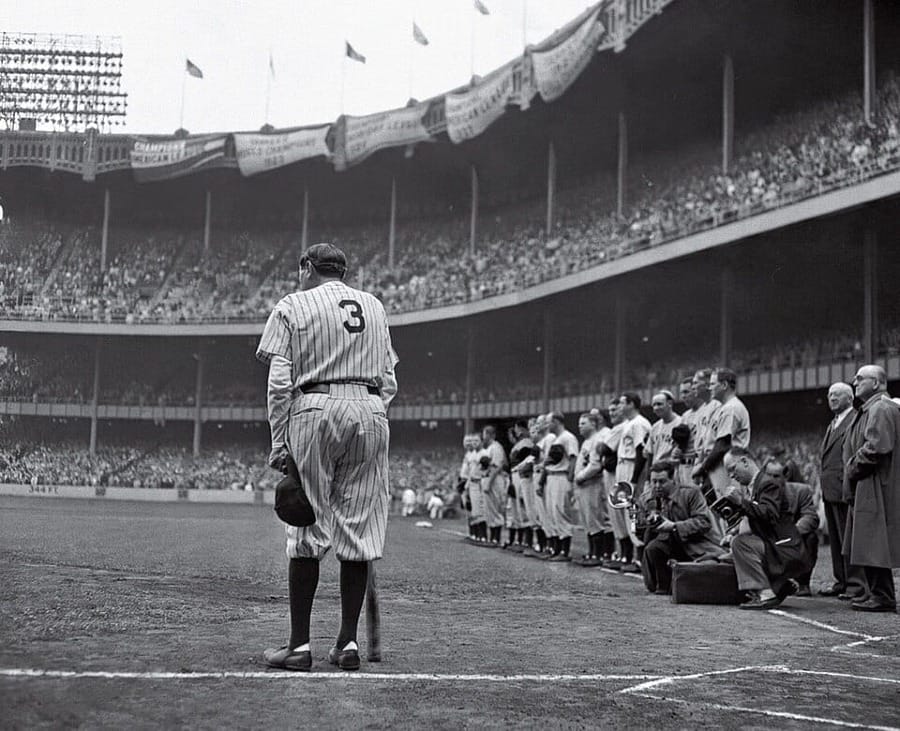
Ruth's swing looked reckless to the people who first saw it. History has made it look more like the earliest version of modern power hitting, arriving decades before anyone had the tools to measure exactly what he was doing right. That combination, timing, talent, and a willingness to swing for something bigger than the accepted wisdom of his era, is why Ruth's impact still shapes the way the game is played and watched a century later.
Baseball did not just survive the crisis of 1919. It found a new identity on the other side of it, and that identity had Babe Ruth's fingerprints all over it.