
The Miracle Braves of 1914: From the Cellar to the Top of the World

Holiday break notice:
A note for subscribers: this is the last Diamond Echoes column of 2026. The year-end holiday break begins a little earlier than usual this year. We plan to return in early January, and I will let you know the exact weekend as soon as it is set. Thank you for reading, and for keeping baseball’s memories alive with me.
By early July of 1914, the Boston Braves had settled into a familiar place. A doubleheader sweep at the hands of Brooklyn had dropped them into last place in the National League. It was their fifth straight loss. Then came a trip to Buffalo for an exhibition game against the local minor league club. The Braves lost that one too, 10-2.
Their record stood at 26-40. Nobody looking at the standings saw anything but another long summer for a team that had known many of them. Yet from that low point, the Braves won 68 of their final 87 games. They passed the three-time defending champion New York Giants and won the pennant by more than ten games. Then they swept the powerful Philadelphia Athletics in the World Series. Baseball has seldom seen a climb so steep.
A Decade in the Cellar
To understand the shock, one must understand the Boston of those years. The Braves had been the National League’s doormat for a decade. The club lost nearly 100 games a year on average. It went through seven managers, four owners and four nicknames, from Beaneaters to Doves to Rustlers and finally to Braves. The home field, the South End Grounds, was a rickety wooden park that held about 10,000 fans. Most of the seats sat empty. Other clubs had moved into modern parks of steel and concrete. Boston played on in the old one.
A new ownership group arrived before the 1912 season. It was led by John Montgomery Ward, the old star pitcher, along with James Gaffney and John Carroll. The results on the field did not change right away. But the group gave the club the name that would stick, the Braves.
Enter Stallings and Evers
In 1913, Boston hired George Stallings to manage. Like Connie Mack, he wore a suit in the dugout. Like John McGraw, he owned a fierce temper, and some said his was worse. Stallings led the Braves to a record of 69-82. That does not sound like much, but it was the club’s best finish since 1902. For a weary fan base, it was a sign of life.
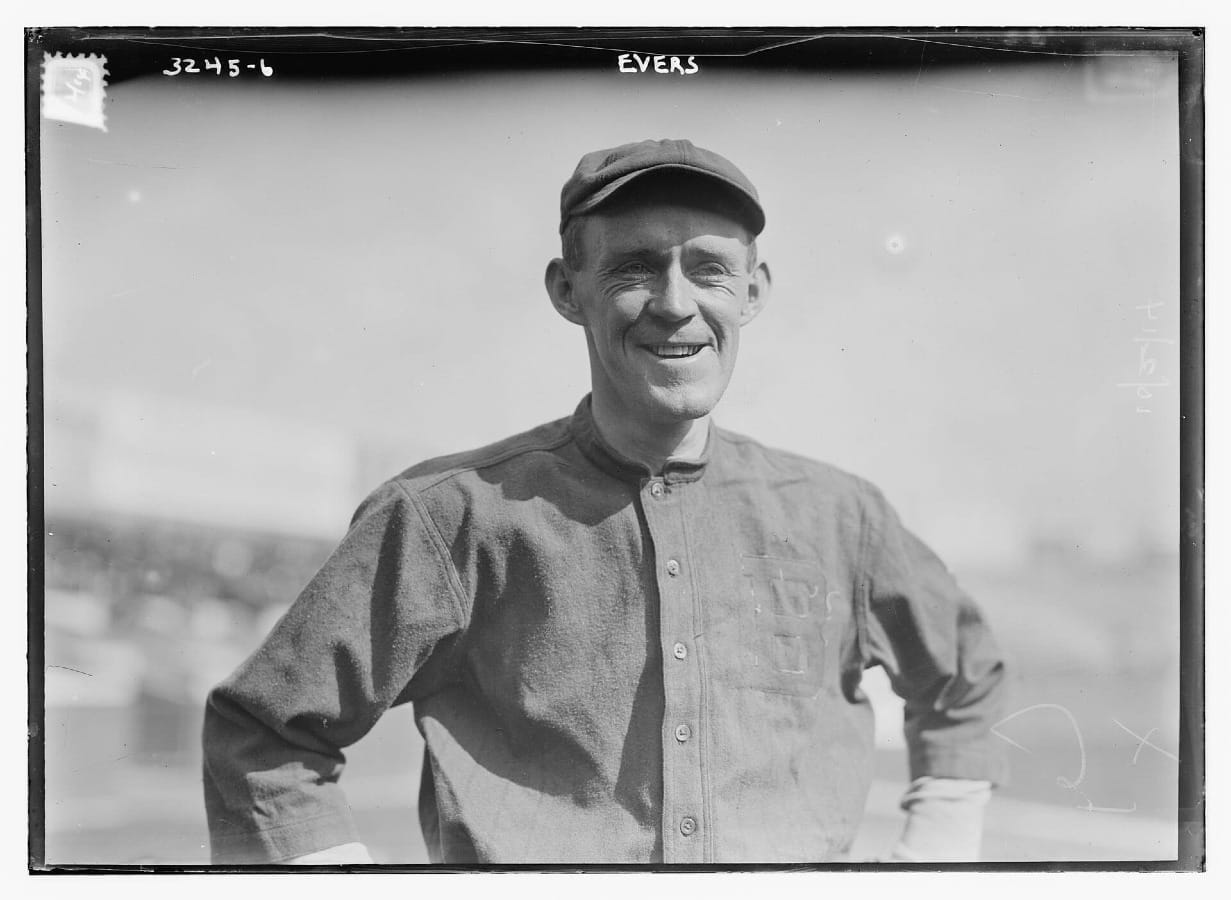
Stallings spent the winter reshaping his roster. He cleared out veterans he felt had overstayed their welcome and gave more playing time to young men. His most newsworthy move was the addition of Johnny Evers. The famous second baseman wanted out of Chicago. The new Federal League, a third major circuit, was courting players, and Evers talked of jumping. Instead, he signed with Boston for a handsome salary. At 32, Evers was no longer a big bat. But he had played on great Cubs teams and had managed one. He brought a winner’s habits to a club that had forgotten them.
Rock Bottom in Buffalo
The new look did not help at first. Boston won only four of its first 22 games. The club played better after that, but the old troubles returned in early July. The five-game skid and the embarrassment in Buffalo were the result.
What happened next became the heart of the legend. Evers used the Buffalo loss as a rallying point. He challenged his teammates to start believing in themselves. The Braves answered by winning 12 of their next 16 games, every one of them on the road. That stretch lifted Boston from last place to fourth in a National League race that had suddenly bunched together.
Catching the Giants
Back home, the Braves kept going. A 14-game homestand produced 12 wins and moved them into second place. Only one team now stood between Boston and first. It was the New York Giants.
The Giants were chasing a fourth straight pennant, but they did not look like champions. Outfielder George Burns was about the only hitter giving manager John McGraw real production. Pitcher Rube Marquard, a star two years earlier during a 19-game winning streak, had faded by midseason. Many blamed a 21-inning outing against Pittsburgh in July for deadening his arm.
Still, New York led Boston by 6½ games when the Braves arrived at the Polo Grounds. McGraw sounded ready to concede the flag. He had reason to worry. Boston swept the three-game series. The last win was a 2-0 victory in ten innings over the great Christy Mathewson.
The Braves kept charging and soon tied New York for first place. The Giants came to Boston in early September for a return series, and the whole city was buzzing. The Red Sox graciously offered Fenway Park, a newer ballpark with about three times as many seats as the South End Grounds. More than 91,000 fans came out for the series. Boston won two of three and took sole possession of first place.
The surge was staggering. The Braves won 36 of 46 games in that stretch. They did not pause to celebrate. They won 25 of their last 31 and finished at 94-59, more than ten games ahead of the Giants. From the low point of the summer, Boston had gone 68-19.
Three Arms and a Platoon
The pitching carried the run. In the second half, Stallings leaned on a three-man rotation. Dick Rudolph and Bill James had made little noise before 1914. Now each won 26 games. Rudolph finished 26-10 with a 2.35 earned run average and 31 complete games. James, only 22, went 26-7 with a 1.90 ERA, the best on the club. Lefty Tyler added 16 wins and a 2.69 ERA. Together the three threw nearly 940 innings. As a staff, Boston finished with a 2.74 ERA, completed 104 of its 158 starts and tossed 18 shutouts. In that era, the starter was expected to finish what he began, and these men did.
The hot streak even rubbed off on lesser arms. On September 9, George Davis took a turn between the regular starters. He threw the National League’s only no-hitter of the year. It was one of just seven victories in his big league career.
The offense was nothing special. The team batted .251 and hit only 35 home runs. By OPS+, Boston’s hitters were about eight percent below the league average. But the Braves got their hits when they mattered, and they won many games in the late innings. Stallings platooned heavily, matching bench players against the right pitchers. Nearly everyone on the roster had a part to play.
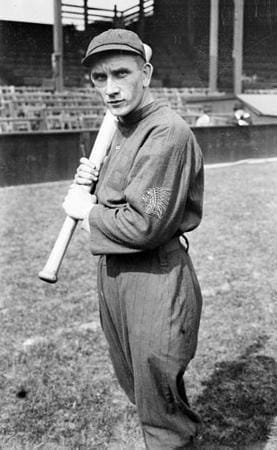
Evers set the tone. He hit .279, drew 87 walks and posted a .390 on-base percentage. He was named the league’s most valuable player and received the Chalmers Award. Rabbit Maranville, just 22, played 156 games at shortstop and finished second in the voting. Joe Connolly, a 30-year-old outfielder, led the club with a .306 average, nine home runs and a .494 slugging percentage. Backup third baseman Red Smith hit .314 in 60 games. Catcher Hank Gowdy, only 24, would save his best work for October.
The Mighty Athletics
Waiting in the World Series were the Philadelphia Athletics, winners of 99 games and their fourth pennant in five years. Most observers saw the A’s as the polished team in the matchup. Eddie Collins hit .344 with 122 runs and 58 steals. Frank “Home Run” Baker led the American League in homers for the fourth straight year. Eddie Plank and Chief Bender anchored a deep staff of young arms. No Philadelphia pitcher won 20 games, which made the A’s the first league champion without a 20-game winner.
Mack had even passed on a 19-year-old pitching prospect from Baltimore. Owner Jack Dunn, short of cash, sold the youngster to the Red Sox instead. His name was George Herman Ruth.
The Federal League had opened for business that same summer, with eight teams playing in rebuilt or brand new parks. One of them, Chicago’s Weeghman Park, would later be known as Wrigley Field. The Feds produced a tight race of their own, and a 24-year-old Indianapolis outfielder named Benny Kauff led the league with a .370 average. With three major leagues now bidding for talent, every player had a new bargaining chip, and not every clubhouse handled it well.
Many experts predicted a Philadelphia rout. But a look inside the two clubhouses told a different story. The Braves were united. The Athletics were not. Some players eyed the money offered by the Federal League, while others stayed loyal to Mack and resented those who did not. The strain had not hurt Philadelphia in the summer. It would in October.
The Sweep
The Athletics’ offense had led the American League in every major category. Against Rudolph and James, it looked ordinary. Rudolph won Game One, 7-1, scattering five hits. James followed with a two-hit shutout in Game Two. The Series then moved to Fenway Park, which Boston borrowed once more. Game Three went 12 innings. Tyler started and James rescued him with two scoreless innings of relief. The Braves won, 5-4. Rudolph finished the job in Game Four, 3-1. Gowdy hit .545 in the Series.
It was the first sweep in World Series history. Rudolph and James each earned two wins. Together they allowed just one earned run in 29 innings. The mighty Athletics batted .172 as a team and were left demoralized. Connie Mack saw what the Series had revealed about his club, and he soon began taking it apart.
After the Miracle
The Braves moved into their own new park, Braves Field, the next year. They finished second in 1915, and the magic never quite returned. James hurt his arm and never again reached the heights of 1914. But for one season, a team that had spent a decade in the cellar proved that a season is never finished until it is finished.
The 1914 Braves did not have the best hitters or the biggest names. They had a fiery manager, soon known as the Miracle Man, a veteran who refused to accept losing, and two young pitchers who could not be beaten. On a July afternoon in Buffalo, they hit bottom. By October, they stood alone on top of the baseball world.