

Twelve trade deadline deals that built dynasties, gutted franchises, or did both at once
Every trade deadline is a bet made in the dark. No general manager knows how it ends. Some trades turn into legend within a year. Others take a decade to reveal themselves. History remembers them all differently once the box scores pile up.
Here are twelve deals that prove the deadline can build a dynasty, gut a franchise, or do both at once.
1964: Cubs trade Lou Brock to the Cardinals for Ernie Broglio
Under the old rules, June 15 was the deadline. The Cubs wanted pitching help. Broglio went 7-19 with a 5.40 ERA over his three years in Chicago. Brock played 16 seasons in St. Louis, racked up 2,713 hits, and stole 888 bases. To this day, die-hard Cubs fans still bring the trade up every deadline season, a cautionary tale passed down through generations of heartbreak.
1987: Tigers trade Doyle Alexander to the Braves for John Smoltz
|Detroit needed a starter for a pennant race. Alexander delivered, going 9-0 with a 1.53 ERA down the stretch, and the Tigers won the division. Smoltz went on to a 21-year Hall of Fame career, finishing with 3,084 strikeouts and 66.4 career WAR. A short-term win that cost Detroit decades of value.
1989: Rangers trade Sammy Sosa, Wilson Alvarez, and Scott Fletcher to the White Sox for Harold Baines and Fred Manrique
Texas wanted a proven bat down the stretch. Sosa was a raw 20-year-old at the time, hitting just .238 in limited action with the Rangers. He went on to hit 609 home runs and finish with 58.6 career WAR, just not for Texas.
1990: Red Sox trade Jeff Bagwell to the Astros for Larry Andersen
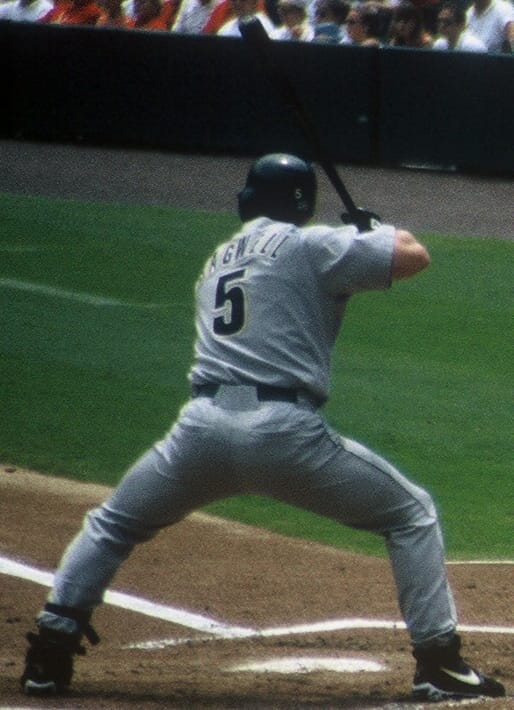
Boston needed bullpen help for a playoff push. Andersen delivered, posting a 1.23 ERA in 22 innings, and Boston still lost in the ALCS. Bagwell became the Astros' franchise first baseman, finishing his career with 449 home runs and 79.9 WAR. Red Sox fans never fully forgave the deal, especially with third base feeling like a black hole in Boston for years afterward.
1993: Athletics trade Ricke first round. Seattle fans were furious in the moment, unwilling to watch their ace leave mid-race. Garcia put together 34.4 career WAR over 15 seasons, and Guillen added 27.7 WAR with multiple All-Star nods. The three players became the core of a contending Mariners team for years to come.
2002: Indians trade Bartolo Colon to the Expos for Cliff Lee, Grady Sizemore, and Brandon Phillips
Colon delivered for Montreal, going 10-4 with a 3.31 ERA down the stretch. What Cleveland got back reshaped a decade. Lee won a Cy Young and finished with 42.5 career WAR. Sizemore made three All-Star teams. Phillips made three of his own and won four Gold Gloves. One of the most one-sided prospect returns in modern trade history.
2004: Mets trade Scott Kazmir to the Rays for Victor Zambranotthree All-Star teams and finished with 22.8 career WAR. Widely considered one of the worst pitching-for-pitching swaps ever made.]the star.
2008: Indians trade CC Sabathia to the Brewers for Matt LaPorta, Michael Brantley, and Zach Jackson
Milwaukee got an incredible half season, watching Sabathia go 11-2 with a 1.65 ERA and reach the playoffs for the first time in years. He left in free agency that winter. Cleveland got Brantley, who developed into a multiple-time All-Star. The trade lit a fire under Brewers fans that still stands today. It showed an ownership group willing to spend and chase October, a message that mattered even after Sabathia moved on. Sometimes a trade sends a signal beyond the players themselves, whether it works out the way the front office hoped or not.
2015: Reds trade Johnny Cueto to the Royals for Brandon Finnegan, John Lamb, and Cody Reed
Kansas City rode Cueto to a World Series title that October. Cincinnati's return underwhelmed relative to the hype. Finnegan gave the Reds a modest four years of value before moving on, and the other two pieces never became mainstays. A steep price for one championship run.
Twelve trades, twelve different lessons. Some deadlines make a franchise. Some just make a memory. Either way, nobody knows which one they're living through until years later.